Vedi qualcosa da migliorare? Proponi una modifica.
Questa pagina è pubblica.
In Structural Biochemistry · pagina 143 di 952
Amino Acids
Proteins have a lot of uses in the body. from cell structure to carrying out reactions. Proteins are in turn made of smaller building blocks called amino acids. There are a total of 20 amino acids.
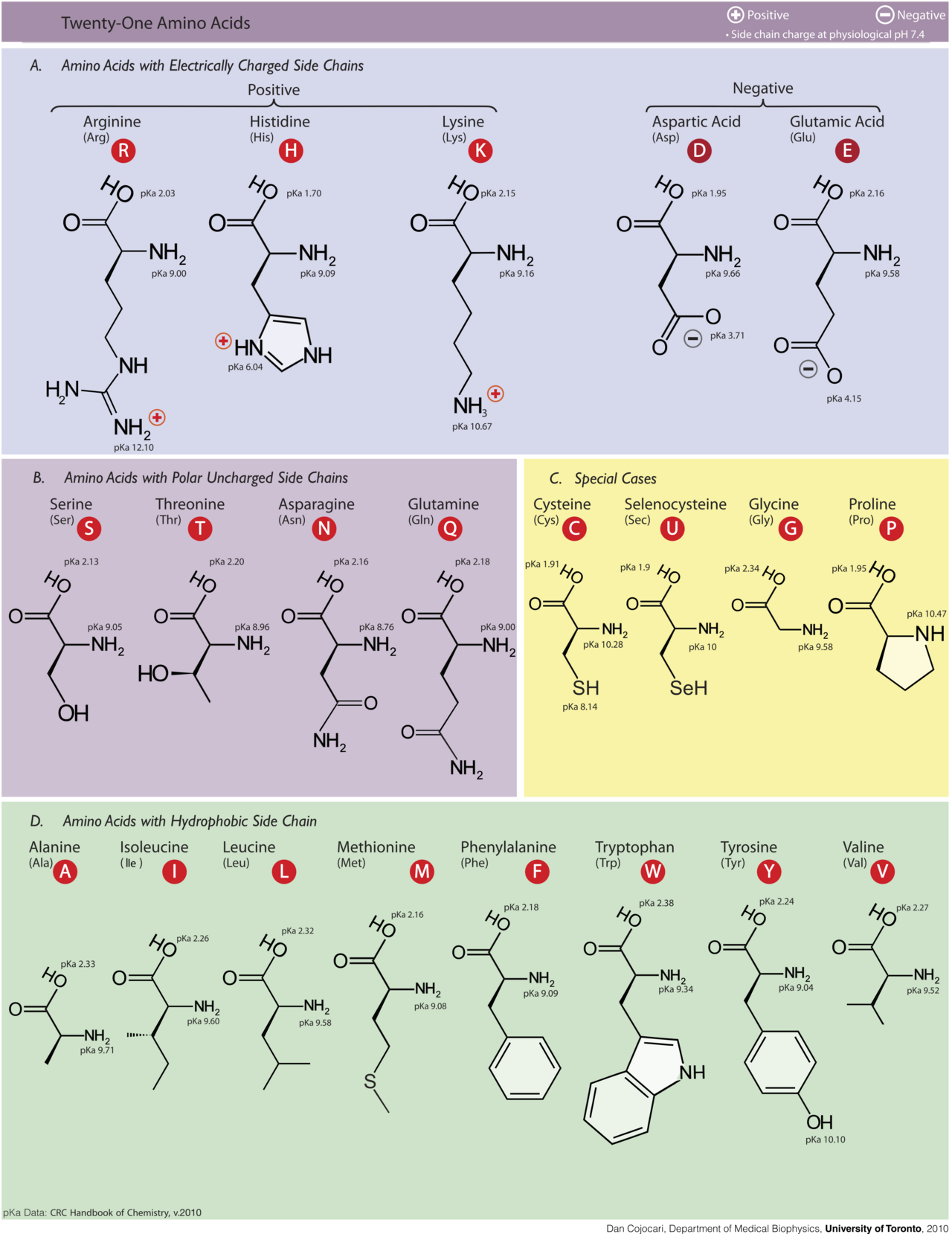
The 20 Amino Acids (Image: Dan Cojocari, CC BY-SA 3.0)
Proteins can be made from a lots of different combinations and number of amino acids. This creates an almost infinite amount of different proteins. Although the sequence of amino acids is a chain, the structure of proteins is far from similar. These amino acids interact with each other to form #D structures. Most common are the alpha helix and the beta strand.
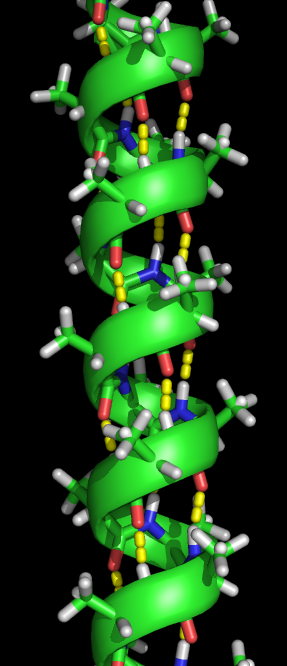
A picture of an alpha helix (Image: Zsolt Bikadi / en:User:Bikadi, CC BY-SA 3.0)
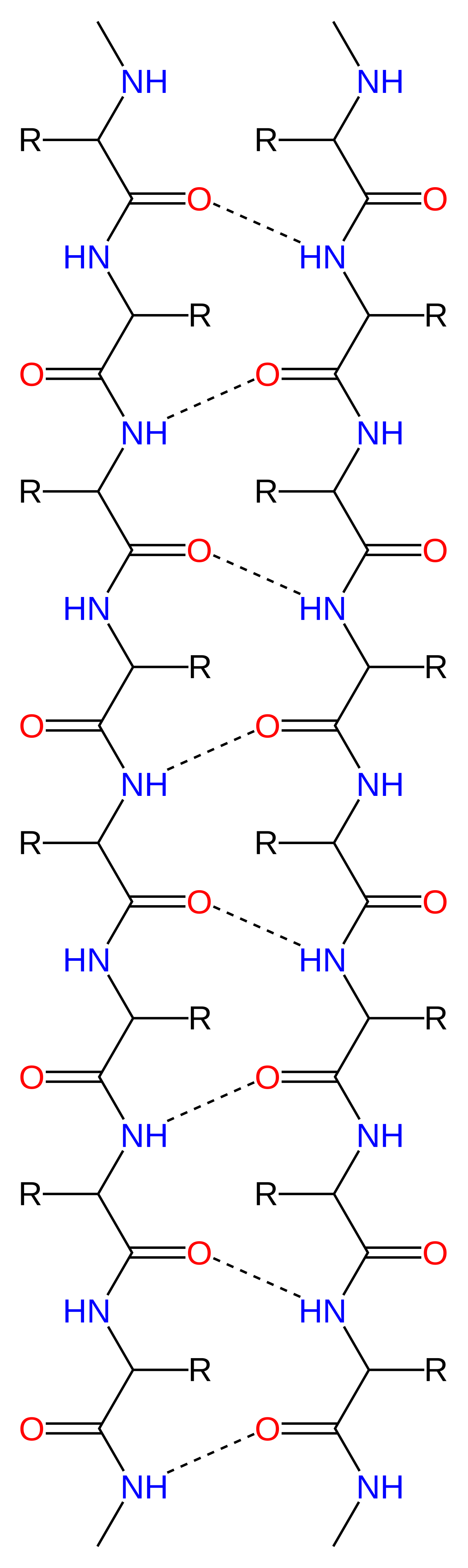
Amino acids interacting to make a beta strand (Image: Fvasconcellos, Public domain)
Although it is possible to determine the 3D structure of a protein, it is not quite possible to predict protein structure from the amino acid chain. This is quite important because diseases such as Alzheimer's and Mad Cow Disease are thought to come from a misfolding of proteins. [1]
References
- ↑ The Structures of Life, NIH Publication No. 07-2778
Where this page came from
This page was imported from Wikibooks. From “Structural Biochemistry” on Wikibooks, by its contributors, under CC BY-SA 4.0. Changed here: set as a page; navigation and edit links left out; each image under its own licence, credited in its caption.
Nobody has written it yet — it is the source material at a new address, which is why search engines are asked to skip it and why no one earns from it. It is up for grabs: take it on, and it is yours to rewrite and to earn from.
In queste pubblicazioniStructural Biochemistry
Licenza: CC BY-SA 4.0 · Tratto da en.wikibooks.org
Commenti