
매거진 Help Me Understand Genetics · 95개 중 5번째 페이지
In humans, each cell normally contains 23 pairs of chromosomes, for a total of 46. Twenty-two of these pairs, called autosomes, look the same in both males and females. The 23rd pair, the sex chromosomes, differ between males and females. Females have two copies of the X chromosome, while males have one X and one Y chromosome.
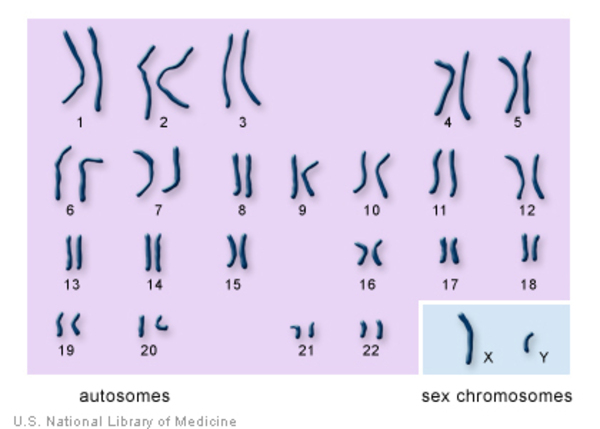
The 22 autosomes are numbered by size. The other two chromosomes, X and Y, are the sex chromosomes. This picture of the human chromosomes lined up in pairs is called a karyotype. Credit: U.S. National Library of Medicine.
Where this page came from
This page was imported from MedlinePlus Genetics, National Library of Medicine. Courtesy of MedlinePlus from the National Library of Medicine; its genetics summaries and the illustrations credited to the library are in the public domain. Pictures credited to others are not copied.
Nobody has written it yet — it is the source material at a new address, which is why search engines are asked to skip it and why no one earns from it. It is up for grabs: take it on, and it is yours to rewrite and to earn from.
이 페이지가 속한 매거진Help Me Understand Genetics
이용 허락: CC0 1.0 (퍼블릭 도메인) · 출처 medlineplus.gov
1
0
0
0

코멘트


