이 페이지는 공개 상태입니다.
매거진 Professionalism · 344개 중 83번째 페이지
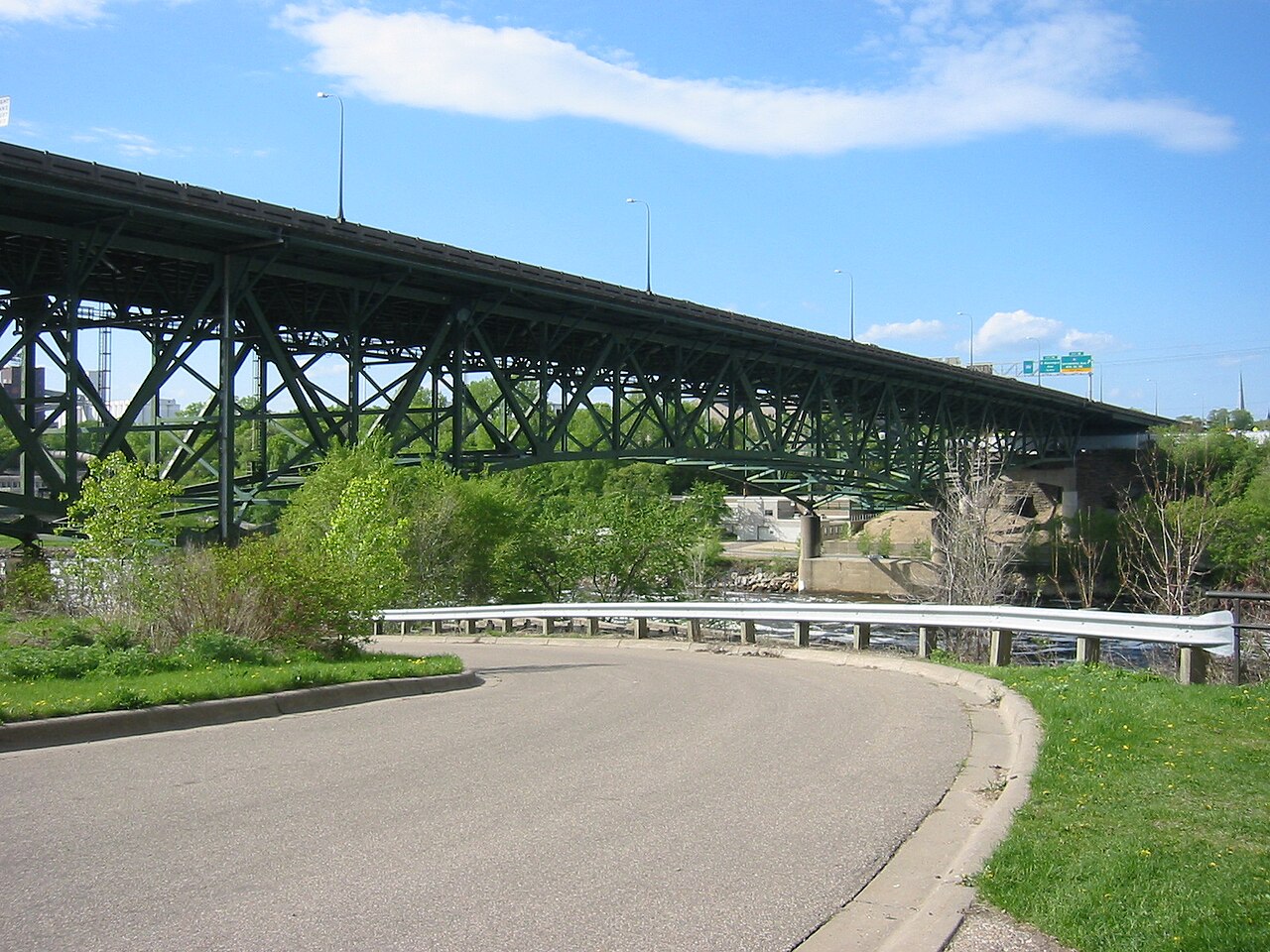
South end of the I-35W bridge (seen from West River Parkway). (Image: Elkman, CC BY-SA 3.0)
The I-35W Mississippi River bridge was designed by Sverdrup & Parcel in 1961 [1]. Construction of the bridge began in 1964 by Hurcon Inc. and Industrial Construction Company for approximately $5.3 million [1]. In November 1967, the bridge opened to traffic. It was an eight-lane, steel truss arch bridge that crossed the Mississippi River into Minneapolis, Minnesota. The bridge itself was 1,907 feet long consisting of 14 spans. The deck steel truss was made up of three parts: the deck, the superstructure, and the substructure. By 2007, the bridge carried a daily average of 140,000 vehicles including 5,700 commercial vehicles [2]. The bridge was Minnesota's third busiest bridge [3] and it was one of the busiest bridges in the country over the Mississippi River.
Just after 6 p.m. CDT on August 1, 2007, during evening rush hour, the central span of I-35W Bridge collapsed, injuring 145 and killing 13 people. At the time of the collapse, there were approximately 120 vehicles, carrying 160 people on the bridge. The impact of the fall broke the span of the bridge into multiple planes. Minor construction on the bridge had began a few weeks prior to its collapse. The bridge was under construction for resurfacing and joint work along with the replacement of lights, concrete, and guard rails. With four of the eight lanes closed for resurfacing, there was approximately 575,000 lbs. of construction supplies and equipment on the bridge 4]. [The National Transportation Safety Board (NTSB) asserted that the weight on the bridge contributed to its failure 5]. The day after the collapse, Governor [Tim Pawlenty stated that the bridge had been scheduled to be replaced 13 years later in 2020 [6].
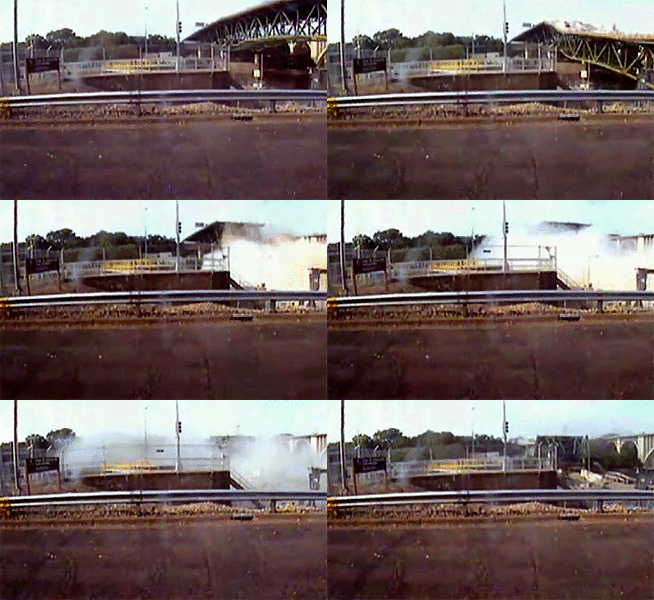
Security camera images showing the collapse from the south end. (Image: U.S. Army Corps of Enginners. Gif animation by The lorax at en.wikipedia
Late, Public domain)
Public Reaction
Unlike other past disasters, the I-35 bridge collapse spread awareness rapidly and informatively. The news of the collapse was not only spread through news reports, but through the World Wide Web. People across the United States were quickly informed through websites such as Facebook, Myspace, Youtube, and Flickr [7]. Through these sites interviews, pictures, eyewitness accounts, and public opinions about the incident were spread quickly. Forums and blogs were widely used as well. Many blogs portrayed emotional and descriptive accounts of the collapse. The public outcry was almost immediate, and citizens were quick to demand justice. This helped pressure the government and organizations involved to compensate the victims and quickly plan a new bridge for the site.
What Parties are Responsible?

MnDOT logo (Image: Government of Minnesota, Public domain)
Owner, Minnesota Department of Transportation
The Minnesota Department of Transportation (MnDOT) had owned the bridge since its initial completion in 1967, and had been responsible for its maintenance and repairs.
Designer, Jacobs Engineering
In 1999, the bridge's original designer, Sverdrup & Parcel, was absorbed by Jacobs Engineering Group. In doing so, Jacobs assumed liability for all of Sverdrup and Parcel's work to date. This included the initial design for the I-35W bridge that Sverdrup and Parcel delivered in the early 1960s. It is important to note that Jacobs Engineering had not been involved in the bridge's maintenance in the years leading up to the collapse. Instead, it was an engineering consulting firm based in San Francisco who had been consulting with MnDOT on the bridge's health.

URS logo (Image: URS Corporation, Public domain)
Consultant, URS Corp.
URS Corporation had been a consultant on the I-35W bridge with the MnDOT since 2004. Since that time, URS had found no issues with the bridge that led them to believe a structural failure was likely. To further complicate matters, construction and maintenance was being performed on the bridge's deck at the time of its collapse by a contractor based in the Minneapolis area.
Contractor, Progressive Contracting Company, Inc.
Progressive Contracting Company had been hired by MnDOT to perform joint work and replace lighting, concrete, and guard rails on the bridge's deck. At the time of the collapse, Progressive Contracting had approximately 575,000 pounds of construction load situated on the bridge.
Recap
As illustrated above, we have four principle parties at play here: owner, designer, consultant, and contractor. With four organizations involved in the catastrophe, it was difficult to determine who would be held accountable for the bridge's collapse and compensating victims of the tragedy. The NTSB's findings, published 16 months after the collapse, would play a key role in shaping the ensuing legal battles.
Cause of the Collapse
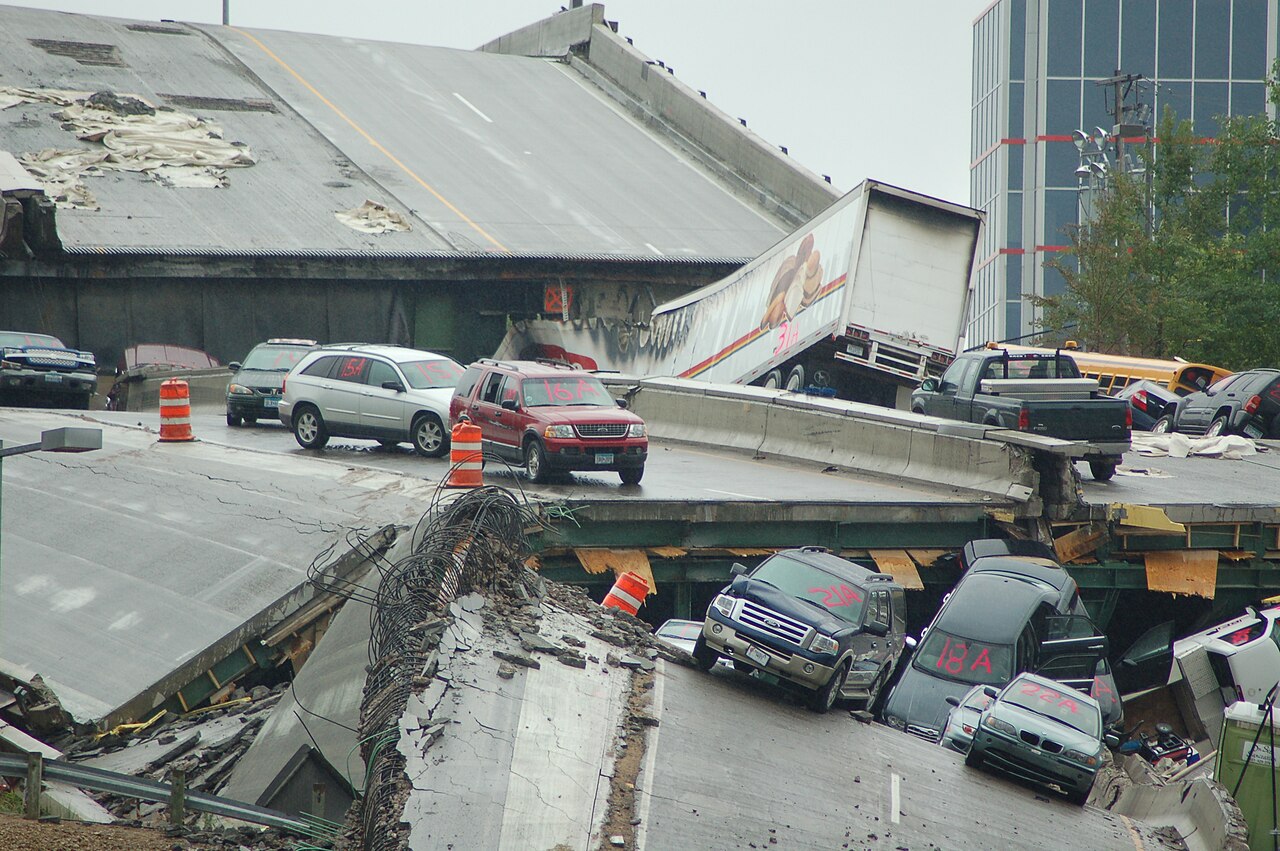
Cars remained on the bridge after the collapse. (Image: Kevin Rofidal, United States Coast Guard, Public domain)
The Federal Highway Administration had assessed the bridge’s health every year since 1983. Starting in 1991, the bridge had received a yearly score of less than 50 on a scale of 1-100. That score was enough to earn the bridge “structurally deficient” status. While the "structurally deficient" label did not mandate replacement of the bridge, it was enough to raise major concerns in the public regarding the widespread health of their infrastructure. The NTSB confirmed that the incident was an isolated one, releasing their findings of the cause of the bridge's collapse in a 162-page document in November of 2008. The NTSB concluded that the "probable cause of the collapse of the I-35W bridge in Minneapolis, Minnesota, was the inadequate load capacity, due to a design error by Sverdrup & Parcel and Associates, Inc., of the gusset plates...which failed under a combination of (1) substantial increases in the weight of the bridge..., and (2) the traffic and concentrated construction loads on the bridge on the day of the collapse" [8].
The NTSB pointed the finger directly at the original designer, Sverdrup & Parcel. This explanation was not well received by those who believed that MnDOT should have been responsible for repairing or replacing the bridge sooner. James Schwebel, a writer for the Minneapolis Star Tribune, wrote in 2008 that "the federal investigation [into the I-35W bridge collapse] is nothing more than a political smokescreen for politicians to dodge and deny the issue of crumbling infrastructure in America." [9]. Schwebel's position was echoed by many in the Minneapolis community who felt that MnDOT was responsible for the collapse because of their 'reactive' instead of 'proactive' approach to the bridge's maintenance.
MnDOT was also criticized for the nature of their relationship with URS Corporation. Kyle Hart, an attorney for Progressive Contracting Company, had this to say, "There's a close relationship between the state [MnDOT] and URS, and [the state] didn't want to sue them to start with. ... They still do business. ... People have moved back and forth between those two entities. They are very close" [10]. Furthermore, URS had recommended a deck re-plating project in June of 2006 that would have significantly reduced the bridge's susceptibility to a truss failure. MnDOT was prepared to move forward with the project but at the last second opted for a cheaper, less-intensive inspection agenda. URS was surprised at the decision, but did not push MnDOT to perform the re-plating. Moreover, URS allowed MnDOT to perform the inspection themselves, rather than allowing URS to do it [10]. In essence, the professional relationship between consultant and client had been blurred, resulting in the prolonged inactivity that led to the bridge's failure.
Blame Game
Outcome chart (Image: Hylton, CC BY-SA 3.0)
Minnesota Department of Transportation
It was nearly two years until MnDOT brought suit against URS. MnDOT blamed URS for negligence in analysis and evaluation of the bridge's condition. MnDOT blamed Jacobs Engineering for the inadequate gusset plate design. MnDOT stated that the combination of the two problems caused the collapse of the bridge. MnDOT never directly admitted any fault in the matter.
URS
In August 2010, URS Corporation paid the victims $52.4 million to avoid any prolonged litigation. URS corporation has not admitted any fault in its settlements. They did, however, attempt to bring a lawsuit against Jacobs Engineering, the sucessor of Sverdrup & Parcel. URS Corporation's lawsuit entailed financial compensation from Jacobs despite their 10-year liability having expired. In August 2010, the Minnesota Court of Appeal ruled that public policy freed Jacobs Engineering in 1977, 10 years after the bridge was completed. Jacobs Engineering, therefore, did not share in any of URS Corporation's liability.
Jacobs Engineering
Jacobs Engineering feels no obligation to pay the URS and MnDOT due to the 1965 Statute of repose. The statute states that a company was only liable for any defects during the ten years after completion of the project [11]. However, the URS and state argued back that there was a 2007 Amendment, three months before the incident, that repealed the statute. Jacobs Engineering still believes that this cannot apply to them because the Amendment should not be able to retroactively revive claims that, under the 1965 Statute, died in 1977 [12]. Also, they believed it was unconstitutional.
Outcome
Jacobs Engineering was not liable to pay URS, however they lost the lawsuit to MnDOT. The amount they owe has yet to be decided as it is still under debate. All companies except for Jacobs Engineering paid the victims of the incident. To this day, no party involved has taken responsibility of the collapse.
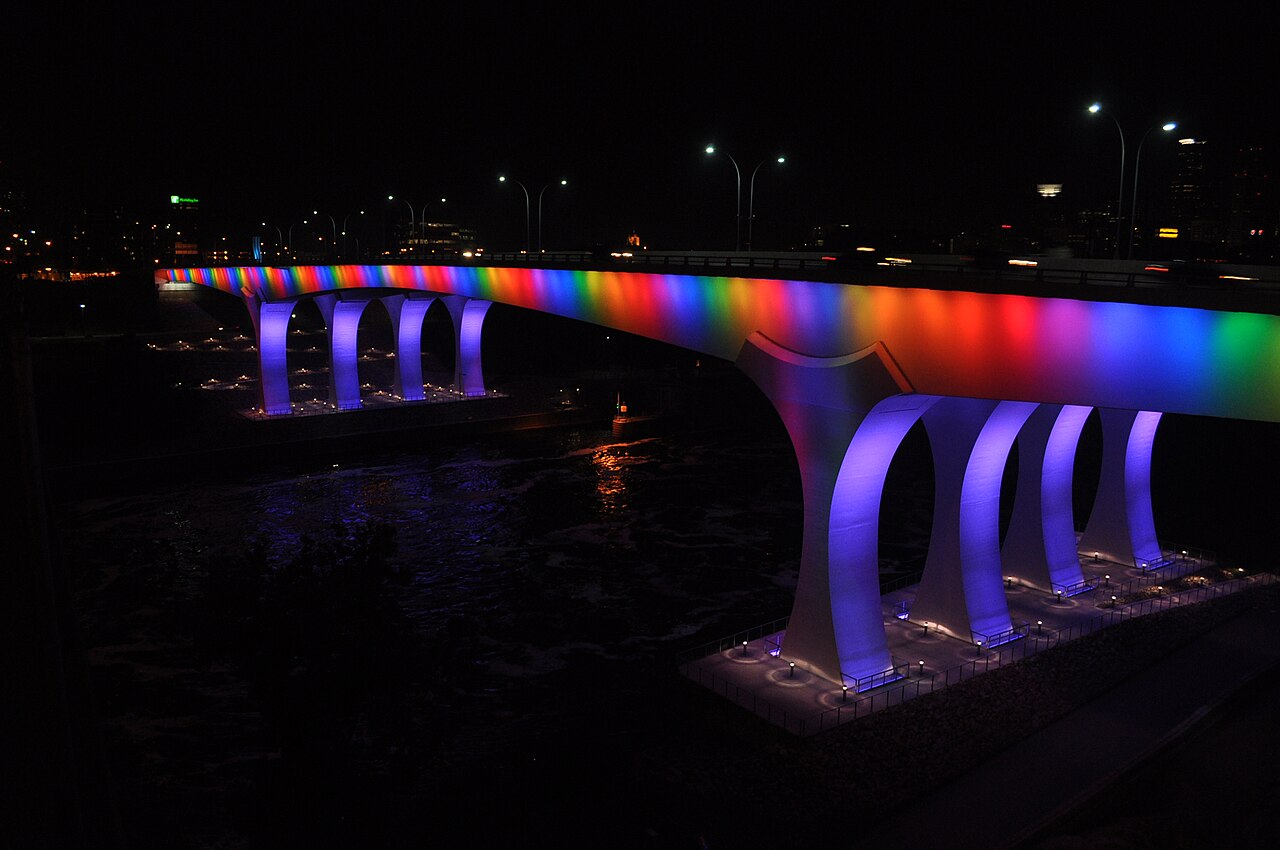
The Saint Anthony Falls Bridge (Image: Joe Bielawa from MInneapolis, USA, CC BY 2.0)
One month after the collapse, the Minnesota Department of Transportation announced on September 19, 2007, that Manson Construction Company and Flatiron Constructors would build the replacment bridge for approximately $234 million. Three months ahead of schedule, the I-35W Saint Anthony Falls Bridge opened to the public on September 18, 2008.
In 2009, the bridge was named the project of the year by the American Works Association.
The American Association of State Highway and Transportation Officials, AAA, and the U.S. Chamber of Commerce selected the bridge as the 2009 America's Transporation Awards Grand Prize winner [13]. It was selected for "representing the best in innovative management, accountability and timeliness."
References
- ↑ a b Minnesota Department of Transportation Fact Sheet Retrieved from http://www.dot.state.mn.us/i35wbridge/pdfs/factsheet.pdf
- ↑ "2006 Downtown Minneapolis Traffic Volumes" (PDF). MnDOT. 2006. Retrieved May 10, 2012.
- ↑ Weeks, John A. III (2007). "I-35W Bridge Collapse Myths And Conspiracies". John A. Weeks III. Retrieved May 10, 2012.
- ↑ "National Transportation Safety Board Investigation Collapse". ASCE. 2007. Retrieved May 10, 2012. {{cite web}}: |first= missing |last= (help)
- ↑ Frommer, Frederic J. (2008). "NTSB: Design Errors Factor in 2007 Bridge Collapse". USA Today. Retrieved May 10, 2012.
- ↑ Michels, Scott (2007). "Bridge Collapse: Who's at Fault?". ABC News. Retrieved May 10, 2012.
- ↑ Retrieved from http://35wbridge.pbworks.com/w/page/900682/Citizen%20Journalism%20Response
- ↑ [1], Collapse of I-35W Highway Bridge Minneapolis, Minnesota. (2008). Accident Report. National Transportation Safety Board.
- ↑ [2], Eckland, Jeff H., Laidig, Dave S. (2008-2009). Lessons Learned from the Collapse and Rebuilding of the I-35W Bridge. "Procurement Law". 44(6).
- ↑ a b [3], I-35 Bridge: The URS/MnDOT Connection. "Minnesota Network for Progressive Action."
- ↑ Retrieved from http://www.constructionlawtoday.com/2009/08/minnesoata-i35-bridge-collapse-engineers-request-to-get-out-of-lawsuit-denied/
- ↑ Retrieved from http://www.faegrebd.com/11971
- ↑ Retrieved from http://www.americastransportationaward.org/default.aspx?ContentID=160
Where this page came from
This page was imported from Wikibooks. From “Professionalism” on Wikibooks, by its contributors, under CC BY-SA 4.0. Changed here: set as a page; navigation and edit links left out; each image under its own licence, credited in its caption.
Nobody has written it yet — it is the source material at a new address, which is why search engines are asked to skip it and why no one earns from it. It is up for grabs: take it on, and it is yours to rewrite and to earn from.
이 페이지가 속한 매거진Professionalism
이용 허락: CC BY-SA 4.0 · 출처 en.wikibooks.org
코멘트