
উন্নত করার কিছু দেখছেন? একটি পরিবর্তন প্রস্তাব করুন।
This article describes the project as of September 2024.
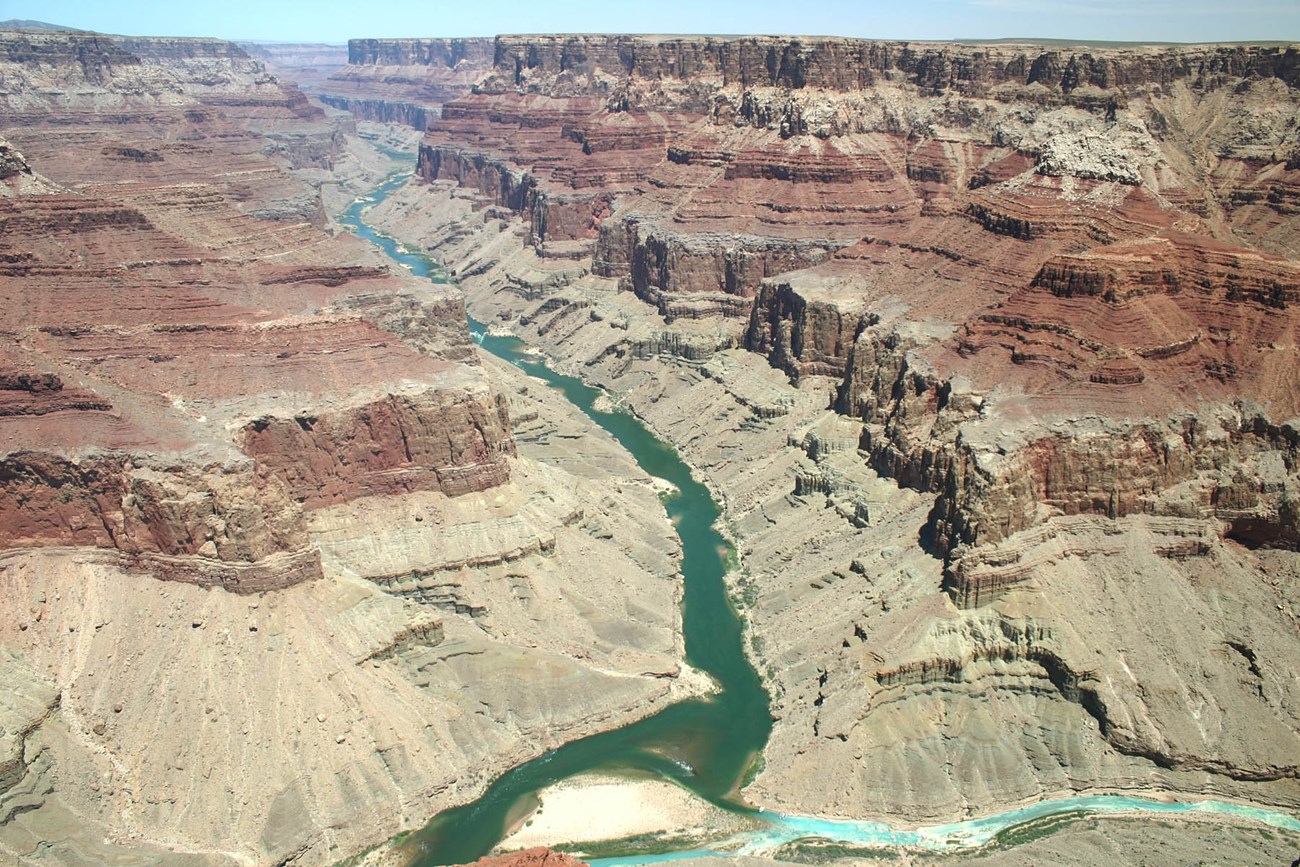
Marble Canyon at the confluence of the Colorado and Little Colorado rivers, Grand Canyon National Park. National Park Service.
Glen Canyon National Recreation Area, Grand Canyon National Park and Dinosaur National Monument draw millions of visitors a year to the American Southwest. All three lie in the watershed of the Colorado River, which runs about 1,450 miles from the Rocky Mountains to the Gulf of California in northwestern Mexico, and all three face invasive species: fish that upset the balance of the river and plants that have taken hold on its banks. With money from the Bipartisan Infrastructure Law and the Inflation Reduction Act, the National Park Service is tackling them together, combining established science with citizen science and new biological tools.
Glen Canyon: paying anglers to catch brown trout
Glen Canyon National Recreation Area covers 1.25 million acres of northern Arizona and southern Utah, with red rock canyons, sandstone cliffs and Lake Powell, the reservoir behind Glen Canyon Dam. The 15 miles of river just below the dam have long been managed as a rainbow trout fishery, important for recreation and the local ecosystem. Since 2015, brown trout, voracious predators, have threatened the rainbow trout and native fish.
The parks' answer is an incentivized harvest: anglers are paid for the brown trout they catch and keep. They fill out a data card and leave it, with the fish's head, in a freezer at the Navajo Bridge Visitor Center at Lees Ferry. Jeff Arnold, a Park Service fish biologist on the project, said the harvest tracks the size of the reward: when rewards went up in 2022–2023, the adult brown trout population fell from about 10,500 in 2022 to about 6,400 in 2023. "We've seen population level impacts from this incentivized harvest, especially as the payments have gotten larger," said Emily Omana, fisheries program manager at Grand Canyon National Park.
Funding for 2025 and 2026 is meant to keep the harvest going and to sponsor fishing trips in Glen Canyon for tribal elders and youth, an idea the pandemic had stalled. The trips would help remove brown trout and give young people a rare chance to experience the canyon.
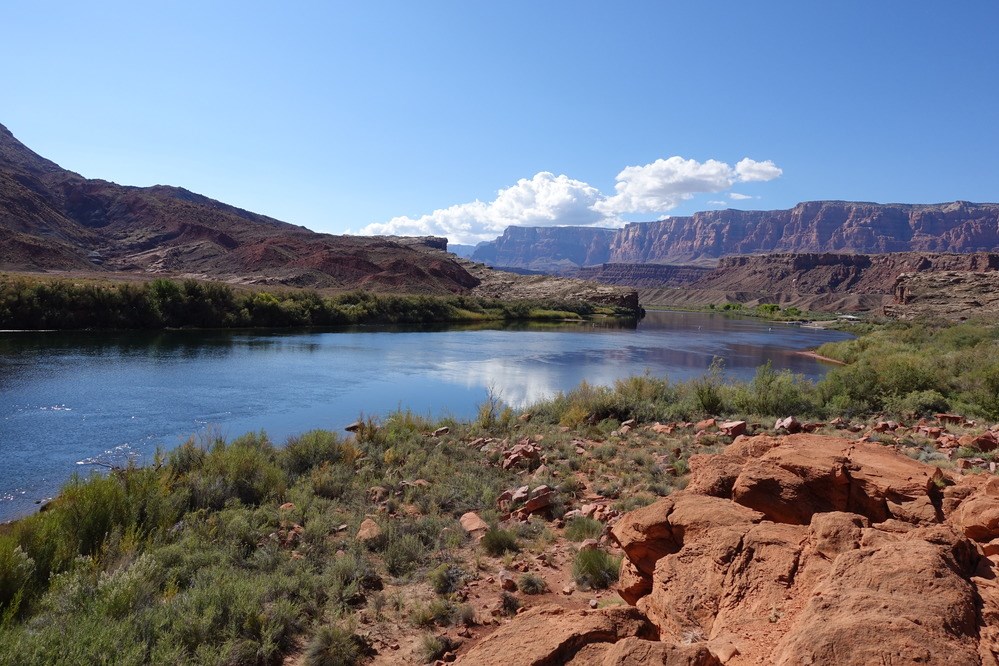
Colorado River near Lees Ferry Site Numerous ferry accidents in the early 20th century drew attention to safety issues of the operation. This eventually led to the construction of the Navajo Bridge across Marble Canyon, completed in 1929. NPS Photo.
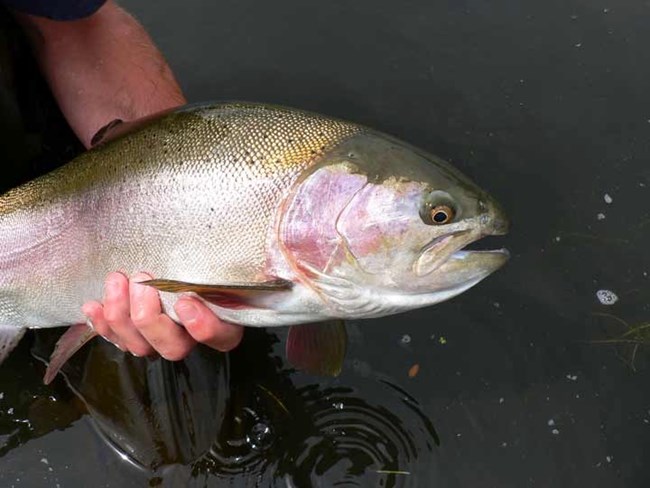
Rainbow trout, threatened by brown trout at Glen Canyon and across the Colorado River system. National Park Service.
Grand Canyon: holding back smallmouth bass
Downriver, in the 277-mile Grand Canyon, invasive smallmouth bass threaten the park's fragile aquatic ecosystem. Crews use electrofishing and other methods to reduce their numbers, but Omana said the bass entered Glen and Grand canyons after water management in the watershed changed because of drought, climate change and overallocation, and that more is needed to prevent new invasions and control the fish already there.
The long-term answer lies upstream. The Bureau of Reclamation recently completed a supplemental environmental impact statement and record of decision to release cold water that lowers river temperatures where the threatened humpback chub lives, preventing smallmouth bass from spawning. A longer-term strategy involves managing how much water is released each year between Lake Powell and Lake Mead. Both matter for water delivery, agriculture and the canyon's ecosystem. Rebecca Koller, a Park Service natural resource specialist, said removal alone is not enough: public awareness and help are needed to stop invasive fish from being spread, on purpose or by accident, along the Colorado and other waterways.
Controlling the bass is part of a wider effort to protect the park's native fish, including the humpback chub, whose numbers have risen significantly thanks to conservation and changing conditions.
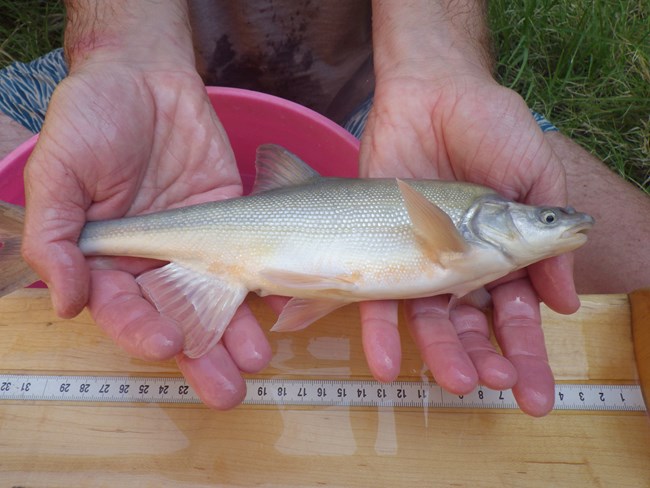
A threatened humpback chub being measured. National Park Service.
Dinosaur: turning nature against invasive weeds
Dinosaur National Monument, on the Colorado–Utah line, is known for its dinosaur fossil beds and the Green and Yampa rivers, tributaries of the Colorado. There, invasive plants such as leafy spurge and Russian knapweed cause widespread economic, agricultural and ecological harm, and pulling them by hand is not always practical or effective. Robert Schelly, the monument's resource stewardship and science program leader, and Emily Spencer, a natural resource specialist, are turning to biocontrol.
Biocontrol reunites an invasive plant with natural predators or pathogens from its home range. Spencer explained that the aim is no longer eradication but suppression: the weeds are too widespread to be put back in "Pandora's Box," so biocontrol buys time for the ecosystem to reach a better balance. The key is making sure the introduced organisms attack only the target plant and not native or endangered species. Federal agencies, including the U.S. Department of Agriculture and the Environmental Protection Agency, test and approve such agents, a process that often takes decades.
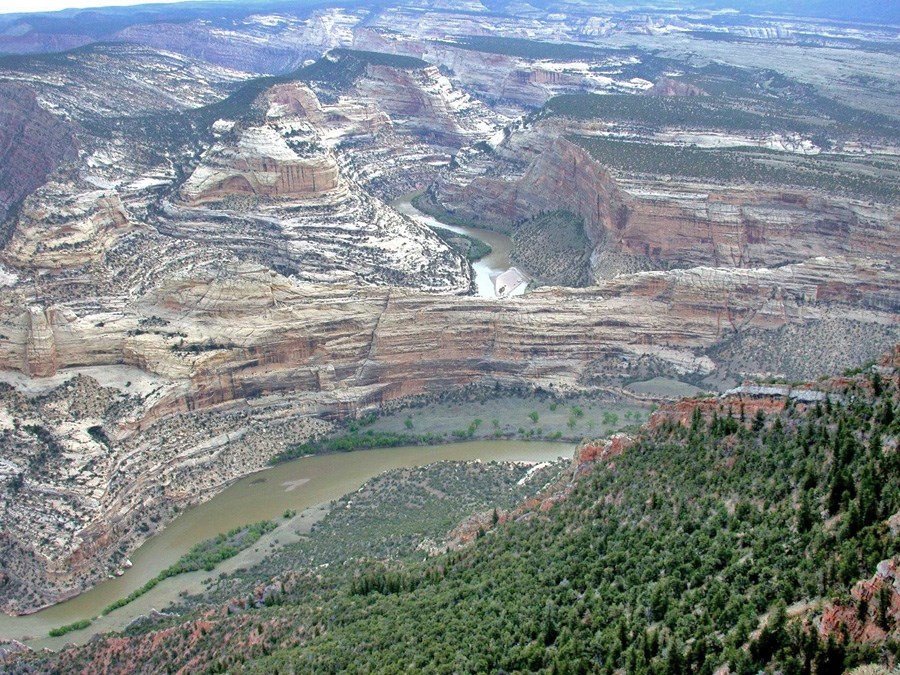
The Yampa River from Harpers Corner Trail. National Park Service.
Working together
The funding pays for scientific and technical staff, surveys and on-the-ground work. Partners include federal and state agencies, Friends of the Yampa in Steamboat, Colorado, the Yampa River Leafy Spurge project, Grand Canyon Conservancy, American Conservation Experience and Glen Canyon Conservancy, with tribal elders and youth soon to join the biocontrol and harvest work. Koller and Spencer stressed that lasting success depends on continued collaboration, adaptive management and public involvement across the region.
Sources
- Benjamin Randall, "Three Parks, One Vital Ecosystem," National Park Service, September 2024. https://www.nps.gov/articles/ira-coloradoriver-article.htm
- Bureau of Reclamation news release on the Glen Canyon Dam decision: https://www.usbr.gov/newsroom/news-release/4901
- National Park Service, Inflation Reduction Act: https://www.nps.gov/subjects/infrastructure/inflation-reduction-act-rr.htm
- Photographs credited to Freshwaters Illustrated appear on the Park Service's page and are not reproduced here. Pictures an earlier version of this page left out were restored on 2026-09-26.
যে প্রকাশনাগুলোতে আছেGrand Canyon National ParkGlen Canyon National Recreation AreaDinosaur National Monument
লাইসেন্স: CC0 1.0 (পাবলিক ডোমেইন) · গৃহীত হয়েছে www.nps.gov
1
0
0
0

মন্তব্য


