
পাতার বিষয়বস্তু আরও ভালো করতে চান? একটি পরিবর্তনের প্রস্তাব দিন।
Along the Delaware River, where limestone juts from the shore and groundwater seeps over the rock, grow little prairies. These Calcareous Riverside Outcrops and Seeps hold the same tall grasses as the Midwest's prairies — big bluestem, Indian grass, switchgrass, little bluestem — in strips far too small for bison. They are globally rare plant communities, and in Delaware Water Gap National Recreation Area they support 26 plant species that are rare in the state. The longest is near the Dingmans Ferry bridge.
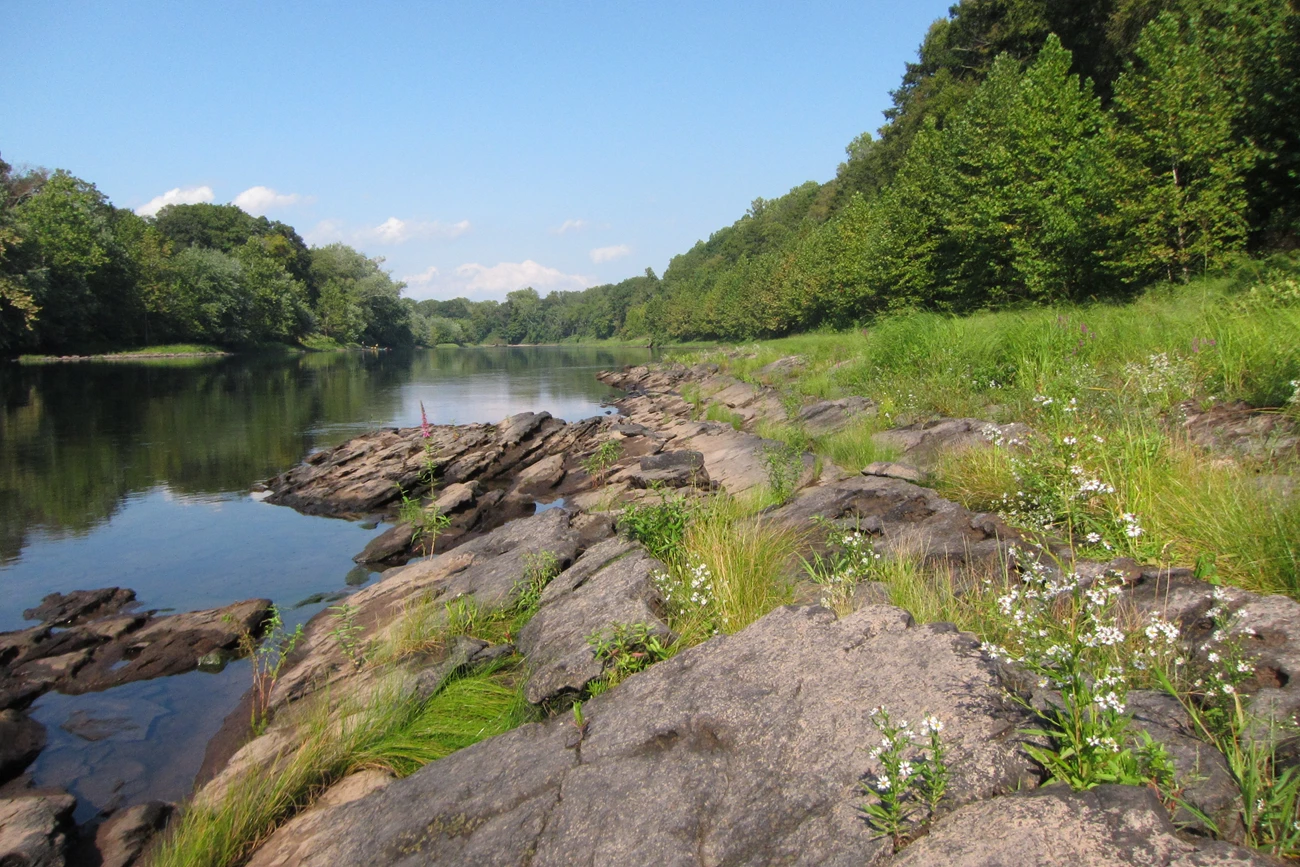
A calcareous riverside outcrop in Delaware Water Gap National Recreation Area. Credit: Perles, National Park Service.
What kept them open — and what's changing
For a long time, the river kept these prairies open itself. Every spring, huge blocks of ice riding floods swollen with snowmelt scraped off any trees and shrubs that sprouted in the rock crevices. As the climate warms, the Delaware will see shorter, milder winters with fewer freezing days — less river ice and less scouring. Without it, trees and shrubs, especially invasive ones, need to be removed every 5 to 10 years to keep the habitat open.
Invasive plants are among the biggest threats. The problem is not where they come from but how they behave: they spread fast and crowd out native plants, especially rare ones that need special habitat.
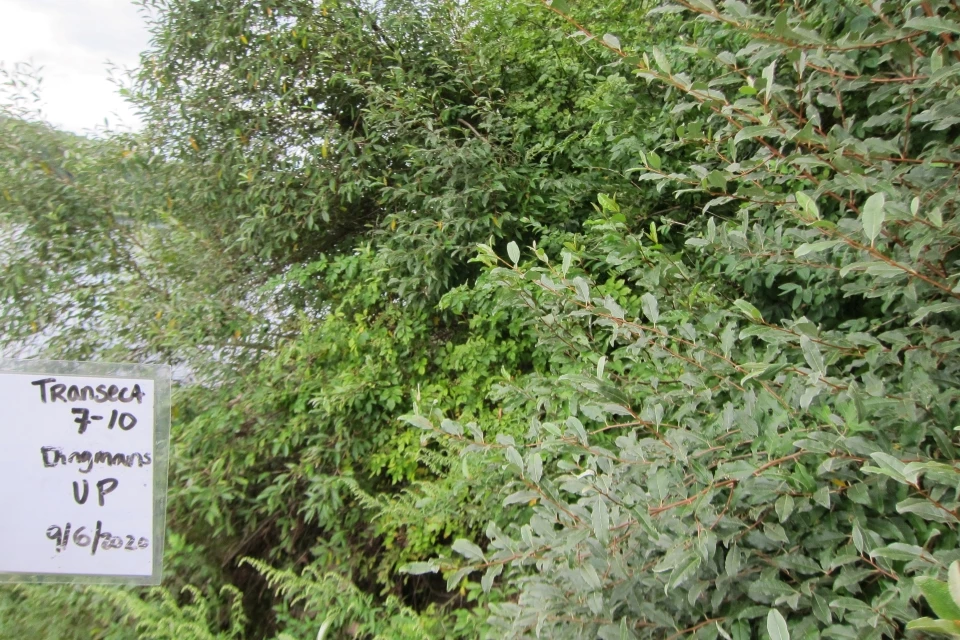
Invasive shrubs have turned parts of the outcrop into a dense, shady thicket. Credit: National Park Service.
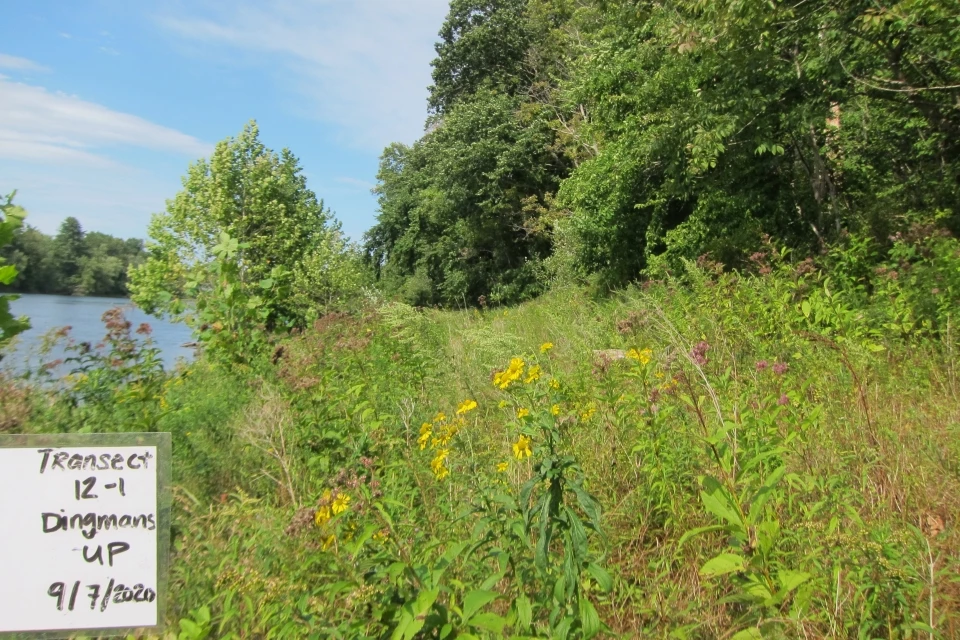
An open, sunny, prairie-like outcrop. Credit: National Park Service.
Two decades of monitoring
In 1998, park staff and biologists from the New Jersey Department of Environmental Protection's Office of Natural Lands Management set up 150 plots at the Dingmans Ferry outcrop. Scientists from the Park Service's Eastern Rivers and Mountains Network revisited them in 2010 and 2020.
| Change, 1998–2020 | |
|---|---|
| New invasive species | 15, including aggressive shrubs such as autumn olive, bush honeysuckles and multiflora rose, which turned open outcrop into shady thicket |
| Biggest gainer | reed canarygrass, threatening to turn the rare community into a common, weedy Reed Canarygrass Floodplain Grassland spreading along mid-Atlantic rivers |
| Other newcomers | common wormwood and Japanese knotweed |
| Native grasses and sedges | big and little bluestem and sedges less common |
| Native wildflowers | more than 140 species seen, but over half, including many asters and goldenrods, declining |
| Native shrubs | ninebark, alders, dogwoods and viburnums declining |
Native plant cover held steady, but non-native and invasive plants now cover more ground than natives at Dingmans Ferry.
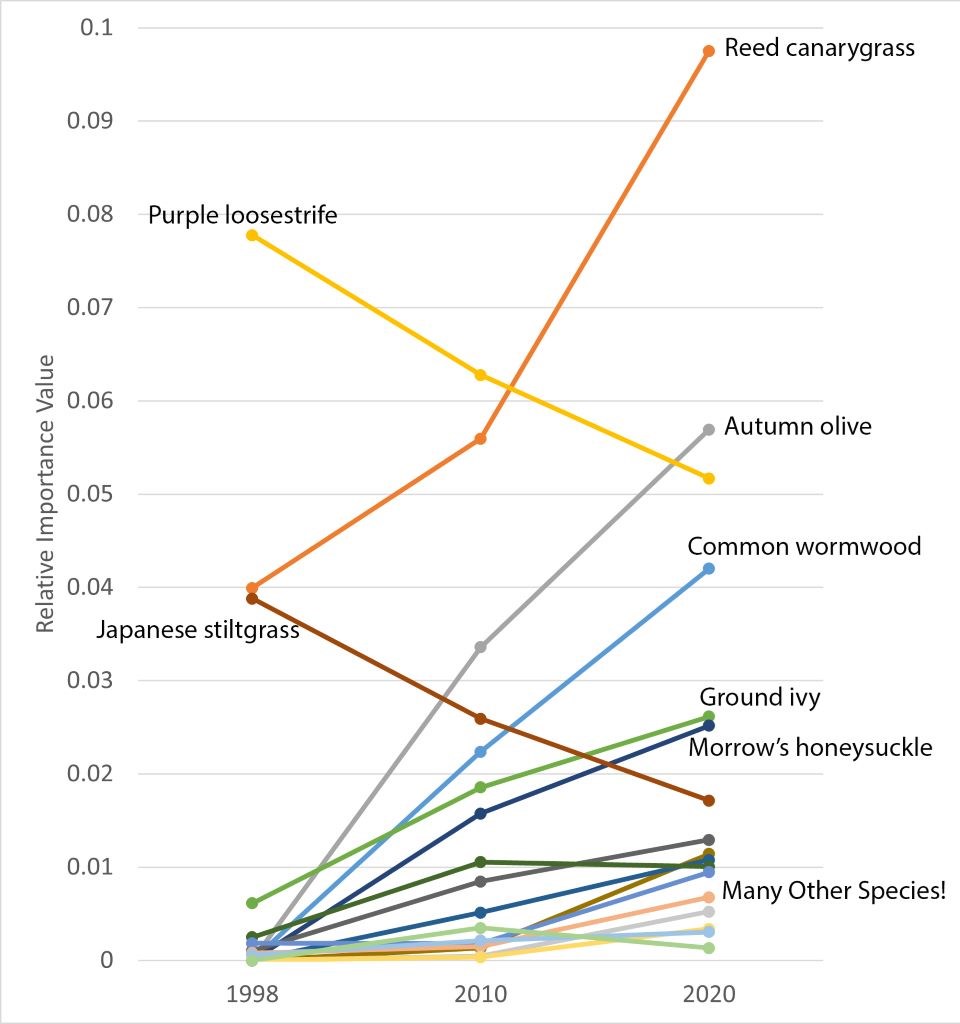
How dominant invasive plants became at Dingmans Ferry, 1998–2020. Credit: National Park Service.
Beetles and weevils
Some invaders have been pushed back by biological control:
- Purple loosestrife, brought to the United States from Europe in the nineteenth century, forms dense purple stands in wetlands that crowd out native plants and degrade habitat for birds, amphibians and rare plants. Between 1996 and 2007, the park released three species of loosestrife-eating beetles. Loosestrife showed the largest decline of any plant at Dingmans Ferry, and signs of Galerucella beetles feeding were everywhere — not eliminating it, but holding it back.
- Mile-a-minute weed, a fast, barbed vine that can smother plants, appeared in the park in the early 2000s. Staff released an approved weevil to control it, and it declined at Dingmans Ferry between 2010 and 2020.
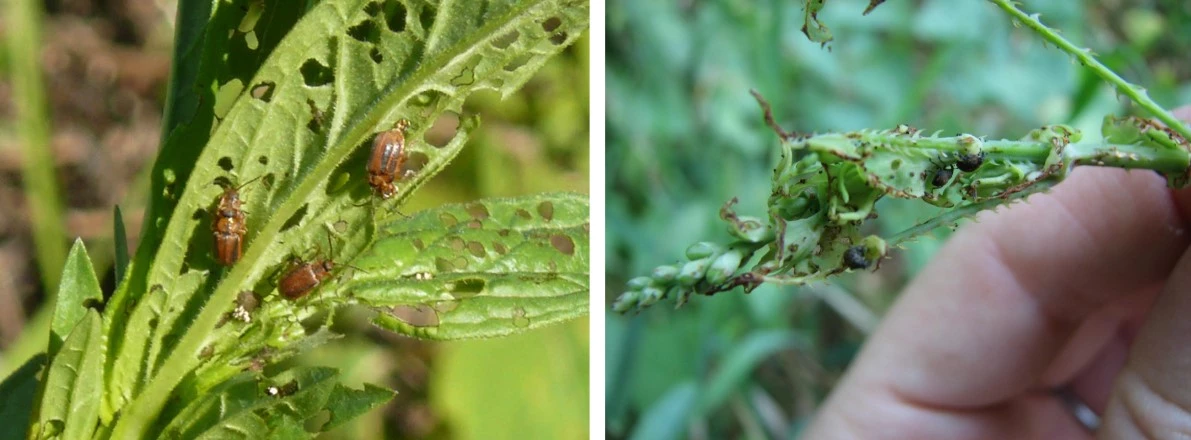
Galerucella beetles eating purple loosestrife (left) and a weevil feeding on mile-a-minute weed (right). Credit: Shreiner, National Park Service (left); National Park Service (right).
Clearing the shrubs
Without ice to do the job, park staff, the regional Invasive Plant Management Team and an invasive plant control company have been removing autumn olive, honeysuckles and multiflora rose. By 2024, nearly all invasive shrubs had been cleared from all three sites, restoring open prairie where unique native plants can thrive.
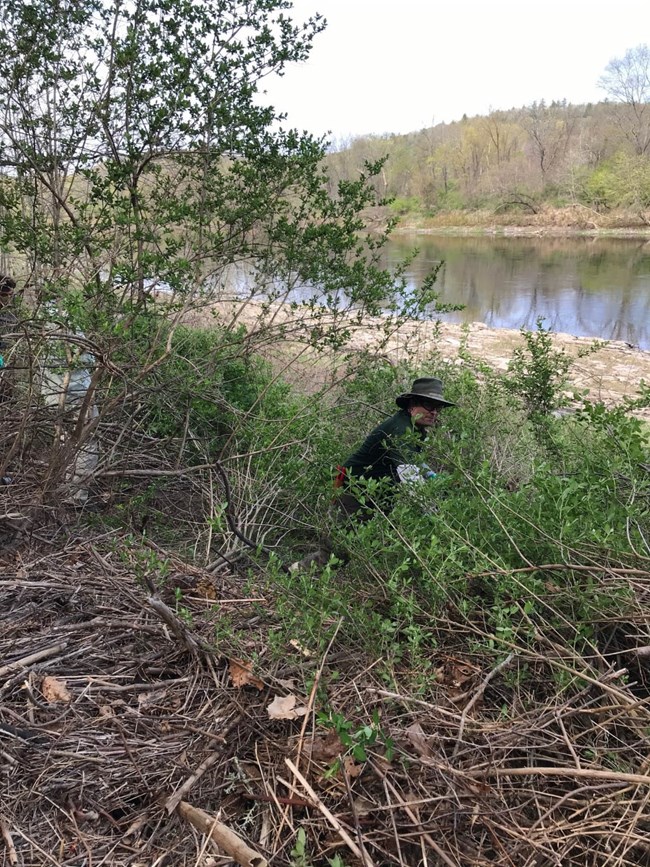
Park staff remove invasive shrubs at Smith's Ferry. Credit: National Park Service.
Sources
Based on "Park Restores Unique Riverside Habitat by Managing Invasive Plants," National Park Service Eastern Rivers and Mountains Network (Delaware Water Gap National Recreation Area), a work of the United States government in the public domain.
যে সংগ্রহগুলোতে আছেDelaware Water Gap National Recreation Area
লাইসেন্স: CC0 1.0 (পাবলিক ডোমেইন) · গৃহীত হয়েছে www.nps.gov
1
0
0
0

মন্তব্য


