
Vil du forbedre nodens indhold? Prøv at lave en redigeringsanmodning.
On May 13, 2026, the technology sector’s primary narrative shifted from software capabilities to the physical constraints of energy infrastructure. As "Big Tech" capital expenditure (capex) budgets for AI data centers surpass a projected $700 billion annually, Amazon and Microsoft have moved to unify their AI services with proprietary energy solutions to bypass grid-level bottlenecks. Amazon announced the integration of its Alexa+ and Rufus AI platforms into a unified ecosystem designed to streamline consumer data processing, but the underlying news is the massive redirection of AWS resources toward "behind-the-meter" power generation. Simultaneously, Microsoft has reportedly intensified its opposition to OpenAI board appointments that do not align with its energy-intensive roadmap. This trend highlights a "zero-sum" competition for wafer and packaging capacity, where the cost of AI is no longer measured solely in compute power but in the availability of megawatts. Market analysts have identified a new class of "Energy-AI" stocks—utilities and hardware firms specializing in large-scale battery energy storage systems (BESS)—as the critical winners of this $700 billion grab. This shift suggests that the primary obstacle to the current AI boom is not algorithmic efficiency, but a looming power deficit that could drive 50% price spikes in essential components by mid-year.
The trajectory of the artificial intelligence industry has reached a pivotal juncture where the digital and physical worlds collide. As of May 13, 2026, the era of unbridled software scaling is being superseded by a desperate race for energy security. The "Big Tech" cohort, led by Amazon, Microsoft, and Google, is currently managing a capital expenditure surge that is fundamentally restructuring the global semiconductor and energy markets.
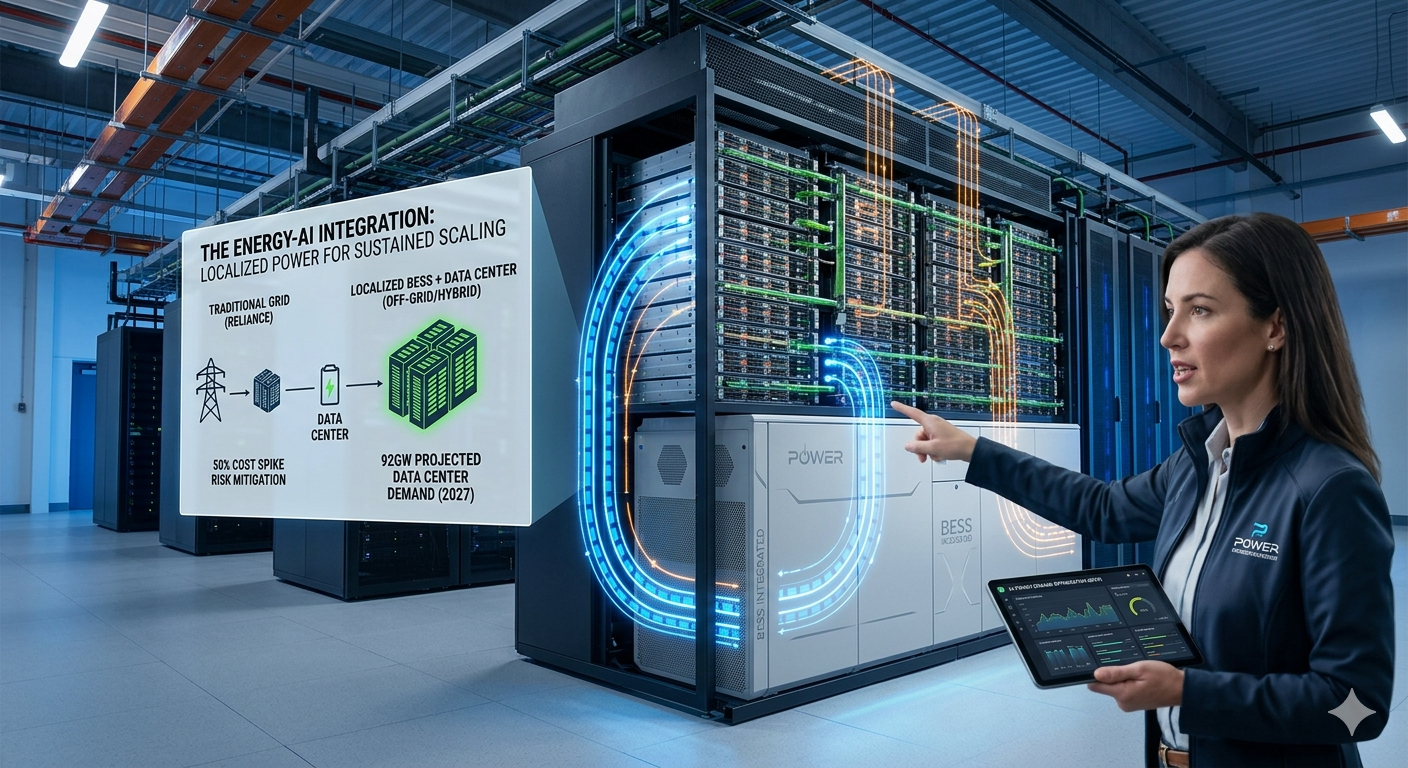
The Power Paradox and Infrastructure Integration
The most significant development today is the emergence of a "Power Paradox." While AI demand is driving semiconductor revenues toward a historic peak of $975 billion for 2026, the energy required to train and run these models is outstripping grid capacity. Amazon’s recent unification of its AI assets (Alexa+ and Rufus) represents more than just a consumer-facing rebranding; it is an effort to consolidate fragmented workloads into a more energy-efficient architecture. By centralizing these agents, AWS can better predict and manage the load on its growing fleet of localized, "behind-the-meter" power plants.
Semiconductor Supply Chain Volatility
The semiconductor industry is currently navigating a high-stakes transition from AI training to inference. This shift has created a "zero-sum" game for wafer capacity. As foundries prioritize the specialized hardware required for high-end AI servers, downstream sectors are beginning to feel the squeeze. Current projections indicate that severe shortages in HBM (High Bandwidth Memory) and advanced packaging could lead to a 50% increase in pricing by the end of Q3 2026. This is particularly critical for companies like TSMC, which has recently raised its 2030 semiconductor market estimate to $1.5 trillion, citing the indispensable nature of advanced packaging in the AI era.
The Rise of the Energy-AI Market
The financial markets are responding to this shift by re-evaluating what constitutes a "tech" stock. Today’s market reports identify five key utility and energy storage firms as the "Nvidias of power." These companies provide the Large-scale Battery Energy Storage Systems (BESS) required to stabilize data center operations. A notable partnership between Richardson Electronics and Gotion to manufacture 5 MWh utility-scale systems in the U.S. underscores the localization of the AI supply chain. Without these energy reservoirs, the $700 billion invested in data centers risks becoming a stranded asset if the aging electrical grid cannot meet the 92-gigawatt additional demand projected by 2027.
Governance and Geopolitical Friction
Strategic alignment at the board level has become a battleground for AI dominance. Internal filings recently revealed Microsoft’s active intervention in OpenAI’s board selection process. Microsoft is prioritizing directors who favor aggressive infrastructure expansion over those advocating for safety-led development pauses. This internal friction reflects a broader industry tension: the need for rapid scaling to ensure return on investment (ROI) versus the logistical and regulatory hurdles of energy consumption.
The 2026 Mandate
For technology leaders and investors, the 2026 mandate is no longer about identifying the next breakthrough chatbot. It is about managing the systemic risks of a high-margin, low-volume manufacturing paradigm. As AI models become more efficient, the hardware they run on becomes more specialized, and the power required to sustain them becomes the ultimate currency. The organizations that successfully integrate energy production with compute capacity will dictate the next decade of technological progress, while those reliant on traditional grid infrastructure face an increasingly precarious future.
1
0
0
0

Kommentarer