
Vil du gøre sidens indhold bedre? Foreslå en ændring.
Life of all types abounds in the Big Thicket. This national preserve protects the incredible diversity of life found where multiple habitats meet in southeast Texas. Hiking trails and waterways meander through nine different ecosystems, from longleaf pine forests to cypress-lined bayous. It is a place of discovery, a place to wander and explore, a place to marvel at the richness of nature.
Where it is
National Preserve, TX.
What people do there
- Biking
- Boating
- Camping
- Backcountry Camping
- Canoe or Kayak Camping
- Fishing
- Food
- Picnicking
- Hands-On
- Citizen Science
- Hiking
- Hunting and Gathering
Getting there
The main corridor through the Big Thicket is US Hwy 69/287 between Beaumont and Woodville. Many smaller roads and highways branch off of the main corridor to reach trailheads and scenic areas. The visitor center is located at the intersection of US 69/287 and FM 420, about 7 miles north of Kountze and 30 miles north of Beaumont.
Weather
SPRING: Expect comfortable weather in Mar/Apr, with heat & humidity increasing in May. SUMMER: High heat, high humidity, and thunderstorms are common. Hurricane & tropical storm activity peaks in late summer. FALL: Early fall can be hot, while Oct/Nov bring pleasant temperatures. WINTER: Mild, chilly weather with occasional cold spells. Snow is rare. Some Dec/Jan/Feb nights may dip below freezing.
Where this page came from
This page was imported from U.S. National Park Service. Material produced by the National Park Service is in the public domain.
Nobody has written it yet — it is the source material at a new address, which is why search engines are asked to skip it and why no one earns from it. It is up for grabs: take it on, and it is yours to rewrite and to earn from.
Licens: CC0 1.0 (offentligt eje) · Bearbejdet efter www.nps.gov
1
0
0
0

Kommentarer
Læs videre
- Planetary NebulaThe Ring Nebula's distinctive shape makes it a popular illustration for astronomy books. But new observations by NASA's Hubble Space Telescope of the glowing gas shroud around an old, dying, sun-like star reveal a new twist. "The nebula is not like a bagel, but rather, it's like a jelly doughnut, be

- Doradus NebulaA panoramic view of a vast, sculpted area of gas and dust where thousands of stars are being born has been captured by NASA's Hubble Space Telescope. The image, taken by Hubble's Wide Field and Planetary Camera 2, is online at The camera was designed and built by NASA's Jet Propulsion Laboratory, Pa
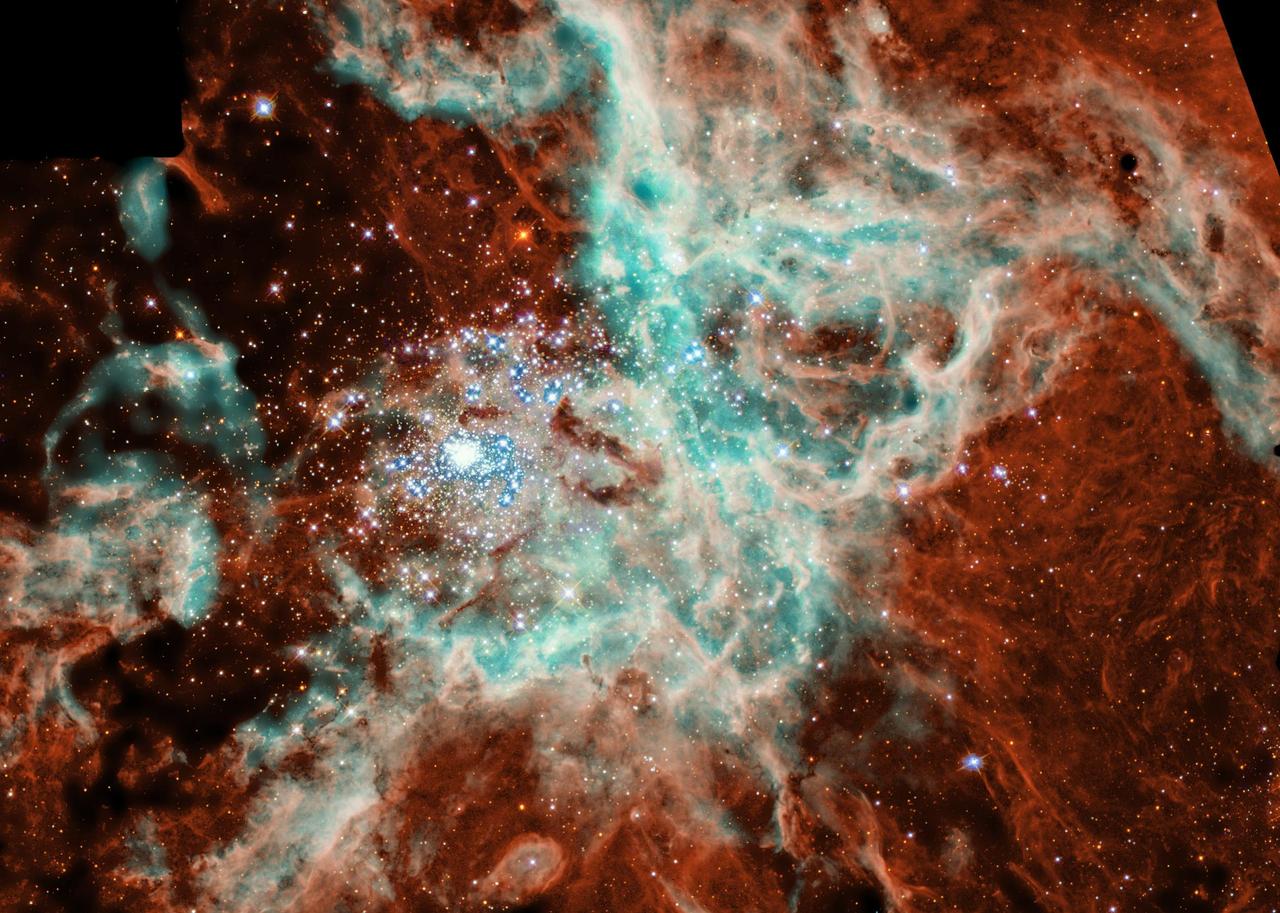
- The Tarantula NebulaNASA Spitzer Space Telescope, formerly known as the Space Infrared Telescope Facility, has captured in stunning detail the spidery filaments and newborn stars of theTarantula Nebula, a rich star-forming region also known as 30 Doradus. This cloud of glowing dust and gas is located in the Large Magel


