
Willst du den Inhalt der Seite besser machen? Schlag eine Änderung vor.
As we mark the 20th anniversary of Laurance Spelman Rockefeller's passing, we reflect on his profound influence on conservation and community. His intellect and spiritual depth, combined with his commitment to the environment, continue to inspire efforts aimed at protecting our natural world. Laurance's humility and approachable style fostered connections that empowered both local and global initiatives, leaving a lasting legacy that we honor today.
Community Scale Conservation
Laurance held a deep affection for Woodstock, not only as his wife, Mary French Rockefeller's beloved home but as a community that shaped their lives. Despite the high expectations associated with the Rockefeller name, Laurance's quiet demeanor surprised many who encountered him, transcending the typical perceptions of wealth and privilege.
His intellectual curiosity and gentle nature helped forge partnerships across diverse groups, underlining his belief that true progress comes from shared interests. Laurance understood that synergy could transform unique ideas into collective action.
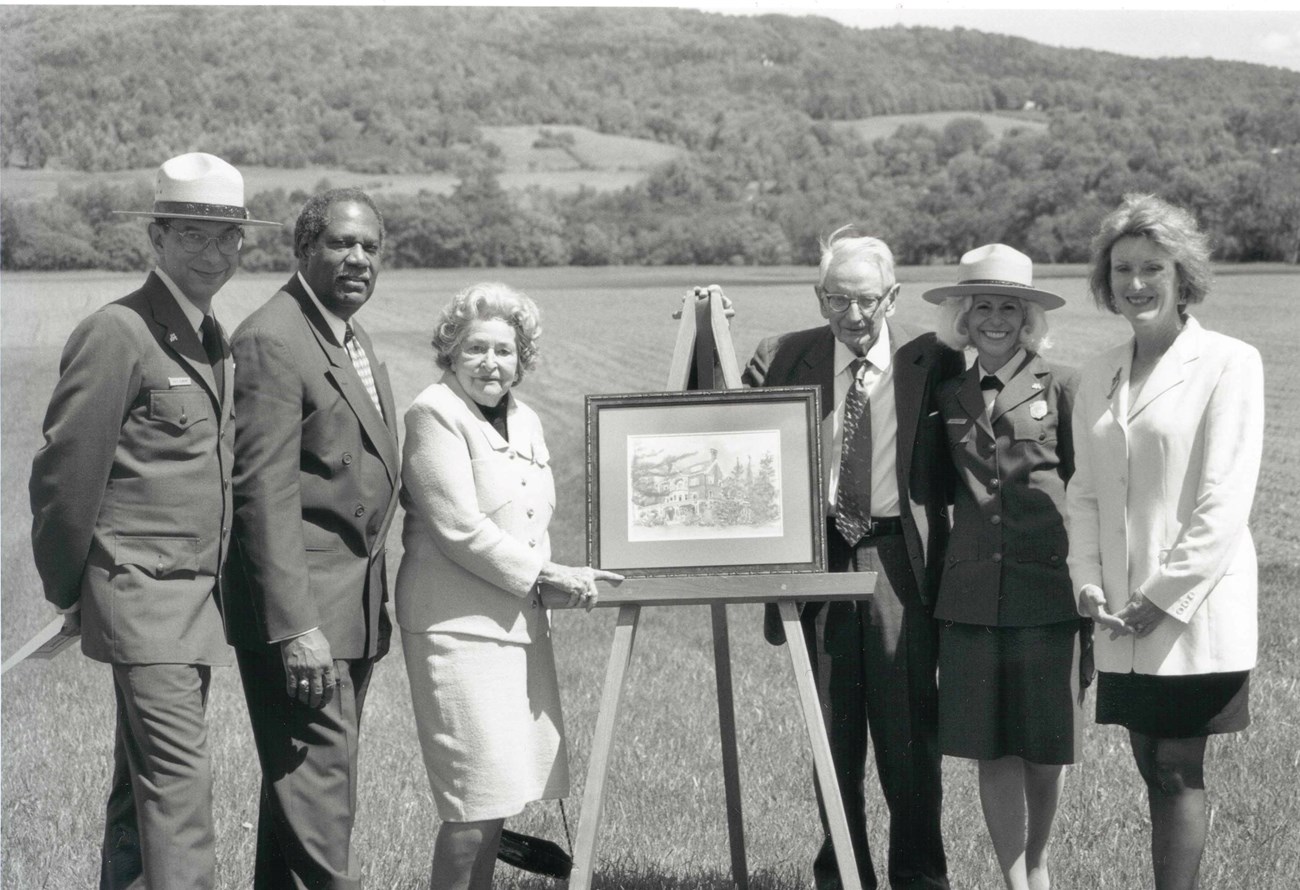
Marsh-Billings-Rockefeller National Historical Park Opening Day, 1998 [Left to right: Superintendent Rolf Diamont, NPS Director Rober Stanton, Lady Bird Johnson, Laurance Rockefeller, NPS NER Regional Director Marie Rust, Unknown] Billings Family Archives
For Laurance, this view represented unity and collaboration. He and Mary acquired 400 acres of Blake Hill, placing a scenic easement on 249 acres to protect the land's rural character. This preservation effort invited local citizens to engage in conservation as stakeholders with a shared vision.
Laurance exemplified collaborative leadership by fostering partnerships between the Woodstock Inn and Resort, Billings Farm and Museum, and the Marsh-Billings-Rockefeller National Historical Park. This synergy promoted economic opportunities while protecting the community's historical and cultural heritage.
Laurance actively engaged in historic preservation, advocating for initiatives such as burying power lines to maintain Woodstock's charming character, which had earned the acclaim of being the "Prettiest Small Town in America."
Economic Impact and National Recognition
The development of the Farm, Park, and Woodstock Inn established a robust economic foundation and fostered stewardship alliances within the community. In 1967, the Billings Mansion received national significance, becoming a National Historic Landmark under the guidance of then-First Lady Lady Bird Johnson. This recognition set the stage for the creation of Vermont's first National Park in 1992.

As this exciting new unit of the National Park System comes into being, we look forward to the day when the message and vision of conservation stewardship and its importance for the future will, once again, go out across the nation from the hills of Vermont.
Where this belongs
- Marsh - Billings - Rockefeller National Historical Park
Where this page came from
This page was imported from National Park Service. Produced by the U.S. National Park Service and, as a work of the United States government, in the public domain.
Nobody has written it yet — it is the source material at a new address, which is why search engines are asked to skip it and why no one earns from it. It is up for grabs: take it on, and it is yours to rewrite and to earn from.
In diesen SammlungenMarsh - Billings - Rockefeller National Historical Park
Lizenz: CC0 1.0 (gemeinfrei) · Bearbeitet nach www.nps.gov
1
0
0
0

Kommentare
Weiterlesen


