
Willst du den Inhalt der Seite besser machen? Schlag eine Änderung vor.
Malinda Powskey was 13 when she ran away from an Indian boarding school at Fort Apache, walking for three days straight; she later called herself stubborn. A member of the Big River Sandy Band of Hualapai, she was born in 1940 in the blazing heat of northwestern Arizona, where the Mojave and Sonoran deserts meet. That stubbornness, and that desert, shaped a life spent preserving Hualapai ways — above all the ancient knowledge of land and plants. This account comes from the National Park Service's Home and Homelands exhibition, written by historian Nicole Martin.
The mescal agave
Ethnobotany studies a region's plants through the traditional knowledge of its peoples. Hualapai ancestral lands cover seven million acres of varied country, part of it now inside Lake Mead National Recreation Area. To outsiders it can look barren; the Hualapai have long known the rich plant life it holds in every season.
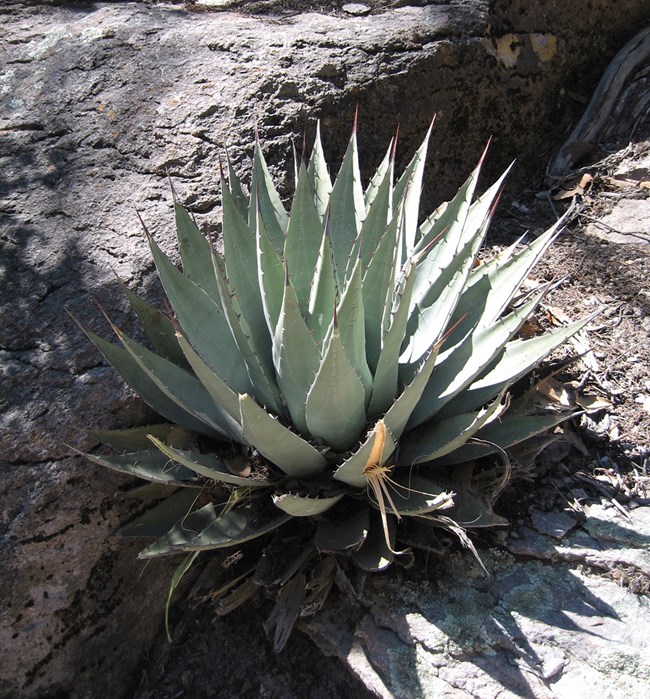
Palmer agave in the Sonoran Desert. NPS photo / Alice Wondrak Biel.
One life-giving plant is the mescal agave, a nutritious food that tastes sweet, like molasses, when roasted. Hualapai women and men traditionally harvested it in spring, just before the flower stalks rose after winter.
Archeologists have found mescal agave knives across the desert Southwest, some thousands of years old. Before contact with European and American cultures, desert peoples including the Hualapai used them to cut away the thorny outer leaves and reach the prized agave heart.
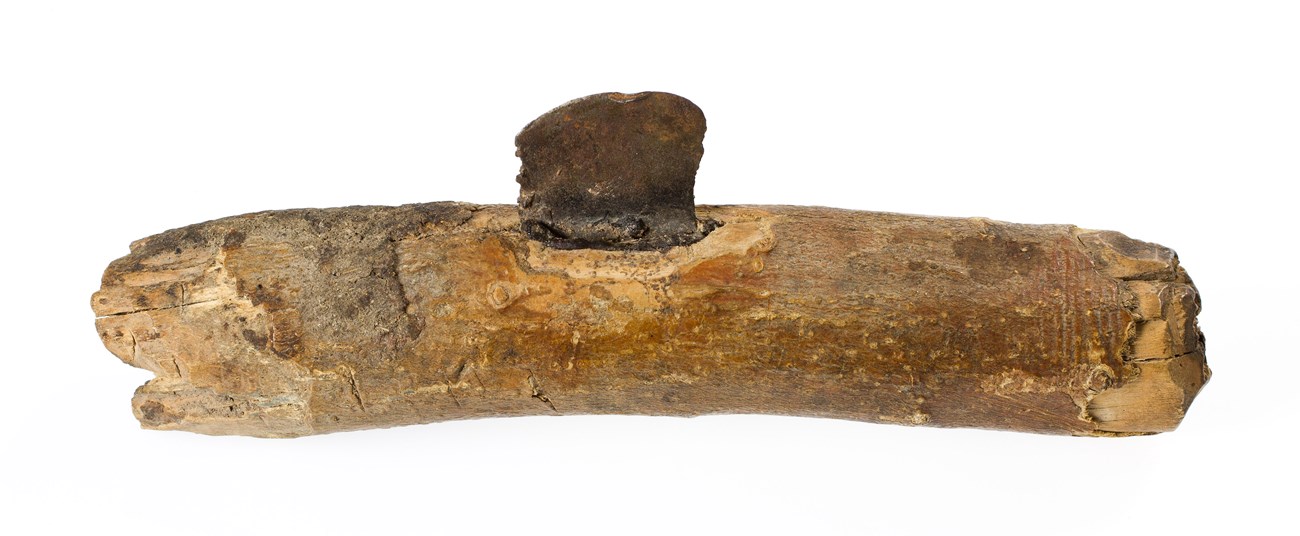
A mescal agave knife found within what is now Lake Mead National Recreation Area; its blade was probably glued on with agave resin. NPS photo, Lake Mead NRA, LAKE-3405-05E.
Preparing the hearts takes days. The rosettes are pried from the ground and brought back to the community, where the outer leaves are cut off. A roasting pit is dug and laid with juniper wood and with rocks placed to honor the four directions. Once the fire burns down to coals, the hearts are buried overnight in this earth oven and eaten the next day.
Knowledge under threat
In the late 1800s the federal government forced the Hualapai onto a reservation one-seventh the size of their territory, cutting access to ancestral lands and foods such as mescal agave. Soon after, Hualapai children were taken to Indian boarding schools, run under a policy of assimilation that forbade them to speak their language or practice their culture — endangering the passing down of plant knowledge.
Teaching the next generation
Powskey came from one of the last families to live off the land, and what she learned as a child was central to the Hualapai Ethnobotany Youth Project. Since 2006 it has paired tribal elders with young people to teach traditional plant knowledge through field trips and activities, including a traditional mescal agave harvest and roast.
Before her death in 2019, Powskey stressed that learning about the plants was not enough; what mattered was to think differently — to think in Hualapai and connect with the land as heritage. So plant knowledge is taught in the Hualapai language: at each stage of the agave roast, elders speak the language and pass on tribal philosophy. She held that losing the names of places meant losing part of one's history.
Plants, people and land, she taught, are bound together; lose one, and a piece of being Hualapai goes with it. The revival of Hualapai language and traditions owes much to her stubborn determination to keep that knowledge whole.
Sources
Based on "Mescal Agave Knife and Malinda Powskey," by Nicole Martin, PhD, Home and Homelands exhibition, supported in part by a grant from the National Park Foundation, published by the National Park Service; rewritten in hubnx's own words.
In diesen SammlungenLake Mead National Recreation AreaHome and Homelands Exhibition: Resistance
Lizenz: CC0 1.0 (gemeinfrei) · Bearbeitet nach www.nps.gov
1
0
0
0

Kommentare
Weiterlesen


