
Möchten Sie den Inhalt des Knotens verbessern? Versuchen Sie, eine Bearbeitungsanfrage zu stellen.
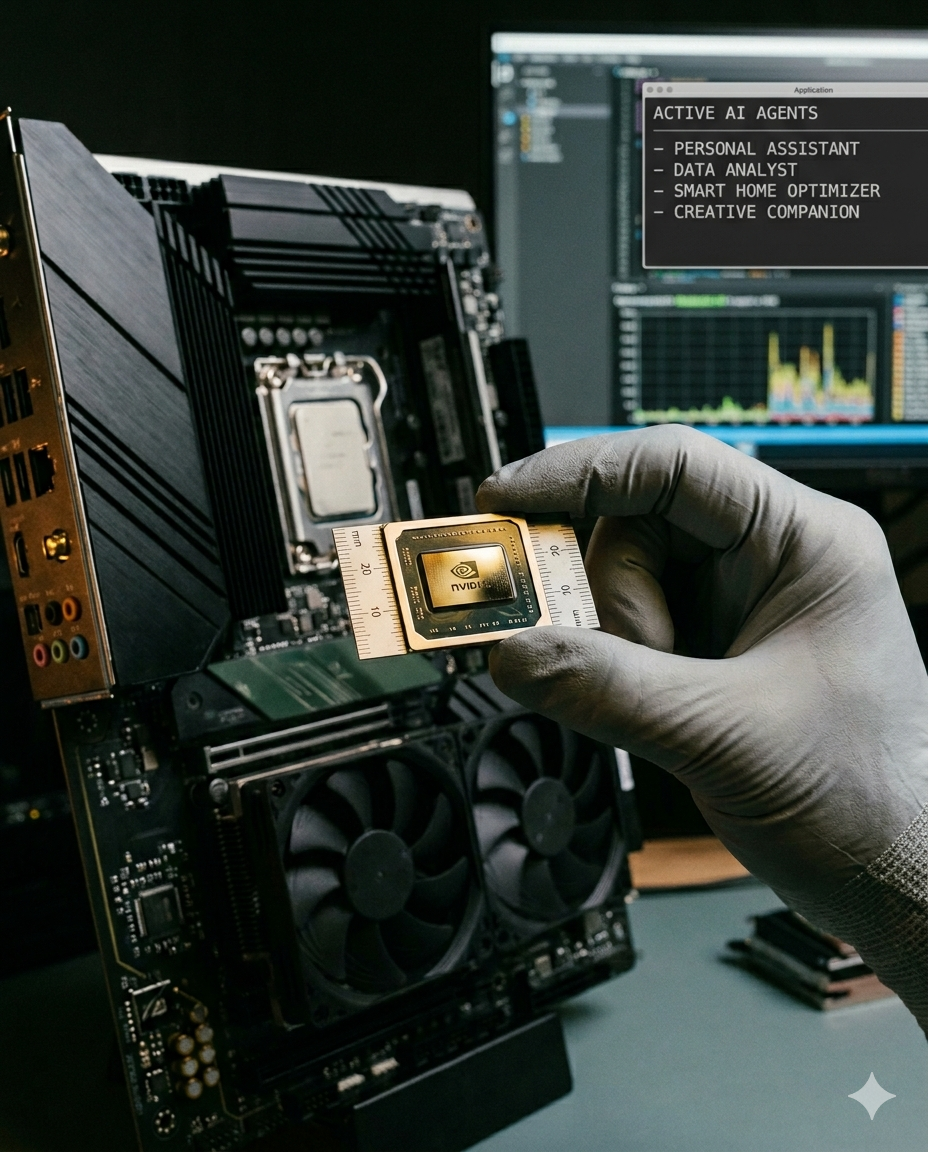
At the Computex conference in Taipei, Nvidia officially unveiled a significant strategic shift with the introduction of its RTX Spark superchip, developed in partnership with MediaTek. This development marks a fundamental pivot in the consumer computing industry, as Nvidia moves to challenge established market leaders by reimagining the personal computer for the age of artificial intelligence. Built on a 3-nanometer process and designed specifically to run proactive AI agents, the RTX Spark platform is intended to displace traditional human-computer interaction methods—specifically the mouse and keyboard—with background-running, autonomous personal teammates. Nvidia’s chief executive, Jensen Huang, described this as the most significant reimagining of the PC in forty years. The objective is to transition from current consumer hardware to AI supercomputers capable of local automation, integrating deeply with home appliances, security systems, and daily task management. This move places Nvidia in direct, high-stakes competition with Apple, Dell, Lenovo, and HP, who currently command the vast majority of the global PC market. The launch is underpinned by a deep collaboration with Microsoft, focusing on integrating the Windows operating system with specialized silicon capable of executing high-complexity AI models locally. By moving intelligence closer to the user, Nvidia and Microsoft aim to address the latency and privacy limitations inherent in purely cloud-based AI services. This strategy positions the PC not as a peripheral tool, but as a central, intelligent node in a user's daily life. As hardware cycles shorten and consumer demand for AI-capable devices increases, this partnership signals an aggressive attempt to set the standard for the next generation of consumer electronics, effectively pressuring legacy PC manufacturers to either adapt their hardware to these new AI requirements or risk obsolescence in an increasingly intent-driven computing landscape.
The Silicon Foundation of Agentic Computing
The unveiling of the RTX Spark superchip at Computex represents more than a typical hardware iteration; it serves as the physical realization of a broader industry shift toward agentic AI. For years, the personal computer has functioned as a reactive tool, awaiting explicit instructions via input devices like keyboards and mice. Nvidia’s new architecture, powered by a 3-nanometer process, is engineered to flip this paradigm. By offloading complex agentic tasks to dedicated silicon, the system minimizes reliance on remote server farms for routine automation, a shift critical for both performance and user privacy.
The collaboration with MediaTek is equally telling, suggesting a focus on balancing high-performance compute with the power efficiency required for sustained background operations in consumer-grade devices. This is not merely a faster processor; it is an optimized environment for running multiple AI agents concurrently. These agents are designed to reside in the background, continuously analyzing user intent, managing file structures, and orchestrating interactions between disparate software applications. The technical challenge, which Nvidia claims to have solved, is the efficient management of high-bandwidth memory and thermal overhead during continuous AI inference, allowing the machine to perform complex tasks without the system-wide performance degradation typically associated with heavy localized AI workloads.
Competitive Realignment in the PC Market
The entry of Nvidia into the consumer PC market as a primary platform provider introduces a volatile variable to the competitive landscape of the hardware sector. Until now, the relationship between chipmakers and PC original equipment manufacturers (OEMs) like Dell, HP, and Lenovo was defined by iterative improvements in performance. Nvidia’s new strategy, however, asserts control over the software-hardware stack. By bundling its superchip with optimized Windows support, Nvidia is creating a proprietary ecosystem that may commoditize the traditional hardware offerings of its competitors.
For Apple, which has long benefited from its own vertically integrated silicon-to-software approach, Nvidia’s new stance presents a more direct challenge to its dominance in the premium computing space. If Nvidia and Microsoft can successfully establish an agentic standard that outpaces the current capabilities of consumer devices, the primary battleground will shift from raw processing power to the efficacy and intelligence of the resident AI agents. The PC market, often criticized for a lack of genuine innovation over the past decade, now faces a rapid transition. The expectation is that consumers will view current hardware as increasingly inadequate for the demands of new AI applications, triggering a hardware replacement cycle driven by the need for localized AI acceleration.
The Integration of Infrastructure and Intent
Beyond the immediate commercial implications, the focus on agentic PCs reflects a wider industry consensus that AI must move from the data center to the edge to be truly useful. The limitation of current LLM-based assistants—cloud latency and data sensitivity—is addressed by localizing the compute. This allows the AI to act with greater autonomy, directly manipulating local files, monitoring desktop activity, and controlling connected IoT devices in real-time.
This evolution brings significant concerns regarding security and oversight. When a system is designed to operate proactively in the background, the definition of user control changes. The technical implementation of these agents must include robust sandboxing and governance layers, as the AI will have broader access to personal data than previous generations of software. Nvidia’s commitment to this architecture suggests that the future of computing will be defined by systems that know the user, anticipate their requirements, and proactively manipulate their environment. While the technological promise is substantial, the long-term success of this vision will depend on how effectively these systems manage the trade-off between convenience and the inherent risks of autonomous, always-on personal digital intelligence.
1
0
0
0

Kommentare