
Etwas zu verbessern? Schlag eine Änderung vor.
In everyday speech, "ocean" and "sea" are used as if they meant the same thing. To a geographer — someone who studies the Earth's surface — they are different, and the difference comes down to size and to land.
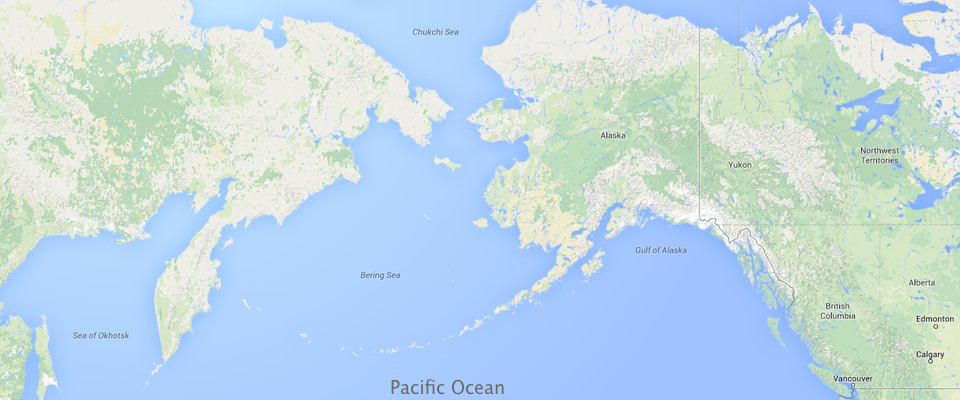
Seas lie on the margins of the ocean and are partly enclosed by land. The Bering Sea, shown here, is part of the Pacific Ocean. Credit: NOAA.
What makes a sea
In geographic terms, a sea is:
- smaller than an ocean
- at the meeting of land and ocean — usually located where the two come together
- partly enclosed by land, typically
A sea is therefore part of an ocean, not something separate from it. The Bering Sea, for example, belongs to the Pacific Ocean.
The sea with no shore
There is one notable exception. The Sargasso Sea is not bounded by land at all; it is defined only by ocean currents.
Sources
Based on "What's the difference between an ocean and a sea?" from NOAA's National Ocean Service, a work of the United States government in the public domain.
Lizenz: CC0 1.0 (gemeinfrei) · Bearbeitet nach oceanservice.noaa.gov
1
0
0
0

Kommentare


