
Etwas zu verbessern? Schlag eine Änderung vor.
Article Metrics
Altmetric:
Related Materials
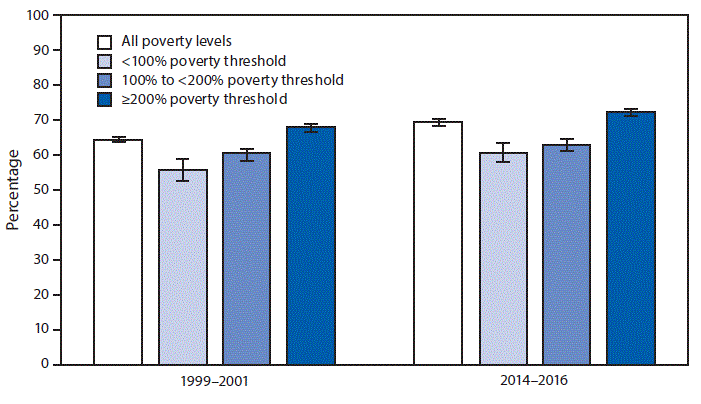
- With 95% confidence intervals indicated by error bars.
† Estimates are based on household interviews of a sample of the noninstitutionalized U.S. civilian population and are derived from the National Health Interview Survey Sample adult component. Percentages were 3-year averages age-adjusted to the projected 2000 U.S. population as the standard population, using three age groups: 65–74, 75–84, and ≥85 years.
§ Based on the survey question,“During the past 12 months, have you had a flu vaccination?” Annual calendar- year estimates of immunizations differ from seasonal flu immunization totals, which reflect vaccinations obtained during the flu season.
¶ Poverty status is based on family income and family size using the U.S. Census Bureau poverty thresholds. Family income was imputed where missing.
During 2014–2016, 69.2% of all older adults, aged ≥65 years, had received an influenza vaccine in the past 12 months. The percentage of older adults with family income ≥200% poverty level who had received an influenza vaccine in the past 12 months significantly increased from 67.9% during 1999–2001 to 72.2% during 2014–2016. During the same period, the changes from 55.7% to 60.8% among those at the <100% poverty level and from 60.3% to 62.9% for those at the 100% to <200% poverty level were not statistically significant. During both periods, older adults with income ≥200% poverty level were significantly more likely to receive an influenza vaccine compared with those with lower family income.
Source: National Health Interview Survey, 1999–2016. https://www.cdc.gov/nchs/nhis.htm.
Reported by: Julie D. Weeks, PhD, JWeeks@cdc.gov, 301-458-4562; Yelena Gorina.
Where this page came from
This page was imported from Centers for Disease Control and Prevention. Material produced by the Centers for Disease Control and Prevention is a work of the United States government and is in the public domain.
Nobody has written it yet — it is the source material at a new address, which is why search engines are asked to skip it and why no one earns from it. It is up for grabs: take it on, and it is yours to rewrite and to earn from.
Lizenz: CC0 1.0 (gemeinfrei) · Bearbeitet nach www.cdc.gov
1
0
0
0

Kommentare


