
Willst du den Inhalt der Seite besser machen? Schlag eine Änderung vor.
Stony coral tissue loss disease can kill a whole coral colony in three weeks, and it has caused severe coral loss in all six national parks in the Southeast that manage reefs. The National Park Service's answer is a syringe of antibiotic paste, dabbed onto each lesion by divers — and it saves as many as 85 percent of the corals treated.

A healthy reef in Biscayne National Park. NPS / Shaun Wolfe.
Why reefs matter, and what is killing them
Corals build their own habitat as they grow, and a reef is infrastructure: shelter, food and breeding and nursery grounds for thousands of species, and a breakwater that absorbs storm waves before they reach shorelines, buildings and people.
"Live coral cover in southeastern parks has declined by as much as 90 percent at some sites in the last 30 years," says Anna Toline, a Park Service marine ecologist working on the region's ocean parks. The threats pile up: disease, overfishing, ship groundings, poor water quality, marine debris, and warming seas. The loss is hard to see from the beach; Toline compares it to wildfire, whose damage on land nobody can miss.
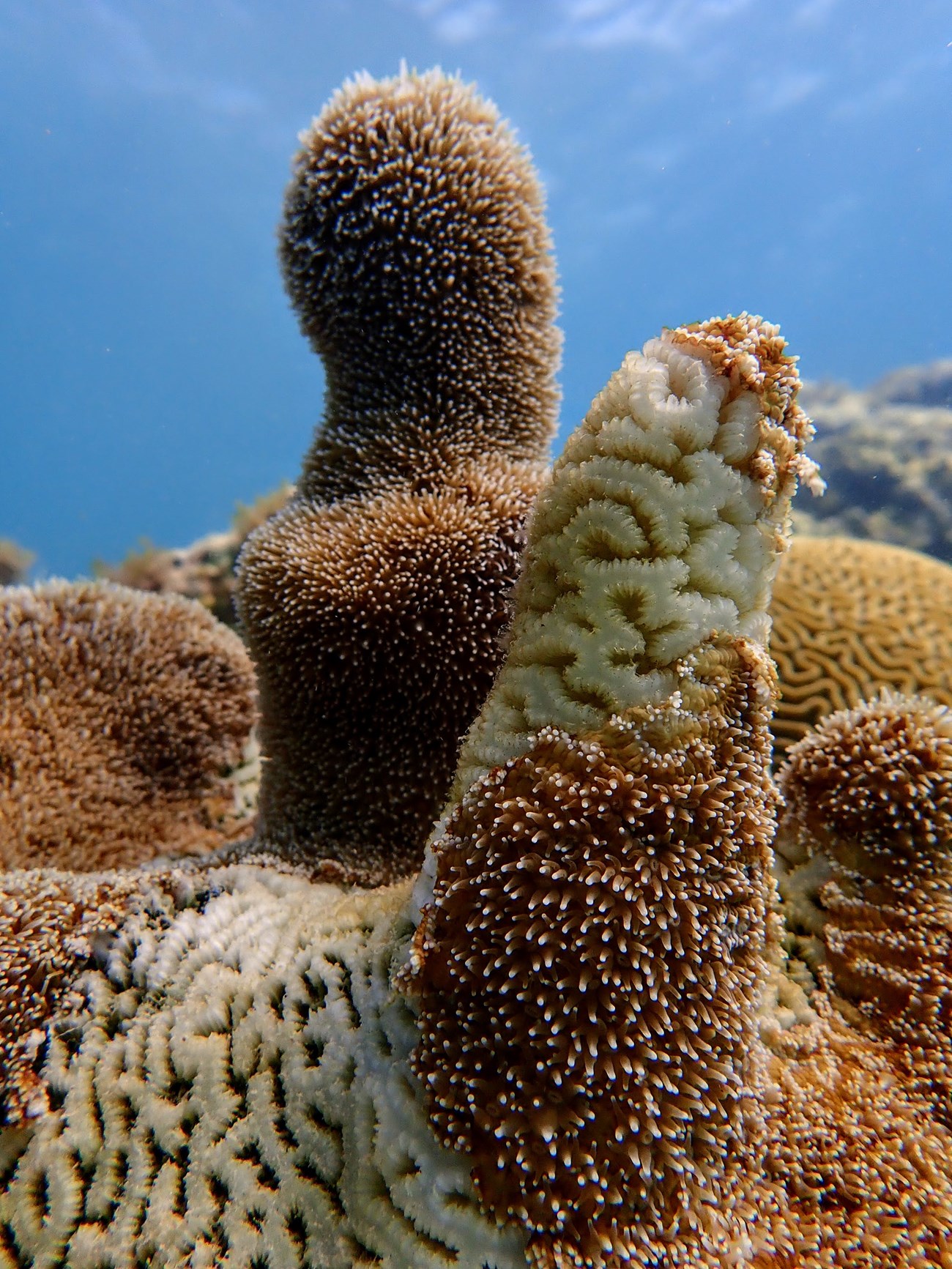
A pillar coral, a threatened species, with advanced tissue loss from the disease. NOAA / Leslie Henderson.
Stony coral tissue loss disease, found in the Caribbean in 2019, is one of the worst things ever to happen to the region's corals. Without intervention, reefs of stony corals could be lost to it.
The treatment

Applying amoxicillin paste to a brain coral on the underwater trail at Buck Island Reef. NPS / Kristen Ewen.
Divers apply a paste containing the antibiotic amoxicillin to the edge of each lesion, which stops the disease spreading. With money from the Bipartisan Infrastructure Law and the Inflation Reduction Act, the Park Service is treating 25 coral species in the reefs that matter most — the most ecologically valuable, those being restored after hurricanes, and those visitors come to see. Parks and partners run volunteer programmes and strike teams to find and treat sick corals.
| Park | Work |
|---|---|
| Biscayne National Park | genotyping elkhorn coral, raising coral larvae, interns treating disease |
| Dry Tortugas National Park | site assessments to direct treatment and restoration |
| Virgin Islands National Park | outplanting coral |
| Virgin Islands Coral Reef National Monument | treating disease |
| Buck Island Reef National Monument | outplanting coral |
| Salt River Bay National Historical Park and Ecological Preserve | treating disease |

A coral response team member treats an elliptical star coral in Dry Tortugas. NPS / Rachel Johns.
Beyond antibiotics
- Restoration. Corals grown in nurseries in the water and on land will be planted back at up to five sites in each Caribbean park, to keep species from disappearing locally.
- Research. Scientists are testing probiotics and other treatments that might prevent the disease, and looking for corals that resist it.
- Protection. "We need to protect what we have," Toline says — less marine debris, cleaner water, and less physical damage.
It will take a long commitment from universities, non-profits, volunteers and territorial, state and federal agencies.
Sources
Written from "National Park Service Protects Critical Corals from Destructive Disease", National Park Service, a work of the United States government in the public domain.
In diesen SammlungenBiscayne National ParkDry Tortugas National Park
Lizenz: CC0 1.0 (gemeinfrei) · Bearbeitet nach www.nps.gov
1
0
0
0

Kommentare
Weiterlesen


