
Etwas zu verbessern? Schlag eine Änderung vor.
By Claire Baker, NPS Climate Change Response Program, 2024.
In September 2024, Zion National Park unveiled the first all-electric transit fleet in the National Park Service — a step toward the agency's sustainability goals, against climate change, and an example to visitors.
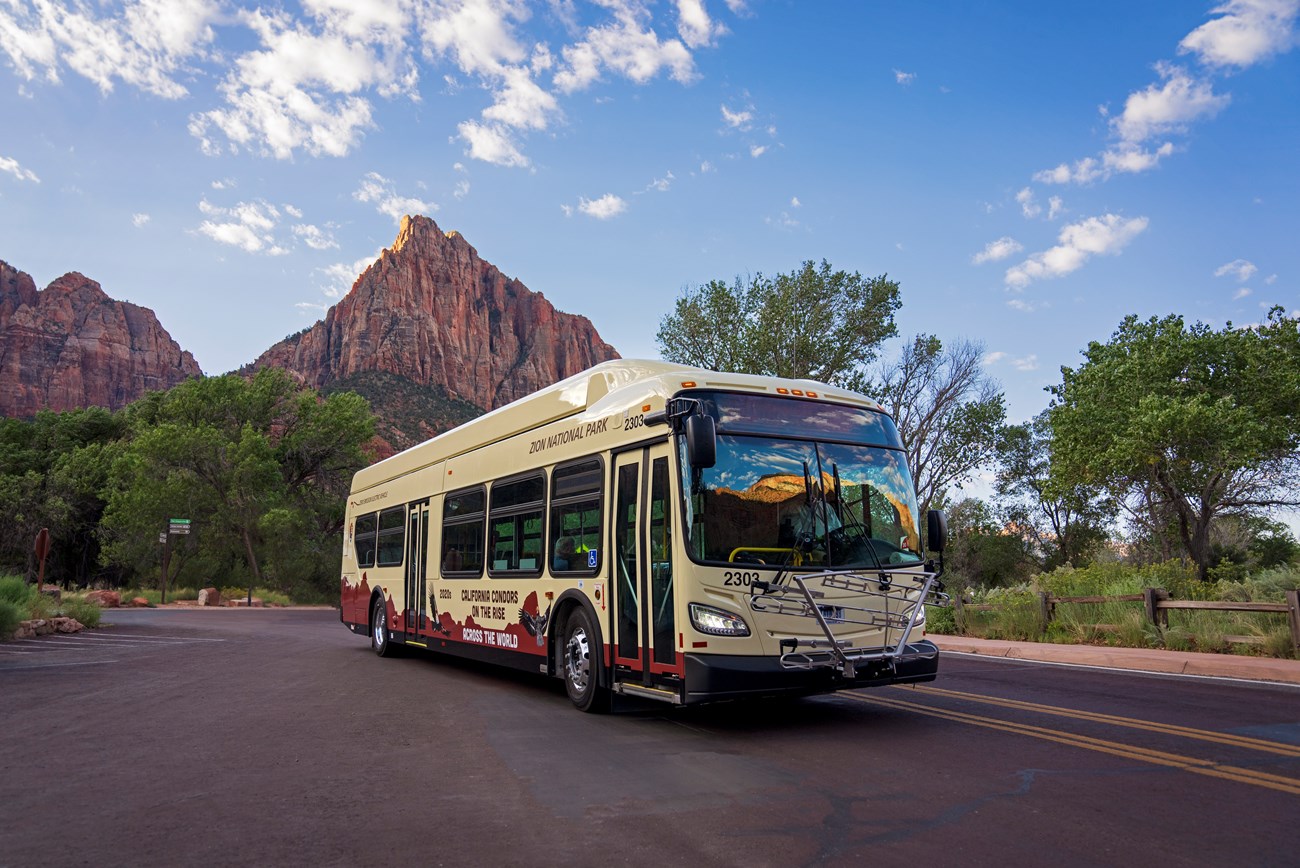
NPS/Abi Farish.
Why change the buses
Millions of people visit Zion's canyon every year, but climate change is reshaping the park: scorching heat threatens health and safety, and shifting weather disrupts long-established natural patterns. Climate change is driven by greenhouse gas emissions, much of it from burning fuel — such as visitors' cars driving through Zion Canyon, which also bring congestion, noise and poorer air.
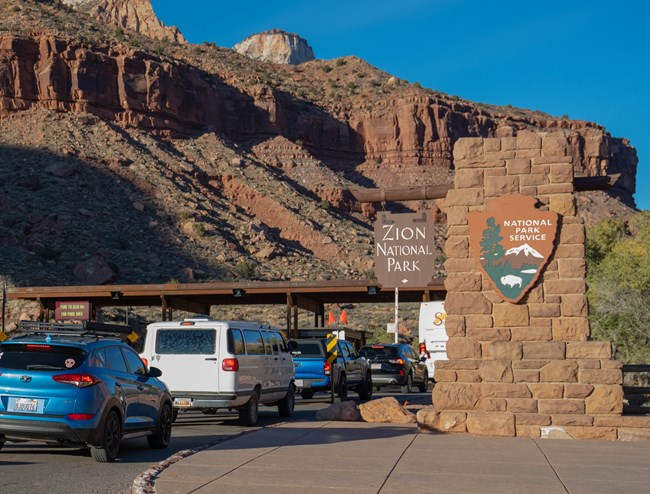
Many visitors arrive by car. NPS/Jonathan Shafer.
Staff began looking for answers to car problems in the 1970s, and settled on a free shuttle, with part of the park reachable only by shuttle. It began in 2000 and proved popular: riders have boarded more than 95 million times in 25 seasons. But after more than 20 years the buses needed replacing — and climate change is now central to park planning. The old buses, bought in 1999, ran on propane, a lower-emission fuel but still a substantial source of greenhouse gases; twenty years on, fully electric buses were within reach.
Making it happen
- Money. In 2021 the park won a $33 million Department of Transportation grant, covering almost the whole cost of an electric fleet; the NPS, National Park Foundation, Zion Forever Project, Kane and Washington Counties and private donors covered the rest.
- Logistics. The park chose a manufacturer, commissioned artists to decorate the buses, and planned and installed chargers powerful enough for a whole fleet.
- Delivery. Five electric buses entered service in September 2023; the remaining 25 arrived in 2024.
Better all round
- Air conditioning, which most of the old buses lacked — increasingly a safety feature as the climate warms.
- Easier access for wheelchair users, and more room for passengers.
- Zero tailpipe emissions. The smaller shuttles alone are estimated to replace 29 cars a day. Had those riders driven gasoline cars, they would have emitted about 8.67 metric tons of greenhouse gases a day — as much as more than 150 trees growing for ten years would absorb.
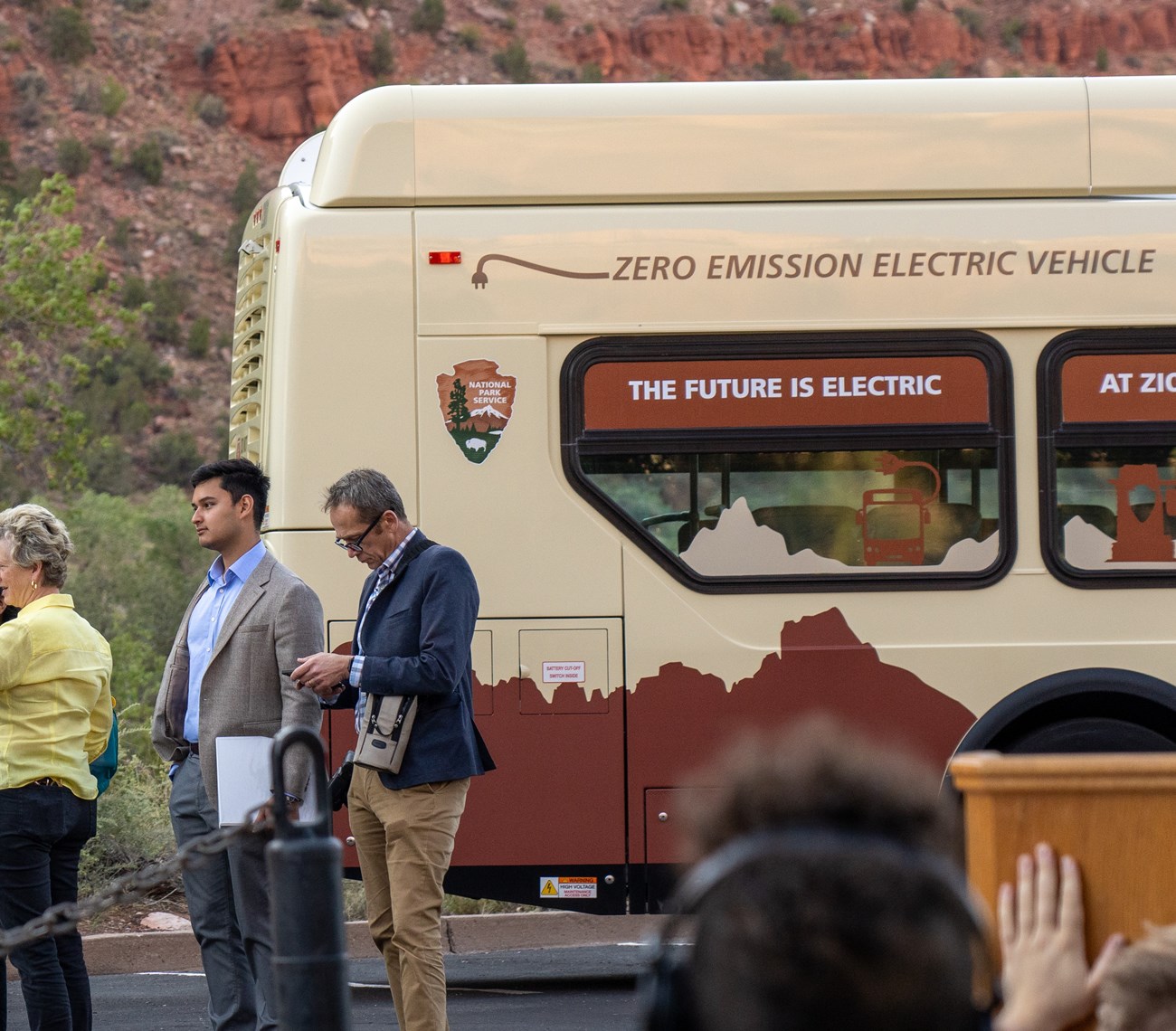
NPS/Abi Farish.
Leading the way
Since 2012 the NPS Green Parks Plan has set out a vision of sustainable park transport, and its third edition (2023) set the goal that every park move to a completely zero-emission transit fleet. Zion is the first to get there. Others are following: Acadia is piloting an all-electric Island Shuttle with its concessioners; Grand Canyon secured funding for 10 electric buses in 2023; Yosemite acquired two battery-electric shuttles in 2017 and has begun funding more; and many parks have invested in zero-emission vehicles for staff and visitors.
Each Zion bus announces that it is electric, showing millions of riders a year that the park takes climate change seriously. If that inspires people to think, talk and act a little more on climate change, it will make a big difference — so hop on the bus.
Sources
- National Park Service, Climate Change Response Program, "Case Study: Zion National Park's Electric Shuttles," by Claire Baker, 2024. https://www.nps.gov/articles/000/zion-electric-shuttles.htm
- The article's emission figures draw on the U.S. Department of Energy's Alternative Fuels Data Center (https://afdc.energy.gov/vehicles/propane-emissions) and the EPA's Greenhouse Gas Equivalencies Calculator (https://www.epa.gov/energy/greenhouse-gas-equivalencies-calculator).
- The original's close-up of a bus's decorated side shows artwork commissioned from a private artist and is not reproduced here.
- Rewritten in hubnx's own words.
In diesen PublikationenZion National Park
Lizenz: CC0 1.0 (gemeinfrei) · Bearbeitet nach www.nps.gov
1
0
0
0

Kommentare


