
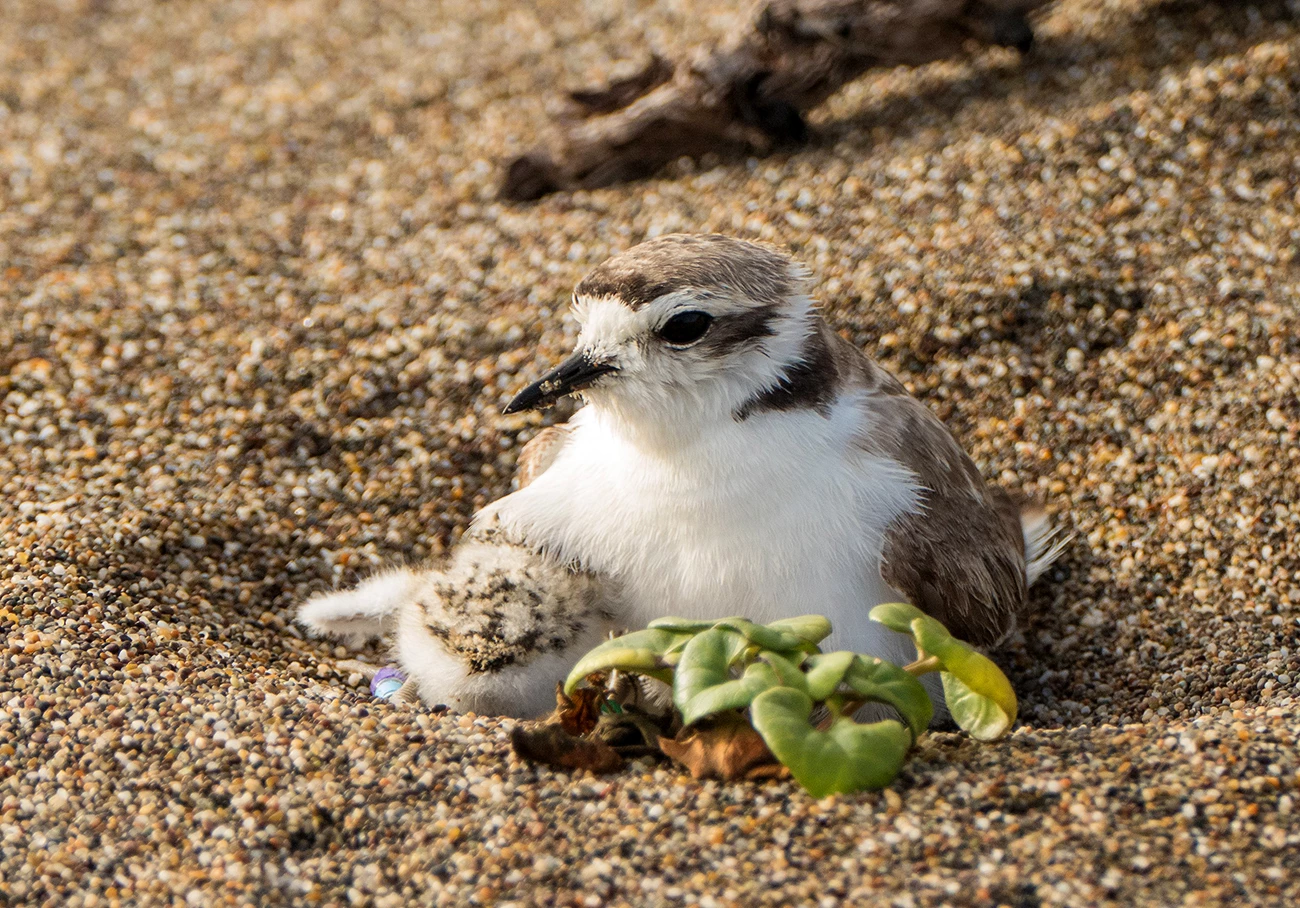
Western snowy plover (Charadrius nivosus nivosus) with its chick. NPS photo by Matt Lau
Western snowy plovers are small shorebirds that forage on open beaches for tiny crustaceans among the kelp. At Point Reyes National Seashore in California, males and females share the work of incubating their eggs. The birds are threatened, and because they need wide, open, pristine beaches, they are an important indicator of the health of the California coast.
Their nesting space has already shrunk under human development and invasive plants, and sea level rise could take more. Much research has looked at those direct effects of climate change. A study by the park with Point Blue Conservation Science looked at the indirect ones too — and found that warming could hurt plovers in one way and help them in another.
Fences against predators
Point Reyes has a small breeding population: an estimated 22 to 40 breeding birds between 2015 and 2021. The main threat to their nests is predators — common ravens, and sometimes coyotes.
So park biologists put up exclosures: wire fences that adult plovers can walk through but predators can't get past. Earlier research found them highly effective, and the park's own unpublished data for 2016–2021 agree:
| Nests | Result |
|---|---|
| Inside exclosures | 70% to 90% of eggs hatched |
| Unprotected | no more than 20% of nests succeeded |
| ravens took more than 40% of all unprotected nests |
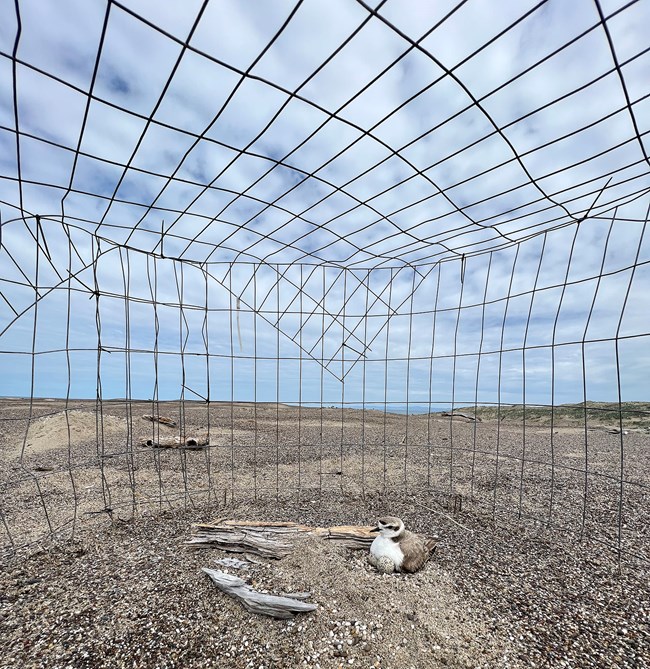
A female plover incubates three eggs inside a wire exclosure, which she can leave and re-enter freely while most predators are kept out. NPS photo by Matt Lau
The study
Using the park's long-term snowy plover dataset, the team mapped every nest found from 2002 to 2020, recorded the weather around each nesting attempt, and measured how temperature, precipitation and distance from the mean high water line affected the survival of nests and chicks. They then ran climate projections for California to estimate future breeding success.
Warmer years, more lost nests
Temperature and distance to the high water line mattered most for hatching. Nests did better when the months leading up to the breeding season — March through September — had been cooler.
The surprise: nests inside exclosures showed no such effect. That points to predators. The researchers concluded that warming could bring more predators near plover breeding sites, with potentially disastrous results for unprotected nests — on top of the habitat lost to rising seas.
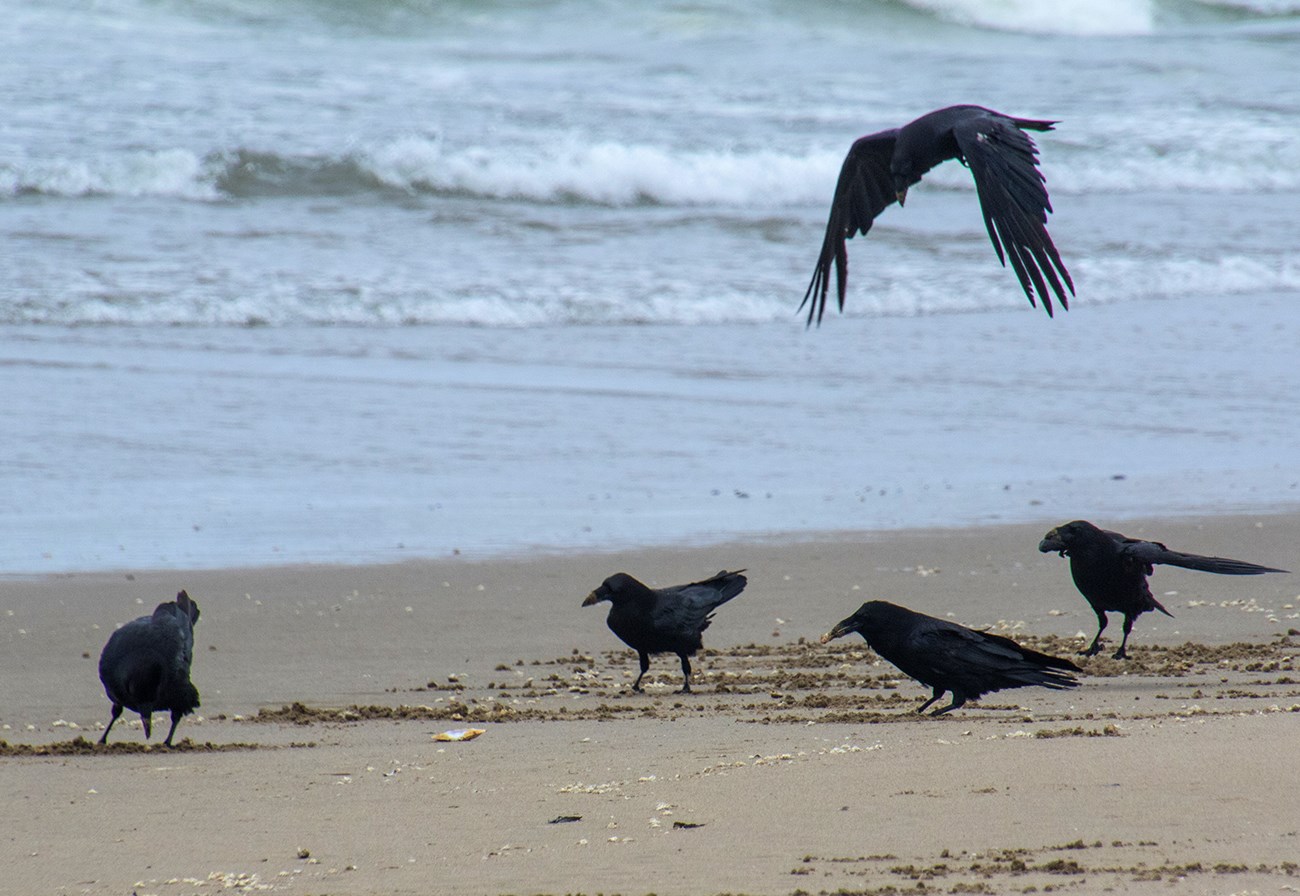
Common ravens (Corvus corax) foraging near plover nesting habitat. Ravens are the main predators of plover nests and chicks at Point Reyes, and warming could increase their numbers. NPS photo by Matt Lau
Warmer years, better chick survival
Warmth may also help. In the models, chick survival tended to rise after warmer months before the breeding season. Two possible reasons:
- warmth could mean more invertebrate prey for chicks to eat;
- chicks are most vulnerable to cold in their first two weeks after hatching.
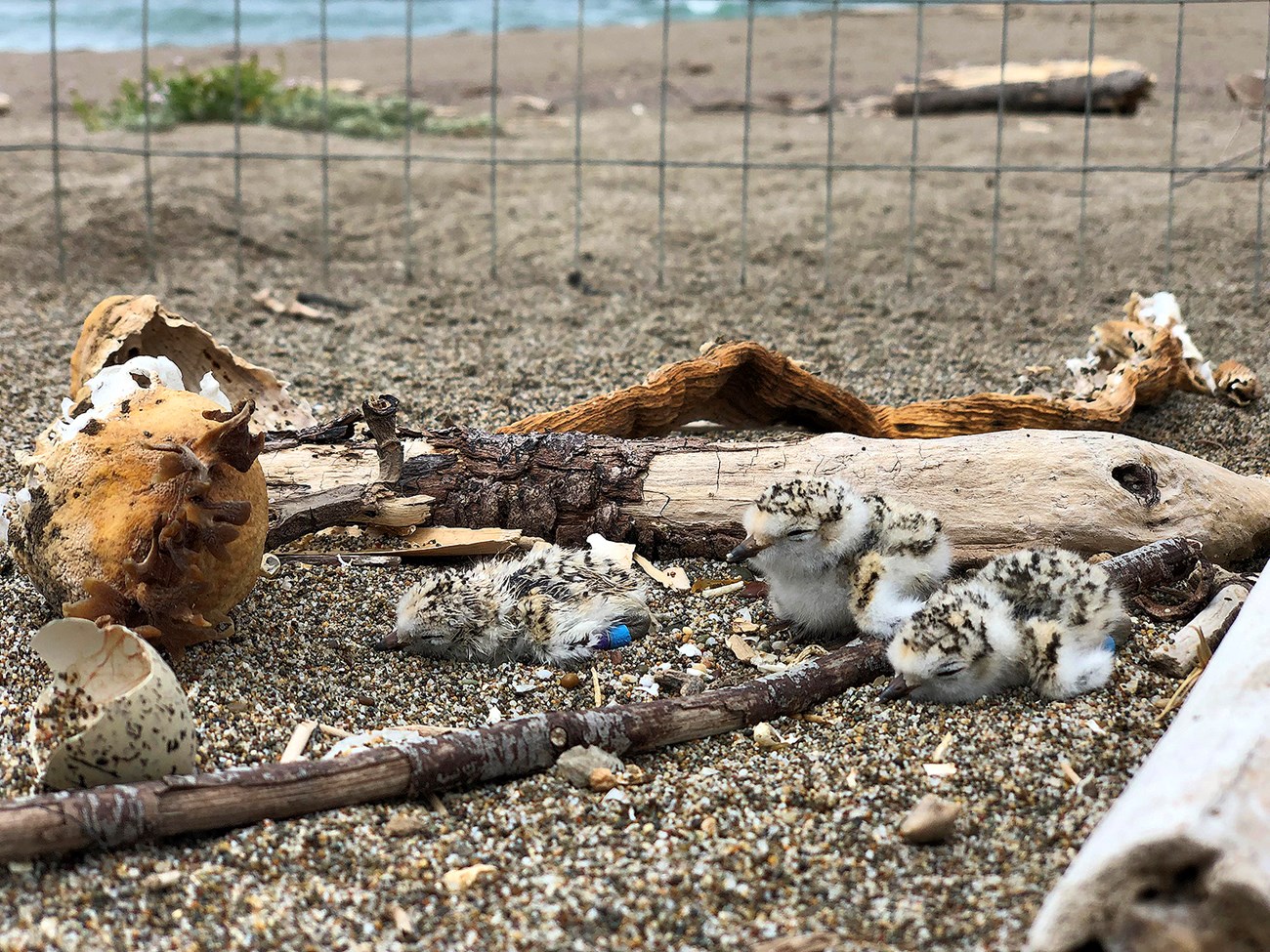
Three plover chicks, three hours old, inside a nest exclosure. Blue leg bands help scientists follow them. NPS photo by Matt Lau
Managing for change
Plovers at Point Reyes — and perhaps along the rest of their Pacific coast range — face climate change directly, through sea level rise, and indirectly, through more predators. Their future will depend more and more on active management.
"Current and future plover conservation efforts will require adaptive management strategies to respond to both changing predator and environmental conditions. Climate-smart conservation will be essential for saving the western snowy plover."
— Dave Press, lead wildlife ecologist, Point Reyes National Seashore
Sources
Based on Matt Lau, "Western Snowy Plovers Could Face Multiple Threats from Climate Change," Park Science volume 36, number 1 (Summer 2022), National Park Service; a work of the United States government in the public domain. The author is a biologist at Point Reyes National Seashore who has led the park's snowy plover management and monitoring program.
In these collectionsPoint Reyes National Seashore
Licence: CC0 1.0 (public domain) · Adapted from www.nps.gov
1
0
0
0

Comments


