
¿Quieres mejorar el contenido de la página? Propón un cambio.
What do these changes mean for these national parks?

Coastline at Bering Land Bridge National Preserve. NPS / Tahzay Jones
With climate change occurring throughout the north, immense changes are happening to landscapes, wildlife, habitat, and human lifestyles in all of Alaska’s national parks.
Observations from people living in and near parks on the frontlines of climate change demonstrate how deep the impacts can be. It’s not just about whether there are more or less bears in a park or that a recreational hiking trail is not accessible. Seasonal changes, unreliable ice conditions, thawing permafrost, and differences in animals and habitat all affect human activities and use of resources. This provides new insights into what climate change means for Alaska’s national parks.
I can do all the science in the world up here, and I can know from the bottom of my heart that this place is critically important, but unless I can help with sharing the message of how important it is, and why people should care, and what is changing up here, it’s not going to get very far. – Tahzay Jones, Anchorage
How are Alaska's national parks responding to the challenges of climate change?
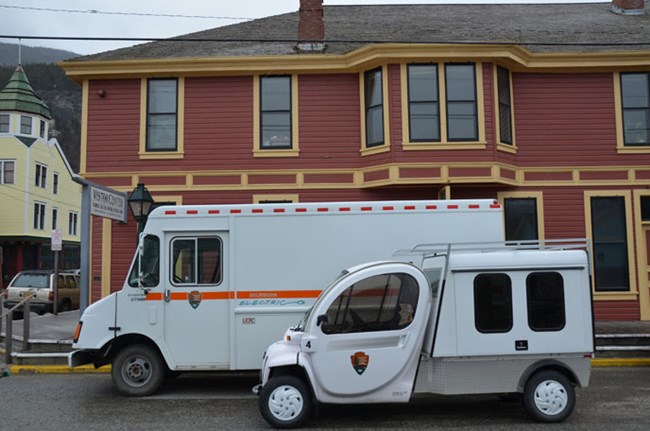
Two of Klondike Gold Rush National Historical Park's fleet of electric vehicles. NPS
The National Park Service actively monitors park resources in Alaska, including conducting scientific studies and ecosystem monitoring to better understand what’s happening and to mitigate climate change. They’ve also developed park planning and facilities development policies in response to existing and projected climate change impacts and natural hazards. The National Park Service is collaborating with local and tribal entities to help protect communities and infrastructure, as well as recording local and traditional knowledge to document changes.
The NPS is also working to minimize their carbon footprint by developing climate-friendly practices. These include using solar panels in new facilities, banning the sale of single-use plastics by park concessionaires, using electric vehicles for park operations, operating shuttle buses and using timed entry to limit congestion at very busy parks, as well as limiting hiking permits or closing sensitive areas to reduce human impact.
The National Park Service also focuses on educating the public about climate change, why it’s important, its effects on parks and park resources, and what the parks are doing to lessen the impacts.
To more information about the National Park Service's Alaska Inventory and Monitor Network, see:
Arctic Inventory & Monitoring Network
Southeast Alaska Inventory & Monitoring Network
Find out more about ways the National Park Service is addressing climate change.
Meet the project participants!
Part of a series of articles titled
Observing Change in Alaska's National Parks.
Previous:
What Do These Changes Mean for Life in Coastal Alaska?
Next:
Climate Change and You
Where this belongs
- Bering Land Bridge National Preserve
- Klondike Gold Rush National Historical Park
Where this page came from
This page was imported from National Park Service. Produced by the U.S. National Park Service and, as a work of the United States government, in the public domain.
Nobody has written it yet — it is the source material at a new address, which is why search engines are asked to skip it and why no one earns from it. It is up for grabs: take it on, and it is yours to rewrite and to earn from.
En estas coleccionesBering Land Bridge National PreserveKlondike Gold Rush National Historical Park
Licencia: CC0 1.0 (dominio público) · Adaptado de www.nps.gov
1
0
0
0

Comentarios
Sigue leyendo


