
¿Ves algo que mejorar? Propón un cambio.
The parasite Cryptosporidium looks the same under a standard lab test, whichever species it is. Genetic typing tells them apart — and when Nebraska did that for 149 patients between September 2015 and December 2017, the state's cases split in two. C. parvum infections came from animals in rural counties; C. hominis infections clustered in cities, spreading through child care.
A common, undercounted infection
Cryptosporidium spreads by the fecal-oral route: through contact with an infected animal or person, or through contaminated water or food. It affects an estimated 750,000 people in the United States each year, but only about 11,000 cases are reported nationally. Symptoms usually begin 2 to 10 days after exposure — watery diarrhea, abdominal cramps, nausea, vomiting or fever — and can last 1 to 2 weeks.
Nebraska relies more on agriculture than other states and has a higher share of people living and working in rural communities, which makes it a revealing place to study the parasite.
What the typing found
Of 630 positive stool specimens reported by clinical labs, 149 (24%) went to the Nebraska Public Health Laboratory and on to CDC for genotyping. The patients' median age was 22 (range 7 months to 79 years); 53% were female; 8 were hospitalized and none died.
| Species or genotype | Patients |
|---|---|
| C. hominis | 80 |
| C. parvum | 58 |
| Chipmunk genotype I | 3 |
| C. felis | 3 |
| C. ubiquitum | 2 |
| C. canis, C. meleagridis, skunk genotype | 1 each |
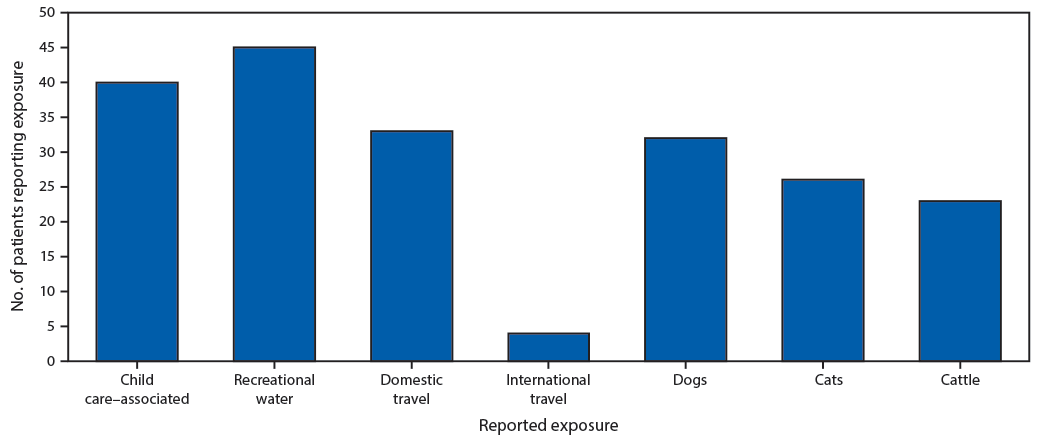
Exposures reported by the 149 patients; patients could report more than one. Credit: CDC, Morbidity and Mortality Weekly Report*.*
More than half (81) reported contact with animals: 32 with dogs, 26 with cats and 23 with cattle. None who reported dog contact reported cattle contact.
| Species | Exposure | Odds ratio (95% CI) |
|---|---|---|
| C. parvum | Cattle | 16.04 (4.50–57.28) |
| C. parvum | Dogs | 3.88 (1.46–10.26) |
| C. hominis | Day care or child care | 9.55 (3.38–26.98) |
Two patterns, two messages

Cases by county. Symbols are placed randomly within each county, not at case locations. Credit: CDC, Morbidity and Mortality Weekly Report*.*
- C. parvum: rural, from animals. Cases came from sparsely populated rural counties and were linked to cattle and dogs — a reason to press hand-washing after touching animals or their feces.
- C. hominis: urban, from people. Nearly half the cases were in Douglas County, the state's most populous. Several child care facilities had the same C. hominis subtype, suggesting community-wide spread — perhaps a shared exposure such as a swimming pool or waterpark, or a sick child excluded from one facility attending another. That points to the need for effective exclusion policies and careful screening of children with symptoms.
- The rare types led to new sources. Follow-up interviews prompted by unusual species turned up dog, squirrel and skunk exposures that patients had not mentioned.
About 40 Cryptosporidium species and genotypes are known, and about 20 have been reported in humans; Nebraska found eight. Its findings match the national picture, in which C. hominis and C. parvum cause most community outbreaks. Nebraska has taken part since 2015 in CryptoNet, the national molecular surveillance system CDC launched in 2010.
Limits
Cryptosporidiosis may be undiagnosed or underreported, and the typed specimens — about a quarter of positives — may not represent all cases. Animal stool was not tested, so transmission from animals could not be confirmed, and the dog finding might be confounded by dogs' own contact with cattle.
Sources
Based on Brianna K. Loeck, Caitlin Pedati, Peter C. Iwen, et al., "Genotyping and Subtyping Cryptosporidium To Identify Risk Factors and Transmission Patterns — Nebraska, 2015–2017," Morbidity and Mortality Weekly Report, volume 69, Centers for Disease Control and Prevention; a work of the United States government in the public domain.
Licencia: CC0 1.0 (dominio público) · Adaptado de www.cdc.gov
1
0
0
0

Comentarios


