
¿Ves algo que mejorar? Propón un cambio.
Adults with inflammatory bowel disease (IBD) — Crohn's disease or ulcerative colitis — were more likely than other adults to have visited an emergency department at least once in the past 12 months, in every age group. This CDC QuickStats chart uses 2015 and 2016 data from the National Health Interview Survey.
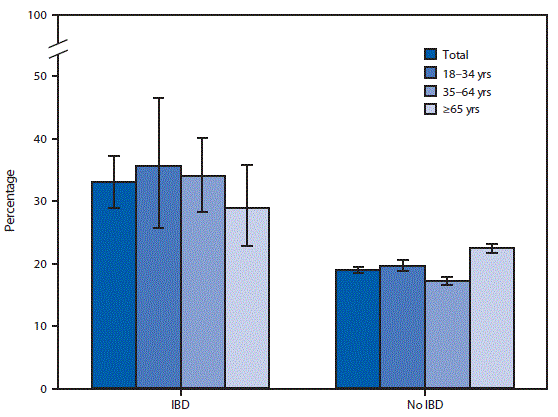
Adults who visited an emergency department at least once in the past 12 months, with and without IBD, by age, 2015–2016, with 95% confidence intervals. Figure from CDC's report.
| Age | With IBD | Without IBD |
|---|---|---|
| All adults | 33.0% | 18.9% |
| 18–34 | 35.6% | 19.6% |
| 35–64 | 34.0% | 17.2% |
| 65 and older | 28.9% | 22.4% |
How it was measured
Both come from the survey's Sample Adult component, based on household interviews with the civilian, noninstitutionalized U.S. population:
- Emergency visits: "During the past 12 months, how many times have you gone to a hospital emergency room about your own health?" — including visits that ended in admission.
- IBD: "Have you ever been told by a doctor or other health professional that you had Crohn's disease or ulcerative colitis?"
Sources
Based on Terlizzi EP, Dahlhamer J, Ji A, "QuickStats: Percentage of Adults Aged ≥18 Years Who Had Visited an Emergency Department at Least Once in the Past 12 Months, by Inflammatory Bowel Disease Status and Age Group — National Health Interview Survey, United States, 2015–2016," MMWR Morbidity and Mortality Weekly Report, volume 68, Centers for Disease Control and Prevention, with data from the National Health Interview Survey; a work of the United States government in the public domain.
Licencia: CC0 1.0 (dominio público) · Adaptado de www.cdc.gov
1
0
0
0

Comentarios


