
Envie d’améliorer le contenu de la page ? Proposez une modification.
Feral swine are damaging more than 40 national parks in southeastern states, from sea turtle nests at Cumberland Island National Seashore to the Mississippian mounds at Ocmulgee Mounds National Historical Park, which they churn up like a rototiller. Funding from the Inflation Reduction Act and the Bipartisan Infrastructure Law is giving parks such as Great Smoky Mountains National Park and Canaveral National Seashore the tools, time and staff to control them.
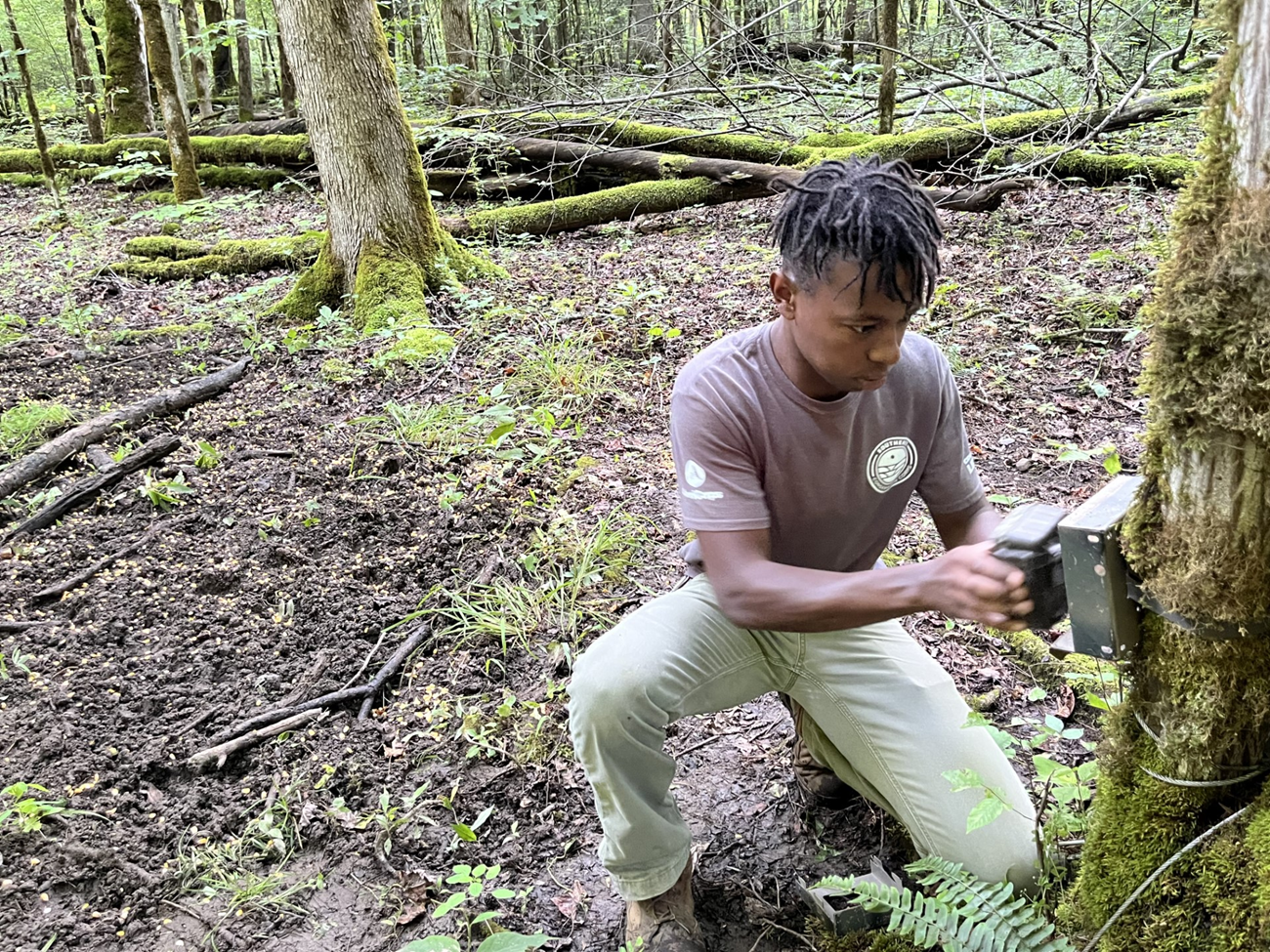
Wildlife intern Bereket Graves checks a game camera set to record wild hogs at Great Smoky Mountains National Park; equipment like this was bought with Bipartisan Infrastructure Law and Inflation Reduction Act funds. NPS photo.
The Park Service's Southeast Region frames the work as large landscape (ecosystem) restoration: the goal is to protect and restore natural environments, at-risk species and cultural sites. Controlling swine also helps neighboring landowners, whose farmland suffers the same damage.
Where they came from
| Period | What happened |
|---|---|
| 1500s | Early explorers and settlers brought pigs to North America as food; they spread easily through today's southern and southeastern states |
| 1900s | Eurasian or Russian wild boar introduced in parts of the U.S. for sport hunting |
| Today | Feral swine are escaped domestic pigs, Eurasian wild boars and hybrids of the two |
Feral swine have been reported in at least 35 states, and their population is estimated at more than six million and growing fast. They adapt to many climates and conditions, people move them around, and they have no natural predators.
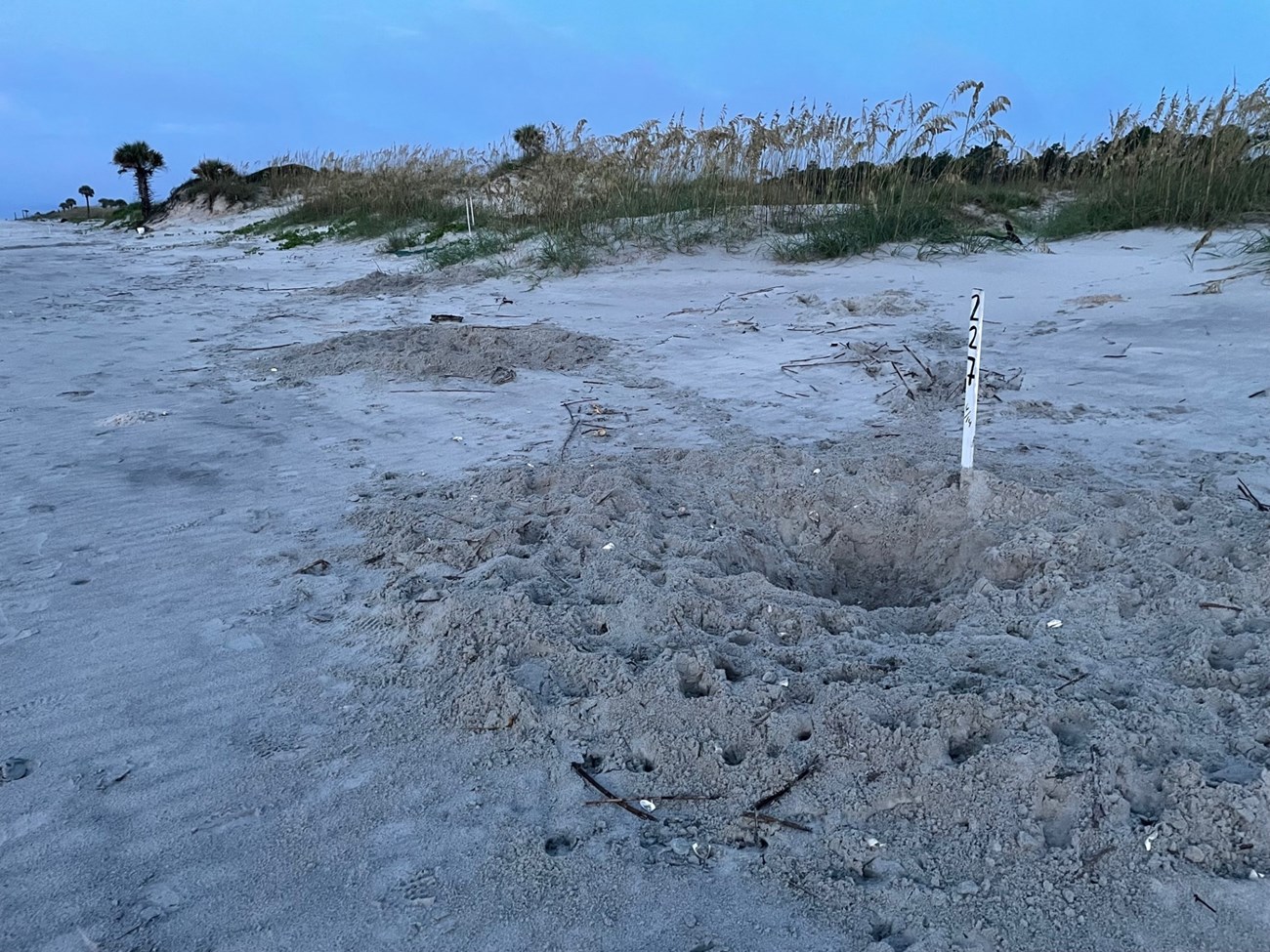
A sea turtle nest destroyed by feral swine at Cumberland Island National Seashore. NPS / Doug Hoffman.
The damage
Park Service invasive animals ecologist Jennifer Sieracki says feral swine are especially hard to control. A single sounder — a herd of wild swine — can strip whole natural areas, wipe out populations of threatened and endangered species and permanently damage cultural sites. They're rarely the only stress on a park, she notes, but often one of the most critical.
At Congaree National Park, superintendent Greg Hauburger lists what the hogs do:
- uproot firefly larvae, threatening the spring and summer firefly displays that draw visitors;
- destroy the nests of ground-nesting animals such as bobwhite quail, Eastern wild turkeys and turtles;
- root up longleaf pine restoration areas and rare and endangered plants such as smooth purple coneflower and Canby's dropwort;
- damage archaeological resources;
- spread diseases such as pseudorabies and swine brucellosis to wildlife and to people.
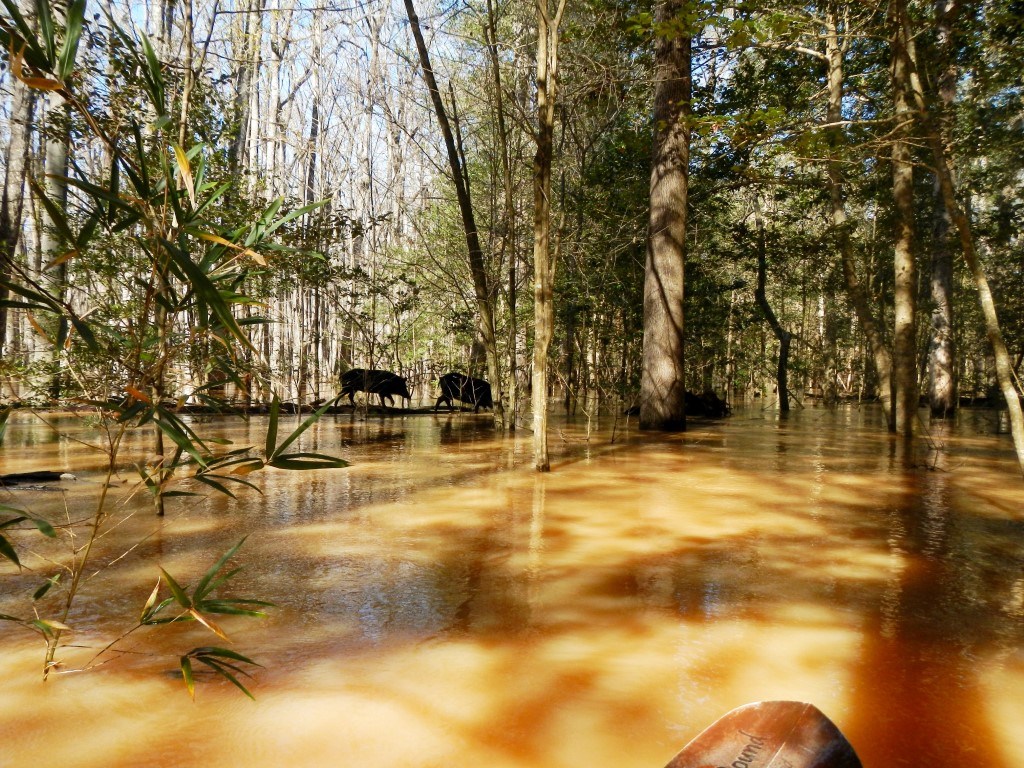
Feral hogs moving through floodwater at Congaree National Park's Cooner Mound. NPS / Dave Schuetrum.
How parks control them
The strategy is to find and remove as many as possible: trapping and euthanizing, targeted shooting by park and contract staff and, where possible, public hunting.
Great Smoky Mountains has worked on feral swine since the 1950s and has removed 15,000 of them since 1959. Supervisory wildlife biologist Bill Stiver used Bipartisan Infrastructure Law funding to hire two seasonal technicians — a recent Tuskegee University graduate and an active-duty Marine Corps Reserves veteran with a wildlife degree from the University of Tennessee. The program has long hired young people and military veterans through internships and seasonal and permanent jobs, working with colleges and universities that have strong wildlife management and veterans' programs.
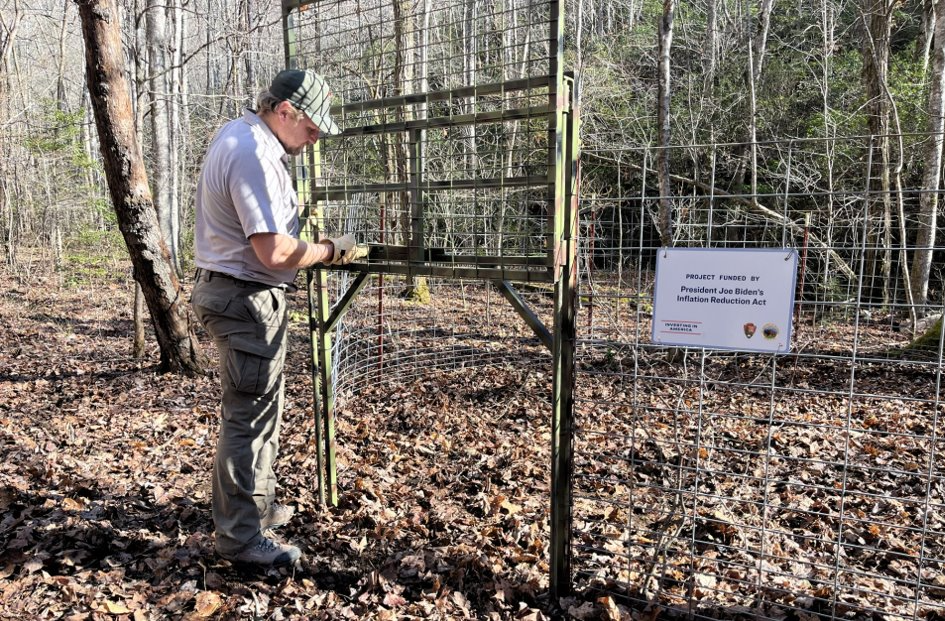
Seasonal biological science technician Kai Shafer sets a feral swine trap at Great Smoky Mountains National Park. NPS / Joe Yarkovich.
Saving sea turtle nests
Female sea turtles bury their eggs deep in southeastern beaches. According to regional natural resources manager Kelly Irick, feral swine were finding and eating the eggs in more than 90% of nests at one park in the ’90s.
| Park | What happened |
|---|---|
| Cumberland Island National Seashore | A 2000 lawsuit over swine harm to turtle nesting led to a control program designed by biologist Doug Hoffman. Trapping and shooting brought the herd from more than 1,000 animals to an average of about 200 or fewer in the 36,000-acre park, which is about half salt marsh and half upland. The 17-mile beach now has about 1,000 nests |
| Canaveral National Seashore | When modest funding for swine control lapsed several years ago, the park quickly lost 300 nests in a small area. Hoffman arrived with thermal imaging gear, removed a small number of hogs, and no more nests were lost there |
Hoffman warns that a single hog can take every nest in a small area: once it finds a stretch of beach with eggs, it stays until they're gone.
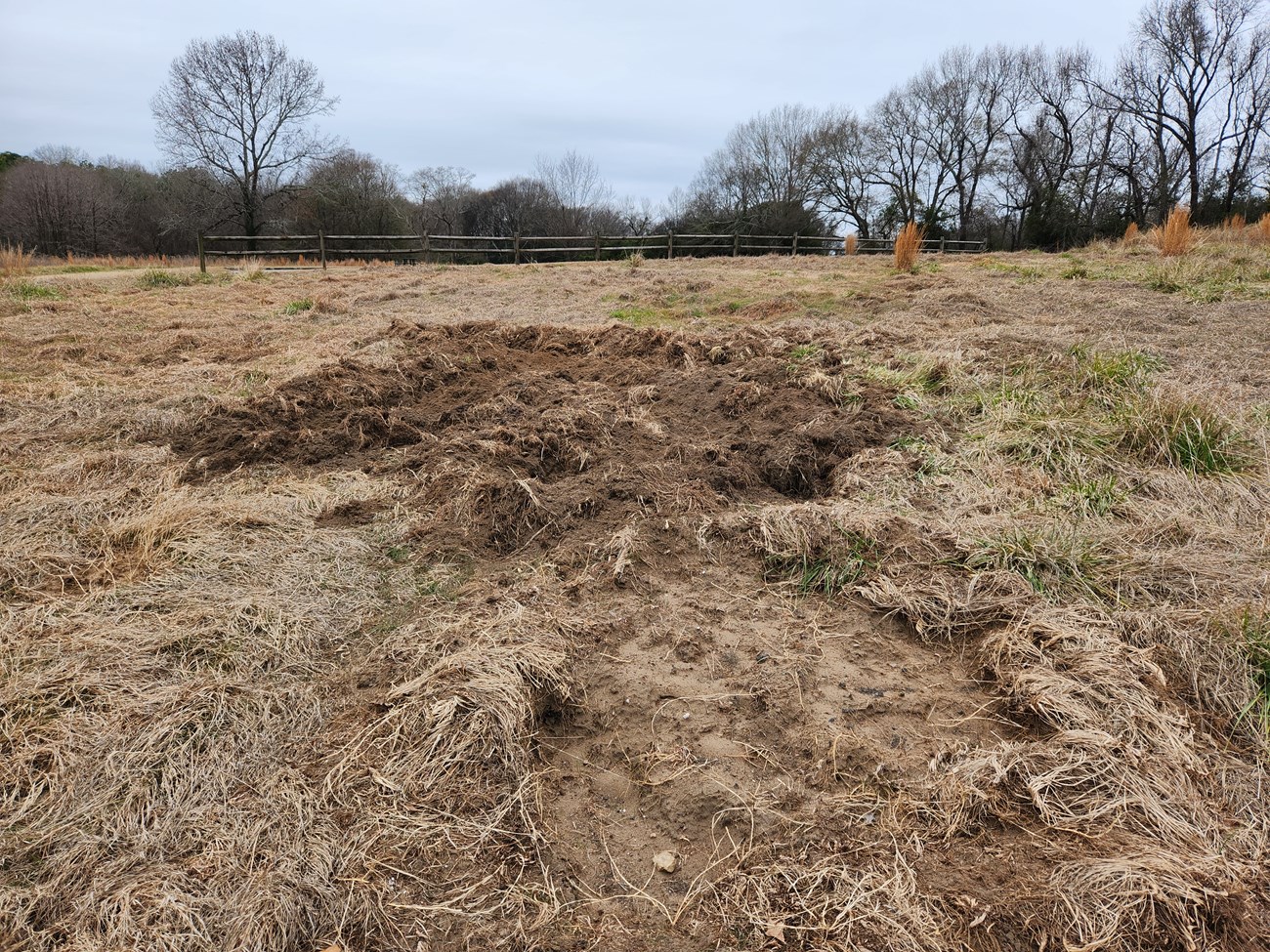
Feral swine damage at Ocmulgee Mounds National Historical Park. NPS / Gregory Luna Golya.
What the funding does
Feral swine are everywhere in the Southeast, on private and public land, so controlling them benefits the whole landscape, says Southeast Region wildlife biologist Carrie Allison. The Inflation Reduction Act money is shared across the region so parks can strengthen existing programs, push swine numbers down and find ways to keep those programs running.
Sources
Based on "Landscape restoration funds help parks protect natural and cultural resources from invasive swine," National Park Service; a work of the United States government in the public domain.
Dans ces collectionsCanaveral National SeashoreGreat Smoky Mountains National ParkCumberland Island National SeashoreOcmulgee Mounds National Historical Park
Licence : CC0 1.0 (domaine public) · Adapté de www.nps.gov
1
0
0
0

commentaires


