
Envie d’améliorer le contenu de la page ? Proposez une modification.
HPV vaccination protects against infections with human papillomavirus that can cause some cancers later in life. More than 15 years of data show it gives safe, effective and long-lasting protection against HPV-caused cancers. This summary covers CDC's recommendations for health care professionals; the official text is in the ACIP recommendations.
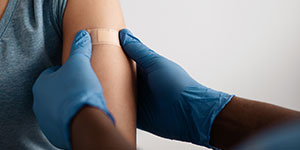
Image from CDC's page on HPV vaccine recommendations.
Parents trust health care professionals more than any other source on HPV vaccine, so CDC encourages clinicians to recommend it the same way, and on the same day, as other adolescent vaccines.
Who should get it
| Group | Ages | Recommendation |
|---|---|---|
| Routine | 11–12 (can start at 9) | Vaccinate everyone |
| Catch-up | 13–26 | Vaccinate anyone not adequately vaccinated |
| Shared clinical decision-making | 27–45 | Some adults not adequately vaccinated may choose it after talking with their clinician |
The vaccine prevents new infections but does not treat existing ones, so it works best before any exposure to HPV. It is not recommended for everyone over 26. Adults 27–45 get less benefit, partly because more of them have already been exposed; clinicians can consider raising it with those most likely to benefit, and need not discuss it with most adults over 26.
Most sexually active adults have been exposed to HPV, though not necessarily to every type the vaccine covers. At any age, a new sex partner is a risk factor for a new infection; people in long-term, mutually monogamous relationships are unlikely to get one.
Dosing schedule
| Starting age | Doses | Schedule |
|---|---|---|
| Before 15th birthday | 2 | Second dose 6–12 months after the first. If the two doses are less than 5 months apart, a third is needed |
| 15 through 26 | 3 | 0, 1–2 and 6 months |
| Immunocompromised, 9 through 26 (including people with HIV) | 3 | 0, 1–2 and 6 months |
Safety
HPV vaccines are very safe, and their benefits far outweigh the possible risks. Like all U.S. vaccines, they went through extensive testing before FDA licensure; the 9-valent vaccine, Gardasil 9, was studied in more than 15,000 males and females before licensure and found safe and effective. No serious adverse events have been linked to any HPV vaccine, and CDC and FDA keep monitoring.
What recipients may notice:
- Injection-site reactions — pain, redness or swelling — the most common, reported by 20% to 90% of recipients in pre-licensure trials, becoming more frequent with later doses.
- Fever of 100°F within 15 days, in 10% to 13% of recipients — about the same share as placebo recipients — and not increasing significantly with more doses.
- Nausea, dizziness, muscle aches and malaise, reported equally often after vaccine and placebo.
- Fainting, which can follow any medical procedure. Adolescents should sit or lie down for the shot and stay that way for 15 minutes afterward to avoid injury from a fall.
When not to vaccinate, or to wait
- Do not give it to anyone who had a severe allergic reaction, such as anaphylaxis, to a vaccine component or to an earlier dose.
- Do not give the 9-valent vaccine to anyone with a history of immediate hypersensitivity to yeast; it is made in Saccharomyces cerevisiae (baker's yeast).
- Wait during a moderate or severe acute illness, until symptoms improve. A minor illness, such as diarrhea or a mild cold, with or without fever, is no reason to delay.
Pregnancy
HPV vaccine is not recommended during pregnancy, though no pregnancy test is needed beforehand. It has not been studied in pregnant women in clinical trials, but inadvertent vaccination in pregnancy has not been linked to problems for mother or fetus.
- Anyone known to be pregnant should wait until after the pregnancy to start the series.
- If pregnancy is discovered mid-series, delay the remaining doses until after it.
- Someone who learns they were pregnant when vaccinated need not be alarmed, and can contact the manufacturer at 1-877-888-4231.
- Report any suspected adverse event after vaccination in pregnancy to VAERS.
Sources
Based on "HPV Vaccine Recommendations," Centers for Disease Control and Prevention; a work of the United States government in the public domain.
Licence : CC0 1.0 (domaine public) · Adapté de www.cdc.gov
1
0
0
0

commentaires
À lire ensuite


