
Envie d’améliorer le contenu de la page ? Proposez une modification.
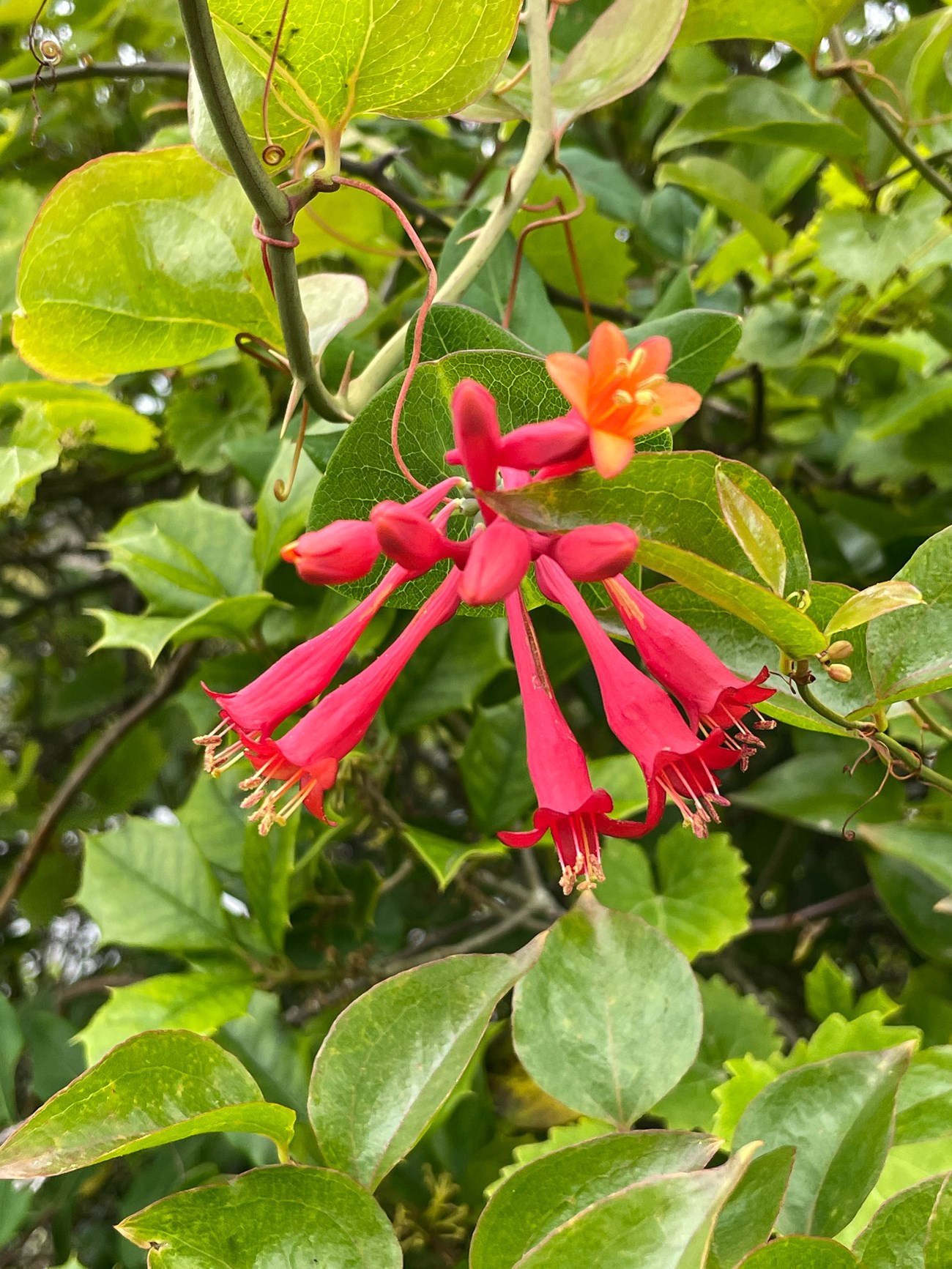
Coral honeysuckle, one of the plants found. NPS / Hall.
The rarest plants at Assateague Island National Seashore turned out to be growing beside its parking lots. A survey before planned construction found 16 of 46 rare, threatened or endangered species — including two never recorded in the park, one of them a first for Maryland.
Why look
The seashore, on Maryland's barrier island, planned to demolish abandoned buildings and move a campground. Before it did, the park, the University of Maryland and the Park Service's Inventory and Monitoring Division set out to learn which rare plants grew where.
The threats are both human and natural:
- Traffic. Development and visitors bring cars and feet; vehicles parked off designated areas tear up plant habitat, and social trails trample it.
- Moving dunes. On a barrier island the dunes migrate west, burying and reshaping habitat. Climate change is speeding that up, and plants that cannot keep pace are buried in sand.

Tyre tracks through habitat where no vehicle should be. NPS.
The search
Researchers drew up a list of 46 rare species that might occur, and concentrated on the frontcountry — parking lots and the planned campground site, where people and plants meet. Working in pairs, one spotting and one recording, they searched each area for about an hour, and took off-road vehicles into the backcountry where buildings were to come down. Uncertain specimens went to expert botanists in the lab.

Biologists search a remote part of the island. NPS / Hall.
What they found
| Target species found | 16 of 46 |
| New to the park | Atlantic lady's tresses (Spiranthes bightensis), an orchid NatureServe ranks as critically imperiled — the number of stems suggests a population of global importance; and largeleaf pennywort (Hydrocotyle bonariensis), the first known population in Maryland |
| Surprise | many rare plants were in the busy, developed frontcountry, not the quiet outskirts |

Pink redstem, another species the team recorded. NPS / Hall.
Species not found may still be growing in places the team did not reach.
Protecting them
Some populations grow close to the construction sites. The researchers judged them fairly resilient, but recommended:
- changing mowing schedules to spare late-blooming species;
- flagging plants so demolition crews avoid them;
- fencing plant areas during construction.
They also delivered notes for each species and an interactive map of every location, which park manager Lindsay Ries called a great tool for planning around the plants. The park will keep monitoring them — and visitors can help by parking only in marked areas and leaving no trace.
Sources
Written from Summer Boulais, "Expect the Unexpected: Rare Plants Identified in Assateague Island National Seashore" (January 2025), National Park Service Inventory and Monitoring Division, a work of the United States government in the public domain.
Dans ces collectionsAssateague Island National Seashore
Licence : CC0 1.0 (domaine public) · Adapté de www.nps.gov
1
0
0
0

commentaires
À lire ensuite


