
Vuoi migliorare il contenuto della pagina? Prova a proporre una modifica.
In July 1944, U.S. forces invaded Guam, then held by Japan, in one of the most significant battles of the Pacific war. The island was strategically vital to both sides. Much of what the battle left behind — ships, aircraft, amphibious vehicles, artillery — may still lie on the seafloor off the landing beaches at Asan and Agat, now part of War in the Pacific National Historical Park.
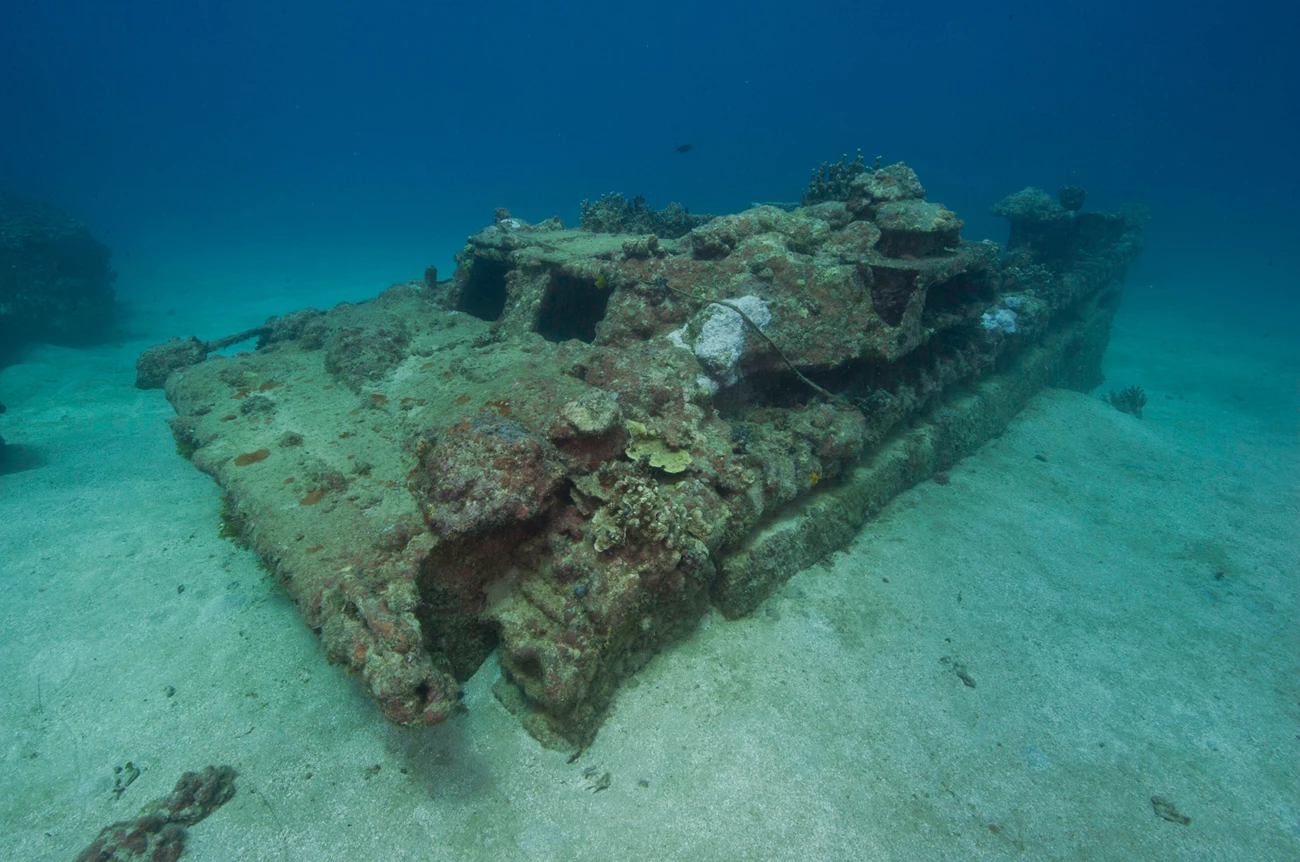
This Amtrac amphibious tractor, under about 50 feet of water in the park's Agat Unit, is one of the few underwater relics of the battle known so far. Credit: National Park Service.
The expedition
From January 27 to February 25, 2023, a team of National Park Service researchers, supported by NOAA Ocean Exploration, planned to search for those remains. It was to be the first of two expeditions on the battle and on how it may have shaped Guam's natural environment today.
"There has never been a complete underwater inventory of what battle-related items may still exist," said NPS archeologist Anne Wright, one of the project's principal investigators. "Evidence suggests there are significant cultural resources, almost 80 years after the battle, still on the bottom of the ocean."
Her co-investigator, NPS marine ecologist Monique LaFrance Bartley, stressed the pairing of history and ecology: "This is a unique opportunity to study cultural and natural resources together. This approach provides a more holistic understanding of the events of WWII from both historical and ecosystem perspectives."
The plan
| Phase | Work |
|---|---|
| Winter 2023 | Underwater remote sensing and diver photogrammetry to map the seafloor and parts of the barrier reef near the landing beaches; elevation surveys of the beaches |
| Summer 2023 | A return with divers and a remotely operated vehicle (ROV) for detailed exploration, guided by the winter data |
The maps would pinpoint battle-related artifacts and show the seafloor around them. The beach surveys had a second purpose: to learn whether wartime damage to the reef is making the coast more vulnerable to storms and sea-level rise.
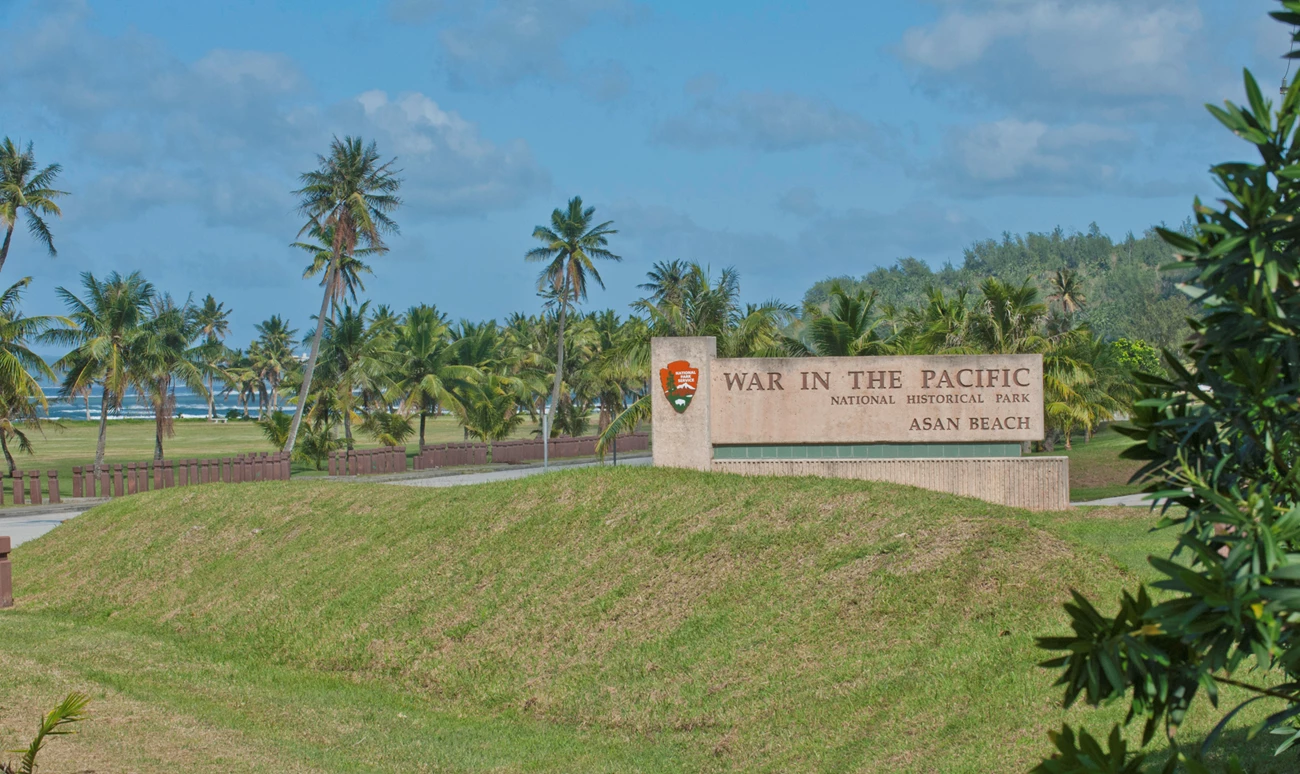
The park commemorates the bravery and sacrifice of those who fought in the Pacific campaigns of World War II and protects Guam's natural, scenic and historic resources. Credit: National Park Service.
The expedition, Guam: A Biogeographic and Maritime Cultural Landscape Exploration of a WWII Amphibious Battlefield, was underwritten by NOAA Ocean Exploration, which followed it on its expedition website.
Sources
Based on "Guam: A Biogeographic and Maritime Cultural Landscape Exploration of a WWII Amphibious Battlefield," National Park Service; a work of the United States government in the public domain.
In queste raccolteWar In The Pacific National Historical ParkUsing Science to Preserve the Past
Licenza: CC0 1.0 (pubblico dominio) · Tratto da www.nps.gov
1
0
0
0

Commenti


