
Vedi qualcosa da migliorare? Proponi una modifica.
On Christmas Eve in the early 1800s, a Protestant American boy named Henry Marie Brackenridge, lodging with the Beauvais family in Ste. Genevieve, sat alone for nearly an hour before midnight on a high stool in front of the altar, holding a cross. "At Christmas eve it was the custom to keep the church open all night, and at midnight to say mass," he remembered; the altar was "splendidly decorated, and lighted with the largest wax candles the village could afford." In the French Catholic town, the weeks from December to mid-January were the most festive of the year.
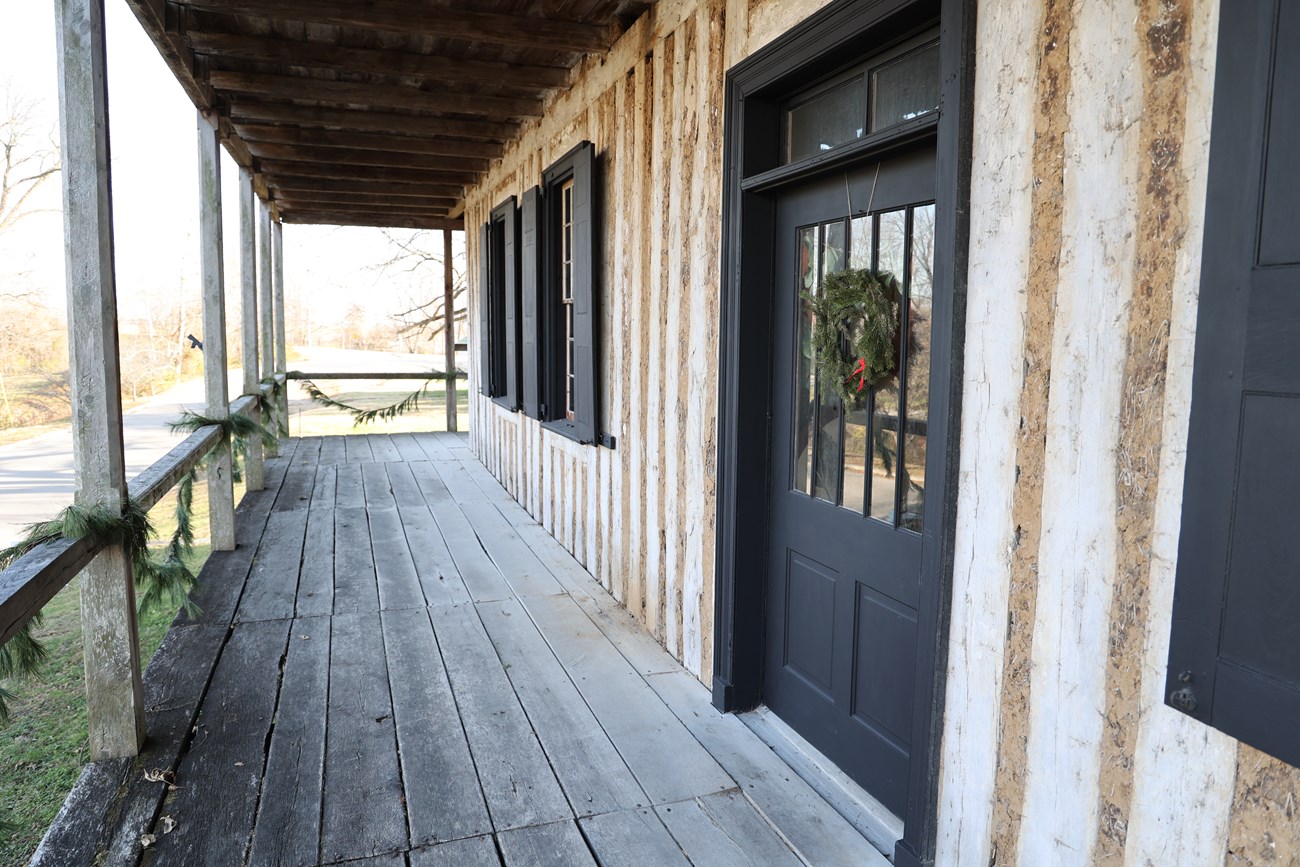
Winter greenery on the Green Tree Tavern in Ste. Genevieve National Historical Park today. Credit: National Park Service.
The season, step by step
| When | Celebration |
|---|---|
| Four weeks before Christmas | Advent: a time of reflection, fasting and celebration, crowded with saints' days — which made December the least common month for weddings |
| Christmas Eve | Midnight Mass, attended by most of the town |
| After Mass, into Christmas Day | La Réveillon, an all-night breakfast feast with extended family: eggs, sausage and bread, but also puddings, stews and cakes; then more feasting, Masses, and in some homes balls or parties |
| New Year's Eve | La Guiannée: a troupe of men in costume went door to door singing, collecting lard, poultry, eggs, wheat and candles for the Epiphany feast |
| January 6, Epiphany | Mass for the arrival of the three wise men, or "kings," then a feast of the goods La Guiannée had gathered |
| Epiphany night or just after | The Kings Ball. At the feast, the town's unmarried women chose the "Kings" to host it, beginning a cycle of balls that ran until Ash Wednesday and Lent |
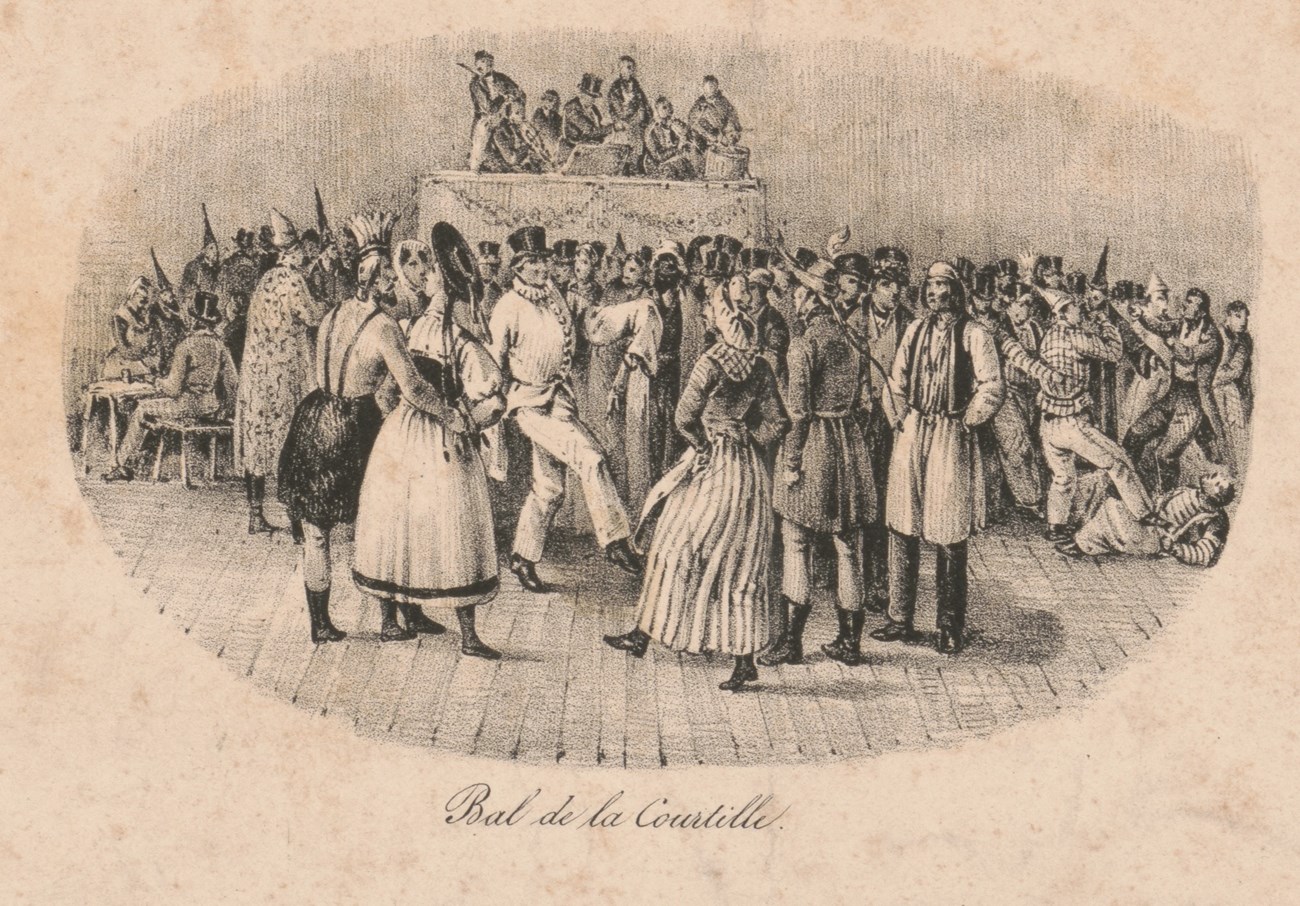
The Kings Ball's dancers dressed finely, like those in this 1820 sketch of the "Bal de la Courtille." Credit: Library of Congress.
Changing traditions
As Americans and Germans settled in Ste. Genevieve, new customs arrived and old ones adapted. Those changes helped many of the French Catholic traditions survive into the town's present-day community.
Further reading
Natalie Belting, Kaskaskia Under the French Regime (1948); Henry Marie Brackenridge, Recollections of Persons and Places in the West (1868); Carl Ekberg, Colonial Ste. Genevieve (1985); John Reynolds, The Pioneer History of Illinois (1852).
Sources
Based on "French Catholic Winter Holidays in Colonial Ste. Genevieve," National Park Service (Ste. Geneviève National Historical Park), a work of the United States government in the public domain.
Licenza: CC0 1.0 (pubblico dominio) · Tratto da www.nps.gov
1
0
0
0

Commenti


