Vedi qualcosa da migliorare? Proponi una modifica.
How do doctors treat GI bleeding?
Treating gastrointestinal (GI) bleeding depends on how severe the bleeding is, its cause, and where in the GI tract the bleeding takes place. If you have symptoms of GI bleeding, seek medical help right away.
Medical treatments
Doctors may use medical treatments to stop GI bleeding, prevent further bleeding, or care for the problem that caused the bleeding. In some cases, doctors can diagnose and treat GI bleeding at the same time.
Endoscopy
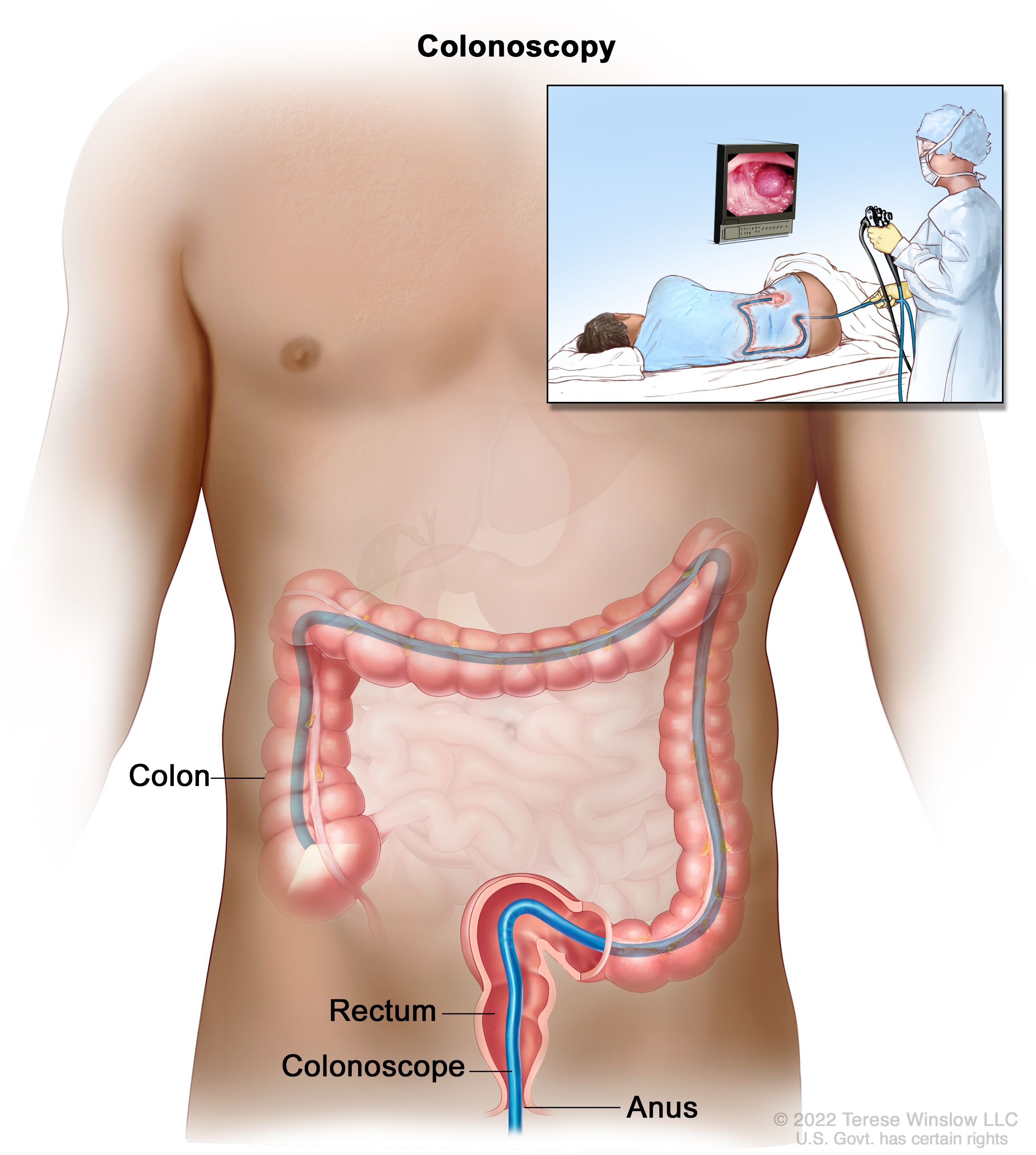
Endoscopy procedures include upper GI endoscopy, enteroscopy, and colonoscopy. During an endoscopy, a doctor can insert tools through the endoscope to
- inject medicines into the bleeding site
- treat the bleeding site and surrounding tissue with an electric current to burn and seal the bleeding blood vessel
- apply a band or clip to close blood vessels that are bleeding
- spray a powder or gel to stop bleeding from a blood vessel
Angiography
During an angiography, a doctor inserts a catheter into your blood vessels. The doctor can inject medicines or other materials through the catheter to stop some types of bleeding.
View full-sized image Doctors may use medical treatments, such as colonoscopy, to stop GI bleeding.
Medicines
Doctors may recommend medicines to treat some of the causes of GI bleeding, such as peptic ulcers, gastritis, and inflammatory bowel disease.
Surgery
If you have severe bleeding or bleeding that does not stop after other treatments, you may need surgery.
Doctors may recommend laparoscopic or open surgery to stop GI bleeding. During laparoscopic surgery, surgeons make small cuts in your abdomen and insert a laparoscope and other tools. In open surgery, surgeons make a larger cut to open your abdomen.
How can I prevent GI bleeding?
If you have a disease or condition that may cause GI bleeding, you can lower your risk of bleeding by following your doctor’s treatment plan.
Nonsteroidal anti-inflammatory drugs (NSAIDs), which are available over the counter and by prescription, may increase the chance of having GI bleeding. Some other medicines, when taken along with NSAIDs, can also increase the risk of bleeding.
Blood thinners may increase the chance of having GI bleeding or the severity of a GI bleed. The risk is higher in patients taking these medicines along with NSAIDs or aspirin and in those who have had GI bleeding in the past.
Talk with your doctor about the medicines you take, including over-the-counter medicines and supplements. In some cases, doctors may recommend changes to your medicines or prescribe a medicine to lower your GI bleeding risk.
Where this page came from
This page was imported from National Institute of Diabetes and Digestive and Kidney Diseases. Published by the National Institute of Diabetes and Digestive and Kidney Diseases (NIH) and, as a work of the United States government, in the public domain; its pictures are not copied (many are licensed stock).
Nobody has written it yet — it is the source material at a new address, which is why search engines are asked to skip it and why no one earns from it. It is up for grabs: take it on, and it is yours to rewrite and to earn from.
Licenza: CC0 1.0 (pubblico dominio) · Tratto da www.niddk.nih.gov
1
0
0
0

Commenti