
Inflation Reduction Act Powers CERCLA Cleanup Effort
By Anna Petr, December 2024
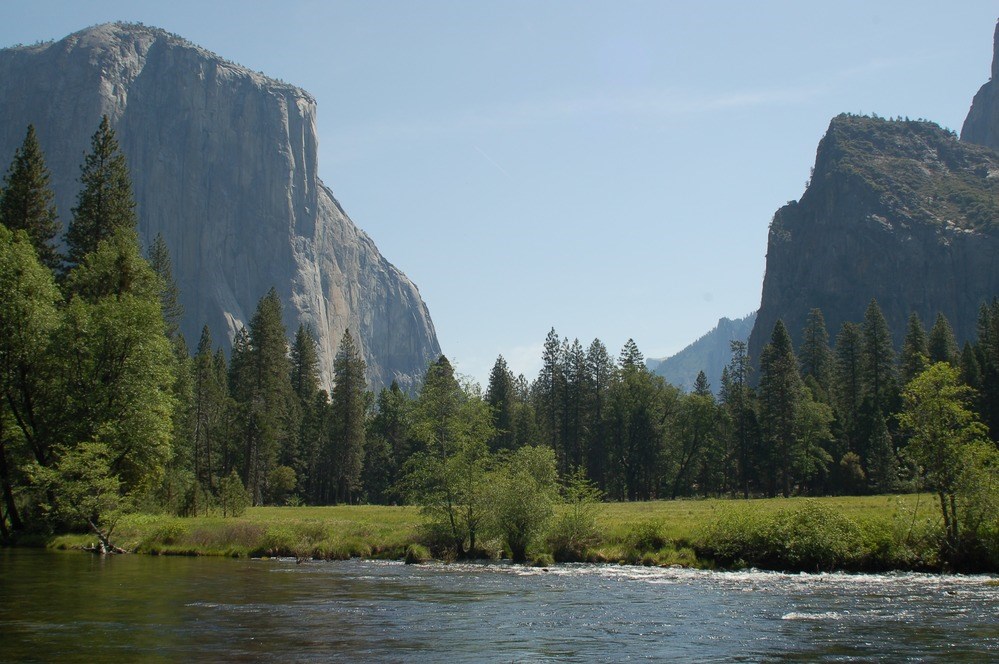
The Merced Wild and Scenic River running by with a view of El Capitan in Yosemite National Park. NPS Photo
Many of our nation’s most revered national parks house significant natural, historic, and cultural landmarks. Surprisingly, some also contain legacy dump sites, resulting from past human occupancy.
In California’s Yosemite National Park, a waste disposal area at the world-famous El Capitan rock formation is getting some much-needed attention. The National Park Service (NPS) has begun cleaning up the El Capitan waste disposal area, thanks to funding from the Inflation Reduction Act (IRA). The goal of this effort is to remediate this part of Yosemite National Park to its original condition.
IRA funds have enabled NPS to exercise its delegated authority under the Comprehensive Environmental Response, Compensation, and Liability Act (CERCLA) to investigate the Site and proceed with response actions to remove the waste and treat groundwater to prevent contamination from leaching into the Merced River, and remediate the original watershed features within the park.
The removal of waste and contamination involves excavating and safely disposing of solid waste, conducting thorough testing and monitoring of hazardous substances in the soil, and restoring the site through revegetation.
A Messy History
The NPS is in the process of remediating sites like this across the country, balancing environmental protection, visitor safety, and preservation of flora and fauna which inhabit parks. The NPS’s current inventory registers more than 500 contaminated and potentially contaminated sites of various types, size, scale, and complexity.
Specifically in Yosemite National Park, the area became contaminated starting in the 1850s, when the Yosemite Valley began receiving visitors. Visitation and development increased in the late 1800s with the extension of roads into the valley. By the early 1900s, hotels and hotel-camps had been built to accommodate ever more visitors, and the U.S. Army had established a camp near Yosemite Creek. Documentation is scarce, but history suggests that these establishments used the El Capitan area for waste disposal purposes from roughly 1905 until the 1930s.
“Materials that came into the park that were not consumed were disposed of in the park. This was common practice for generations, until landfills were developed,” said Stephen Mitchell, former deputy lead of NPS’s Environmental Compliance and Cleanup Division.
A variety of debris has been documented at the El Capitan site – trash, glass, ceramics, automotive machinery, related wastes, paint cans, 55-gallon oil drums, and burned material. Hazardous metals have contaminated soils. This poses a threat to human health and the environment, including an ancient Indian village, groundwater, and the Merced River.
The Merced River — which cascades over park cliffs, drops down magnificent waterfalls, and winds its way through park meadows — is adjacent to the site. For more than a century, its beauty has inspired artists, photographers, and authors, including Ansel Adams and John Muir. As a designated Wild and Scenic River, the Merced is protected and left largely undeveloped to preserve its natural character. As a result, its flow and footprint change over time.
“At times, the river would be extremely wild – and erode or meander into the waste disposal area, releasing both solid wastes and hazardous substances downstream,” Mitchell said. While the river is not a source of drinking water at or near the park, a concern that hazardous substances could be polluting drinking water sources farther downstream could not be excluded.
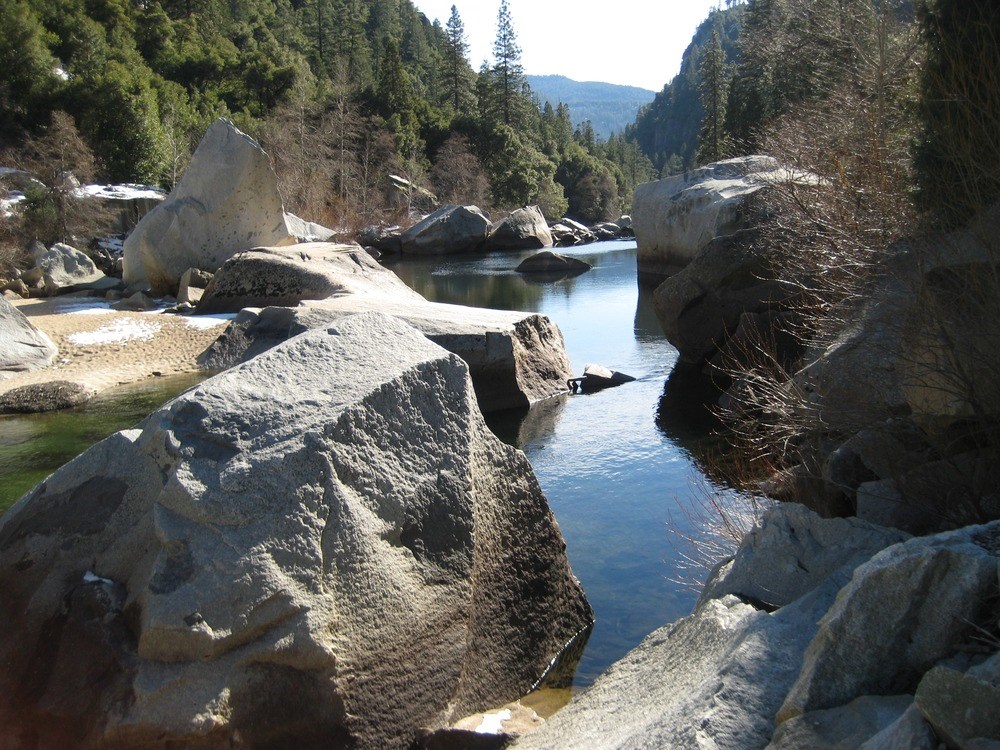
The Merced Wild and Scenic River running through Yosemite Valley. NPS Photo
Clean for All
The California black oak and animal species of concern, such as the spotted bat and western mastiff bat, are found near the El Capitan site. The California black oak is culturally significant to Native Miwok and Paiute people, and its acorns are important food for Yosemite animals. The bats are species of concern in California due to potential population declines and vulnerability to habitat changes. Ingesting hazardous substances is harmful to not only bats but a wide array of species that are present at the site.
The gradual accumulation of toxins in an organism, such as the hazardous substances found at the El Capitan site, is known as “bioaccumulation.” For example, an invertebrate animal species, such as a worm, will bioaccumulate contaminants from soil. A predator, such as a bird, will consume the worm, accumulating the toxins from the worm, and so on through the food chain.
“Wildlife that live in the site’s terrestrial environment are most impacted,” said Mitchell. “A national park isn’t just about scenery — it is a living entity. If there are no living, vibrant ecological receptors, we would be left with nothing. This is why it is crucial to clean up waste sites — to ensure the parks remain safe havens for plants and animals to thrive, and where future generations of Americans can enjoy nature.”
Mitchell estimates that the project is nearly one half complete, and that removal of the waste can be completed this year, once work resumes in August 2025 after bird mating season. Throughout the project, NPS is taking precautions to protect the California black oaks. The NPS also is minimizing disturbance to the park environment and, with technical expertise from the Environmental Compliance and Cleanup Division, doing everything possible to ensure the health and safety of visitors and employees.
Once the project is completed, vegetation and groundwater monitoring will be done for three to five years to ensure there are no remnants of the contamination and that wildlife and plants are thriving.

El Capitan, rising over 3,000 feet above the floor of Yosemite Valley, is a favorite for experienced rock climbers and onlookers alike. El Capitan is best seen from El Capitan Meadow. NPS Photo / H. McClendon
About the Inflation Reduction Act
The Inflation Reduction Act provides the National Park Service with an historic opportunity to address critical ecosystem resilience, restoration, and environmental planning needs. Projects funded in national parks represent broad-scale and impactful resource investments across every corner of out nation—from Alaska to Florida to Maine.
Where this belongs
- Yosemite National Park
Where this page came from
This page was imported from National Park Service. Produced by the U.S. National Park Service and, as a work of the United States government, in the public domain.
Nobody has written it yet — it is the source material at a new address, which is why search engines are asked to skip it and why no one earns from it. It is up for grabs: take it on, and it is yours to rewrite and to earn from.
このページを含むコレクションYosemite National Park
ライセンス: CC0 1.0(パブリックドメイン) · 出典 www.nps.gov
1
0
0
0

コメント
次に読む


