
You’re visiting a park and notice a bison walk up a little way away from you. You’ve heard us joke about not petting the fluffy cows, but they just look so tame. Getting just a little closer to take an epic selfie won’t hurt... will it?
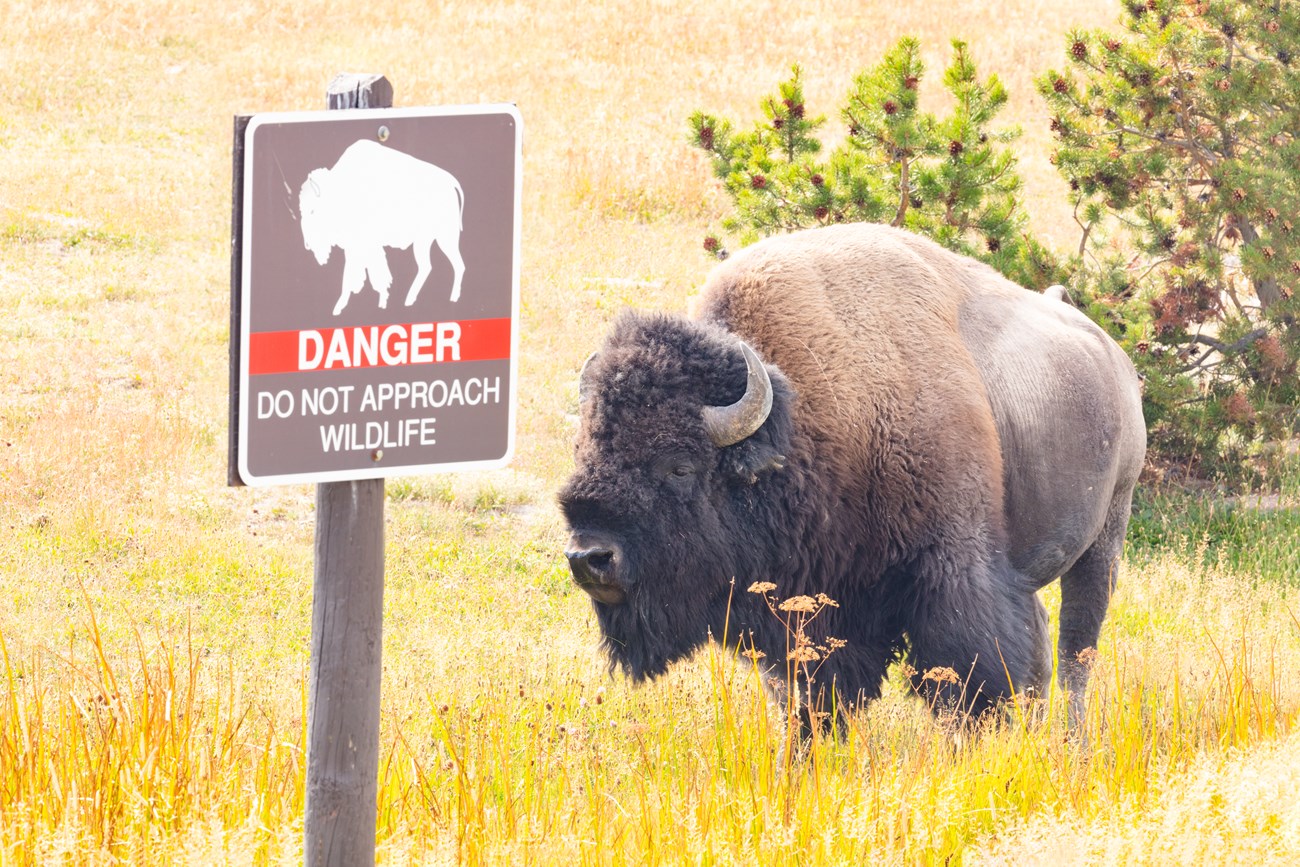
There's not always a perfectly placed sign, so it's up to you to remember to keep your distance. NPS / Jacob W. Frank
You aren’t visiting a zoo, you’re visiting a national park, a place to let wildlife be wild. The animals you see are not pets or cared for by staff, they are wild. Your safety, as well as the safety of the animals, depends on good judgement and following safe wildlife viewing guidelines.
Did You Know?
Respect Wildlife is one of the 7 Leave No Trace Principles. These Principles empower you to leave nature as unchanged by your presence as possible. It’s a way of protecting the natural world and yourself and to preserve our outdoor spaces for the enjoyment of generations to come.
Why do I need to keep my distance?
- **It keeps you safe. **Remember that wildlife in parks is wild and can be unpredictable when disturbed or surprised. Interacting with wildlife can cause injury or disease.
- **It keeps wildlife safe. **Keeping your distance is not just for your safety, but also the safety of wildlife. Getting too close to wildlife can cause unnecessary stress. Animals can get injured trying to escape away from people who get close, especially near roads. Also, both people and pets may have diseases that they can give to wildlife.
- **It’s the law****. **It’s illegal to feed, touch, tease, frighten, or intentionally disturb wildlife (36 CFR § 2.2(a)(2) Wildlife Protection).
Safe Wildlife Viewing Guidelines
Follow these three ranger tips to safely watch wildlife when visiting a park.
1. Know Before You Go
Every park is unique and has specific guidelines, including minimum wildlife viewing distances. Before you head out, take a few minutes to review the park’s rules. Many parks have the Superintendent’s Compendium (park rules) available online on the park website, usually under “Learn About the Park” under “Management” and “Laws and Policies.” If you can’t access this information online or if you have questions, stop by the visitor center and ask a ranger.

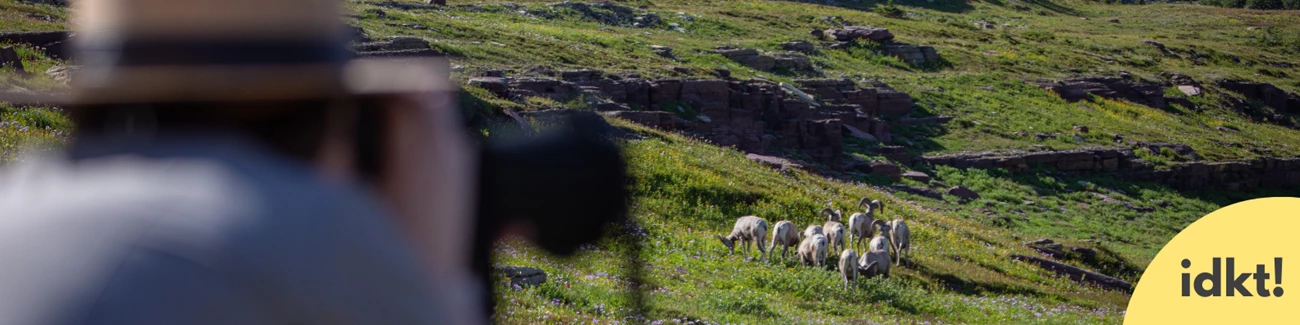
A spotting scope or a zoom lens is a great way to get a closer look while keeping safety in the picture. NPS Photo
2. Give Animals Room
Parks provide a unique opportunity to view the natural behavior of animals in the wild. The best way to stay safe when watching wildlife is to give animals room to move. In general, if an animal reacts to your presence, you are too close. If you’re close enough for a selfie, you’re definitely too close! Use binoculars or a zoom lens and move back if wildlife approach you. Let wildlife be wild and observe from a distance.
How Close is too Close?
Many parks require you to stay a minimum distance of 25 yards from most wildlife and 100 yards from predators like bears and wolves. But make sure you check with the park you’re visiting as these rules sometimes vary (for example, Olympic National Park requires a minimum distance of 50 yards).

###
Text description of infographic
Title: Sometimes the best relationship is a long-distance relationship
General Description: The infographic shows three safe wildlife viewing distances shown with school buses as a reference for how far away you should be.
Viewing Distances:
- Viewing distance for a squirrel is 25 yeads or two school bus lengths
- Viewing distance for deer or elk is 50 yards or four school bus lengths
- Viewing distance for a bear is 100 yards or eight school bus lengths
For each animal, there is a speech bubble with a witty saying:
- Squirrel is saying "distance is the key to admiration."
- Deer are saying "distance gives us new perspective."
- Bear is saying "distance makes the heart grow fonder."
How far away am I?
You are probably not bringing a tape measure on your adventure, so how do you know how far away you are? Here are two ranger tips on how to estimate your distance.
Bus Lengths: One way to help visualize the distance is to think of it in terms of something familiar, like bus lengths. 75 feet (25 yards or 23 meters) is about two bus-lengths. 150 feet (50 yards or 46 meters) is about four bus-lengths.
Rule of “thumb”: Another way to help keep your distance is to use the rule of “thumb.” Hold your arm straight and give the animal a thumbs up. If you can’t cover the animal in your line of sight, then you’re too close. Take a few steps back and try again.
What if an animal approaches me or I don’t notice it until I’m too close?
It happens! You might be viewing from a safe distance and the animal approaches you, or you might turn a bend in a trail and stumble upon a too-close animal. If this happens, it’s your responsibility to slowly back away and keep your distance. Wildlife may not know better, but you do! It’s also a good to be aware of your surroundings and ready for any wildlife that may pop up at a moment’s notice.
3. Do Not Disturb
Seeing wildlife in their natural habitat is a privilege, and we need to respect them and the habitats in which they live. The best viewing experiences happen when the animals act naturally, without being distracted by a human presence or interference. They’ll behave most naturally when they don’t know you’re watching.

Watching wildlife in their natural habitats is an amazing experience - if you keep your distance. NPS / Jacob W Frank
What You Can Do
- Use our Bring This, Not That checklist to make sure you’re prepared.
- Use your zoom and photograph wildlife from a distance.
- Use spotting scopes or binoculars to get a closer look.
- Wildlife is "Amazing from Afar," Capture and Share the Experience.
- Set a good example for others.
- Learn more about Leave No Trace Principle #6 – Respect Wildlife.
Pass It On
Did you learn something new? Pass it on! Protecting our ecosystems a job for us all, but there’s no way for everyone to be an expert in everything. That’s why sharing knowledge is so important!
Download or screenshot this card to share with a friend or help spread the word and encourage others to Leave No Trace by respecting wildlife and viewing them from a safe distance. Thank you for helping protect our natural spaces for generations to come.

Check out other I Didn’t Know That! Topics.
###
Text Description of Infographic
Title: I Didn't Know That! (with Leave No Trace) Principle 6: Respect Wildlife
Parks offer us the opportunity to observe wildlife in their natural habitats. Parks aren’t zoos! The wildlife can be unpredictable and dangerous if you get too close. Your safety, as well as the safety of wildlife, depends on good judgment and following safe wildlife viewing guidelines.
- Know before you go.
Every park is unique and has specific guidelines, including minimum wildlife viewing distances. Before you head out, take a few minutes to review the park’s rules.
- Give wildlife room.
In general, if an animal reacts to your presence, you’re too close! Use binoculars or a zoom lens and move back if wildlife approaches you.
- Do not disturb.
Let wildlife be wild and observe from a distance. It’s the law! It’s illegal to feed, touch, tease, frighten, or intentionally disturb wildlife.
Ranger Tips
- Use your zoom
- Bring binoculars or a spotting scope
- Set an example for others
go.nps.gov/idkt
###
In Collaboration with Leave No Trace
This article is part of the I Didn't Know That!: Leave No Trace series and was developed in collaboration with Leave No Trace Center for Outdoor Ethics.
Part of a series of articles titled
I Didn't Know That! Leave No Trace.
Previous:
I Didn't Know That! Leave No Trace Principle #5 - Minimize Campfire Impacts
Next:
I Didn't Know That!: Leave No Trace Principle #7 - Be Considerate of Others
Where this page came from
This page was imported from National Park Service. Produced by the U.S. National Park Service and, as a work of the United States government, in the public domain.
Nobody has written it yet — it is the source material at a new address, which is why search engines are asked to skip it and why no one earns from it. It is up for grabs: take it on, and it is yours to rewrite and to earn from.
このページを含むコレクションI Didn't Know That! Leave No Trace
ライセンス: CC0 1.0(パブリックドメイン) · 出典 www.nps.gov
1
0
0
0

コメント
次に読む


