
Imagine learning that the cheap thrift-store bowl you keep your keys in is a thousand-year-old Maya vase. Park Service ecologists had that experience in 2024 — except the treasure was a few acres of what looked like worn cow pasture. It turned out to be old-growth remnant grassland: a plant community that has existed for thousands of years, still holding most of the area's original plants, animals and soil microorganisms, and their unique genetic signatures.
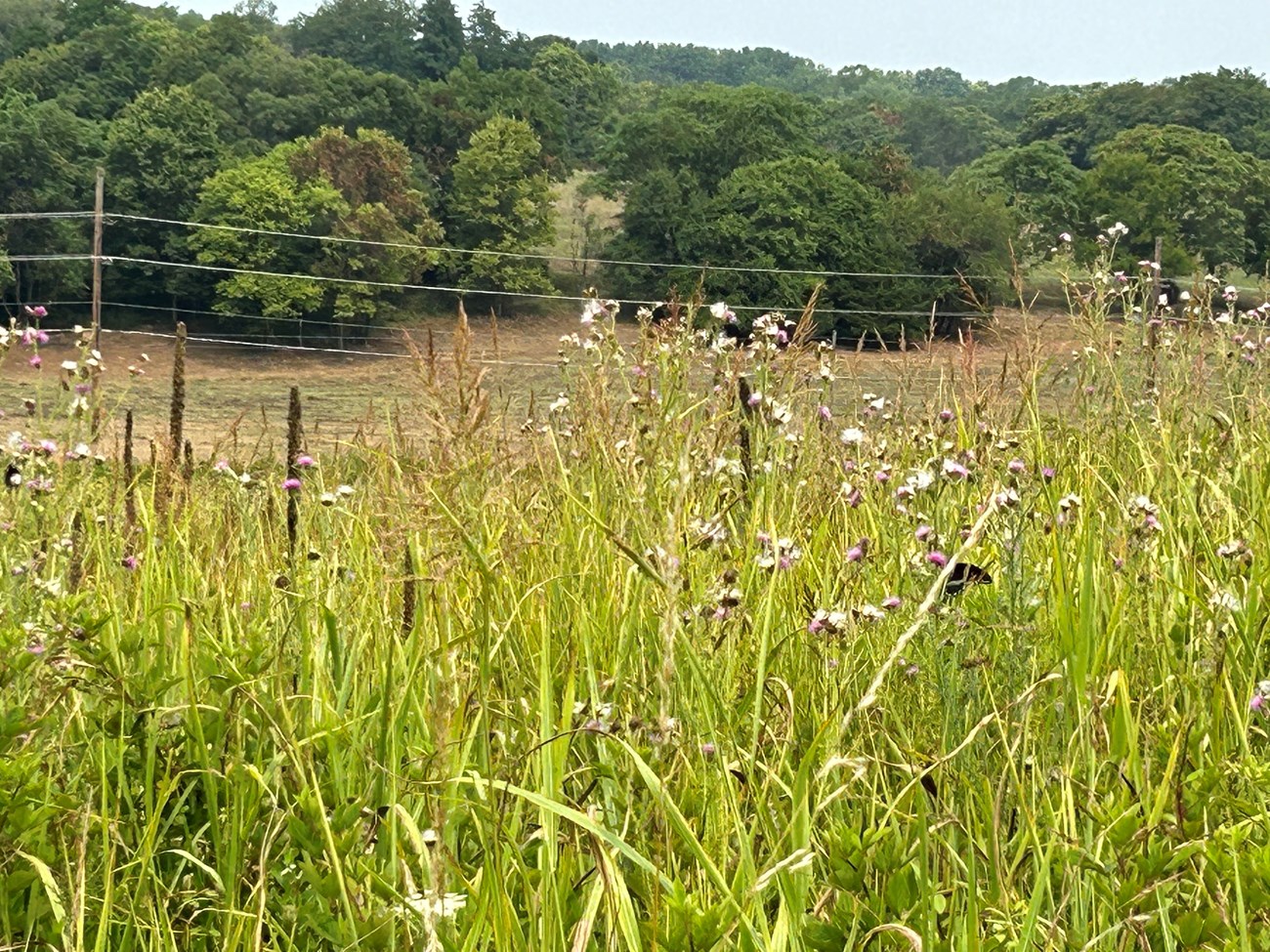
An old-growth remnant grassland in the Lower Bolivar area of Harpers Ferry National Historical Park, newly identified in 2024. Credit: National Park Service.
Surprises in the parks
The finds came during scouting for a project to restore eastern grasslands on up to 4,000 acres in 37 parks from Mississippi to Vermont, funded by the Bipartisan Infrastructure Law and the Inflation Reduction Act.
| Park | What was found |
|---|---|
| Congaree, Great Smoky Mountains, Shenandoah | Old-growth grasslands already known |
| Fredericksburg and Spotsylvania National Military Park, Rock Creek Park, Gateway National Recreation Area | The first old-growth grasslands ever known in these parks |
| Harpers Ferry National Historical Park, Manassas National Battlefield Park | New sites, beyond those already known |
At Lower Bolivar, wild strawberry (Fragaria virginiana) and clumps of the grass Dichanthelium were signs of an old-growth dry savanna.
Why they're so easy to miss
Unlike a forest of towering old trees, an old-growth grassland tells most of its story underground; like tree rings, its roots and soil reveal its age. Grassland plants need disturbance: grazing, mowing and fire may look damaging, but they stimulate plants to sprout, flower and regrow. Plowing is different — like cutting down an ancient tree. Once the soil is turned, the grassland and its history are gone.
Finding one takes skilled study of the plants, the site and its land-use history. Remnants often shelter plants that are rare in their state or globally, that need particular soils, or that take a long time to establish. They are extremely diverse and preserve part of the genetic diversity of the East's original grasslands, which makes them key to restoration. "If we can stabilize those [remnant] sites, make sure they persist, that gives us one of the best tools against climate change," says Jeremy French of the Southeast Grasslands Institute, a Park Service collaborator, "because it's allowing these long-term genetics more of an opportunity to not die off and to find their niche."
Two kinds of restoration
- Degraded land — mostly farm fields that have lost their native diversity — will be cleared and replanted with a diverse mix of locally adapted native species.
- Old-growth remnants get a lighter touch: removing non-native, invasive and woody plants, and spreading seed collected from the remnant's own plants rather than adding new species, to keep its genetics intact.
Both will be maintained with mowing, prescribed fire and targeted invasive-plant treatment, restoring the disturbance grasslands need.
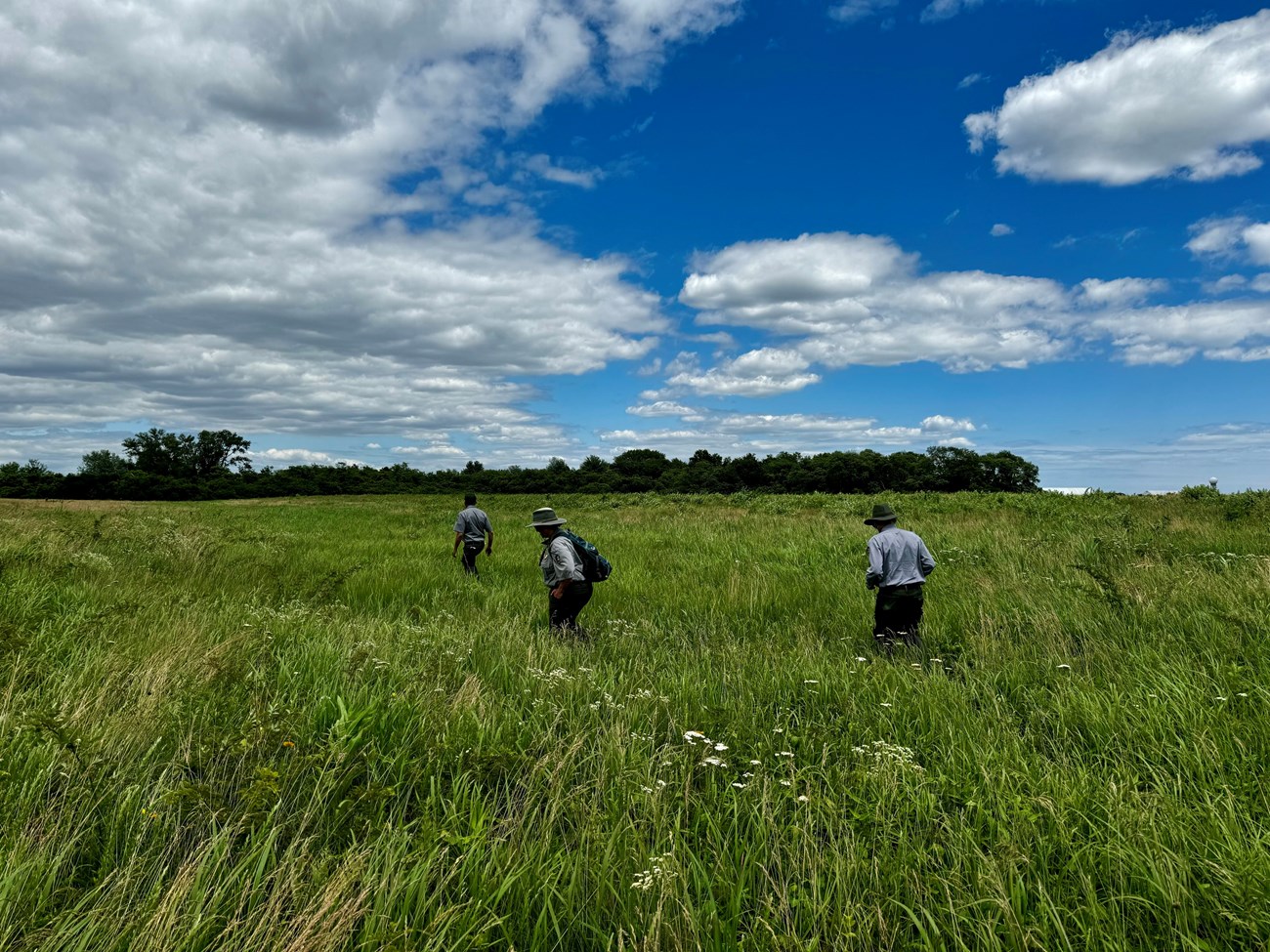
Park Service staff in an old-growth remnant grassland at Gateway National Recreation Area, first identified in 2024. Credit: Casey Reese, National Park Service.
Grasslands in the East?
Before European settlement, the East held tens of millions of acres of grassland, hunted on and maintained by Indigenous people for thousands of years. Settlers saw the open land and rich soil as the easiest places to farm and build, and few recorded the loss. Less than 10% remains.
Many Midwestern prairies formed only after the glaciers fully retreated, 15,000 to 20,000 years ago. But grasslands in the East and Southeast below New York were never scraped clean by ice, and some — like the savannas of the southeastern coastal plain — may be hundreds of thousands of years old, with extraordinary diversity and many species found nowhere else. Restoring them helps fast-declining grassland birds and pollinators, cycles nutrients, stores up to 5 tons of carbon per acre, protects soil and water quality, and makes landscapes more resilient to drought and extreme heat.
Sources
Based on "Hidden in Plain Sight: Old Growth Remnant Grasslands," National Park Service; a work of the United States government in the public domain.
このページを含むコレクションCedar Creek & Belle Grove National Historical ParkAntietam National BattlefieldCatoctin Mountain ParkAppalachian National Scenic TrailBooker T Washington National MonumentBig South Fork National River & Recreation Area
ライセンス: CC0 1.0(パブリックドメイン) · 出典 www.nps.gov
1
0
0
0

コメント


