
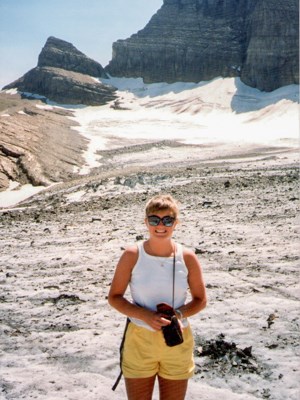
Lisa McKeon at Grinnell Glacier in 1988
In 1988 Lisa McKeon crunched out onto Grinnell Glacier with her parents. Other hikers were also scattered about, taking photos and exploring the glacier.
She didn’t know it at the time, but she would be hiking to many of the park’s glaciers over the next three decades. McKeon would go on to spend her career studying the park’s glaciers for the U.S. Geological Survey (USGS).
McKeon was instrumental in the creation of the USGS’s repeat photography project, an effort to photographically document the park's glaciers. This project took her into both the park’s archives and its mountains. In the archives, she made copies of old photographs of glaciers—pictures taken by early Euro-American scientists like George Bird Grinnell and her USGS predecessor, William Alden.
Historic pictures in hand, she then hiked into Glacier’s high country and searched for the exact spot where the old images were taken. By taking new photographs from the same perspective she could see how the landscape had changed.
By standing in the same places that an early photographer stood and taking a new picture, we can compare how the landscape has, or has not, changed. This technique is called repeat photography or rephotography.
How to Identify Glaciers
Can you tell the difference between seasonal snow and glacial ice?
Duration:54 seconds

Lisa McKeon at Grinnell Glacier in 2020
When McKeon tried to repeat her 1988 photograph, she found that the ice had melted away so much that to stand in the same place would require standing in the meltwater around the glacier.
You can hear more about McKeon's repeat photography work on Glacier’s podcast, Headwaters. The “Confluence | Many Glacier” and the “Becoming | Stained by History” episodes both explore how repeat photography works.
To document the park’s glaciers with repeat photography requires a good sense of timing, McKeon explains, “I have people in June asking if they can come to the park and take some photos for me. And I have to say, well, you can't really until the end of August at the earliest, or maybe September. You have wait for the seasonal snow to melt and expose the glacier.” Once the snow has melted, the first step to taking a good repeat photo of a glacier is to check if you are looking at seasonal snow or permanent ice.

Can you see the difference between snow and ice?
Seasonal snow is much whiter and cleaner than the rock and dirt covered glacial ice. Can you see the differences? This image of Sexton Glacier taken in the early summer shows how seasonal snow can cover ice and obscure glacier ice.
Most years, photographing the glaciers can only occur in a narrow window between late August and late September after the previous winter's snow has melted from the ice and before the first snows of autumn. It is only in that late summer season that the glacial ice can be clearly seen. Historic pictures must also be chosen to not include too much seasonal snow.
The location a historic photo was taken from can be estimated from a map or Google Earth. Still, in the field it can take hours to find the right spot if the landscape has changed dramatically.
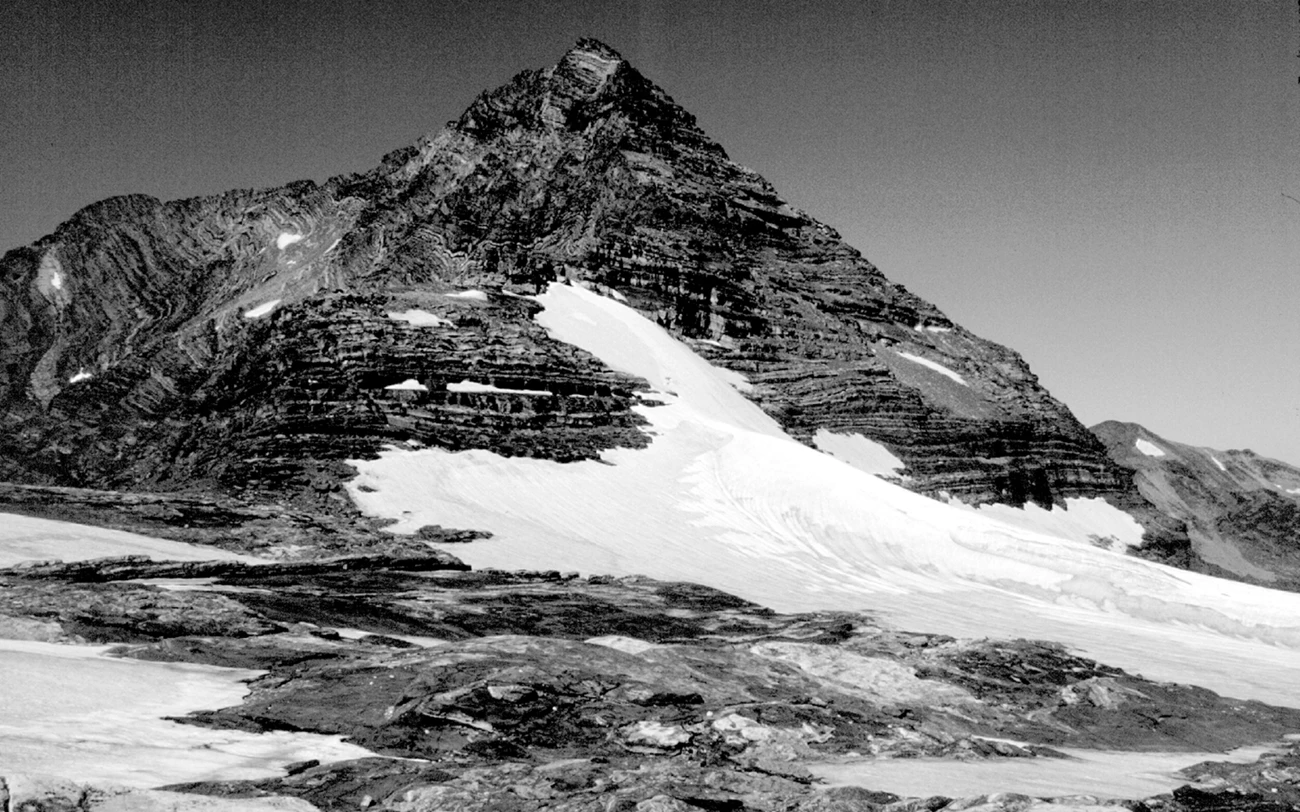
One early glacier McKeon photographed was Sperry Glacier. Below, a photograph (left) by Morton J. Elrod in 1907, that she repeated 96 years later in 2001 (right).
Sperry Glacier arm below Mount Edwards in 1907 and 2001
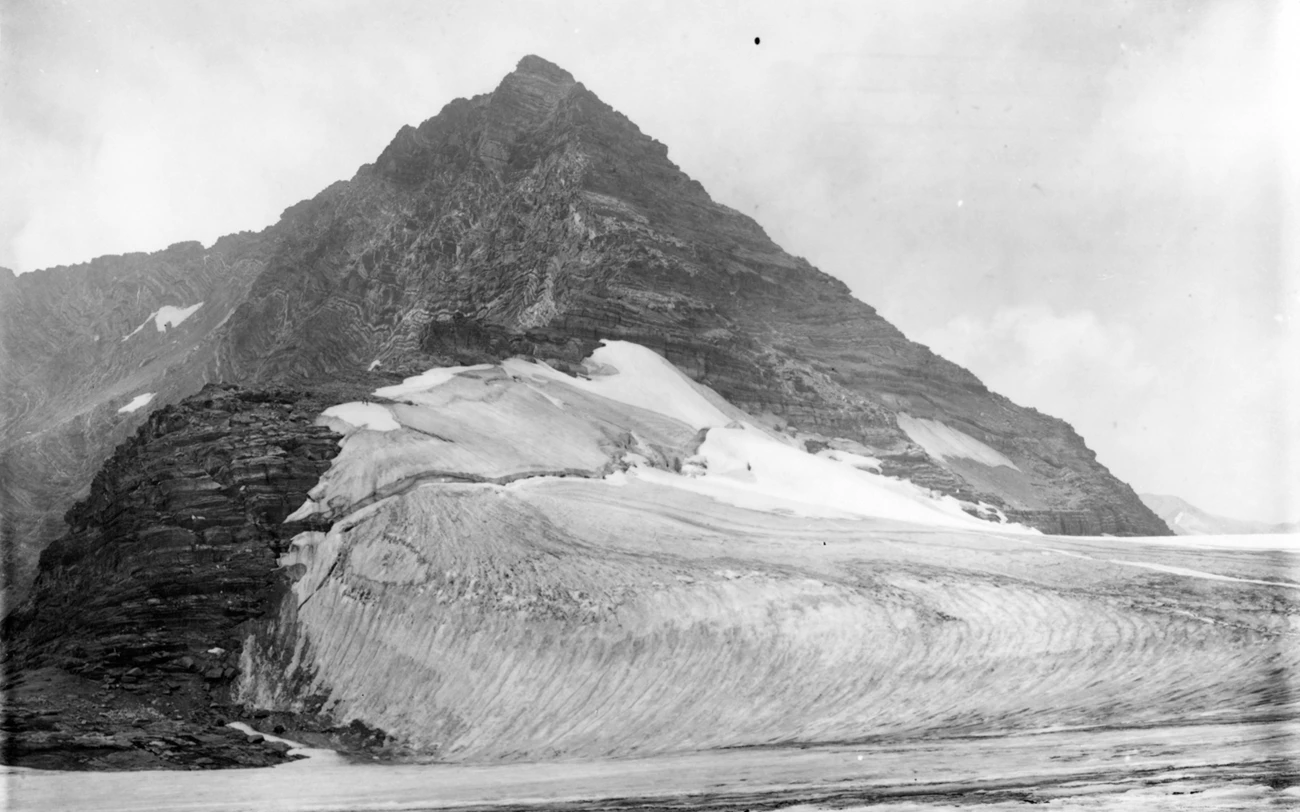
Left image
Sperry Glacier arm below Mount Edwards in 1907 by Morton J. Elrod.
Right image
Sperry Glacier arm below Mount Edwards in 2001 by Lisa McKeon.
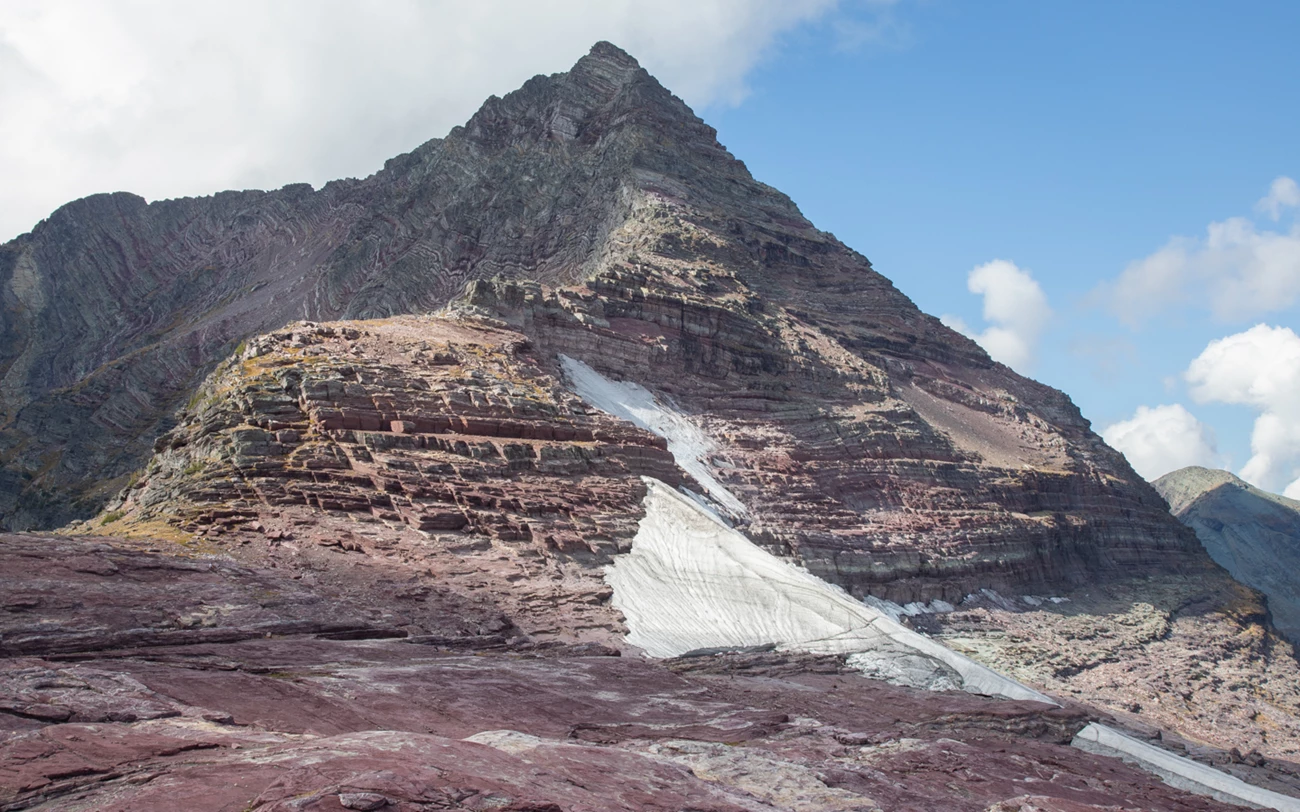
Decades have passed since McKeon took many of these repeat images. Repeating them again reveals how the glaciers have continued to change in recent years. This same perspective of Sperry Glacier was photographed again in 2023.
Sperry Glacier arm below Mount Edwards in 2001 and 2023
Left image
Sperry Glacier arm below Mount Edwards in 2001 by Lisa McKeon.
Right image
Sperry Glacier arm below Mount Edwards in 2023
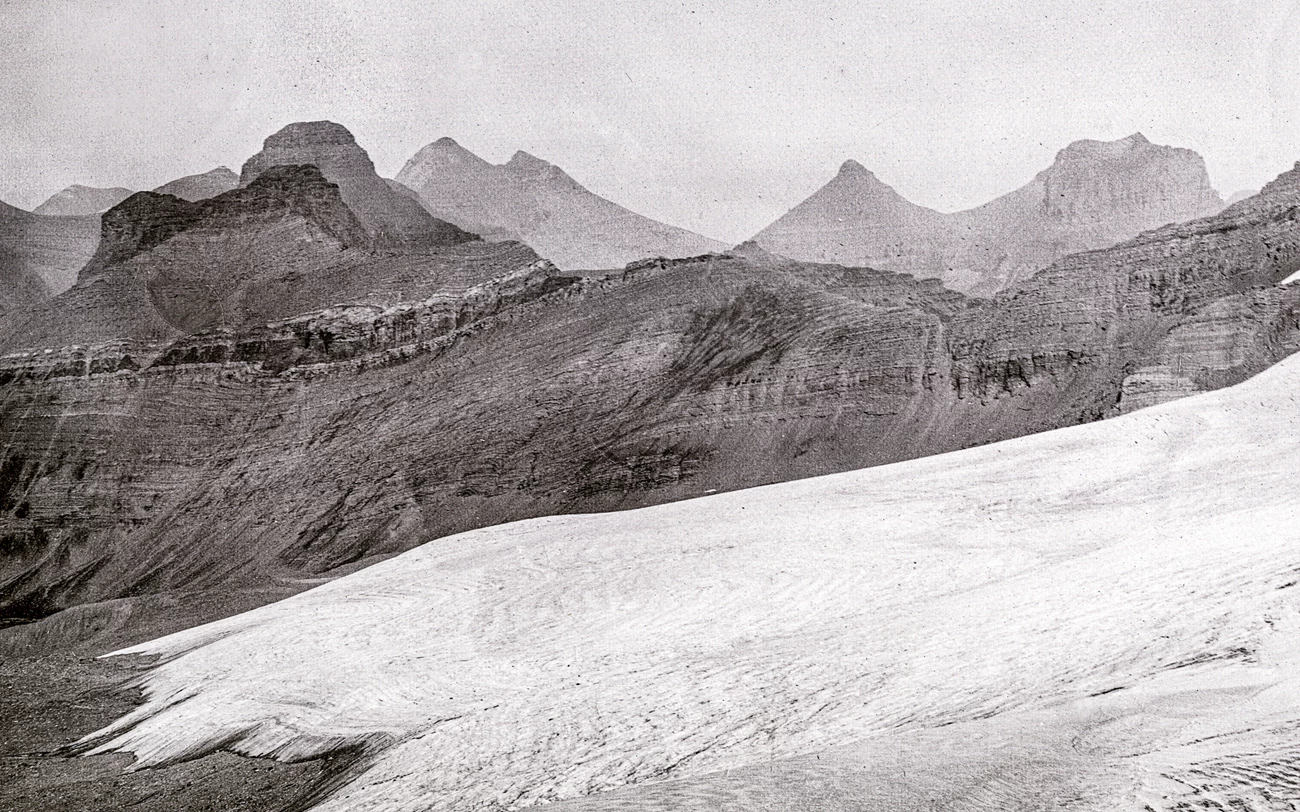
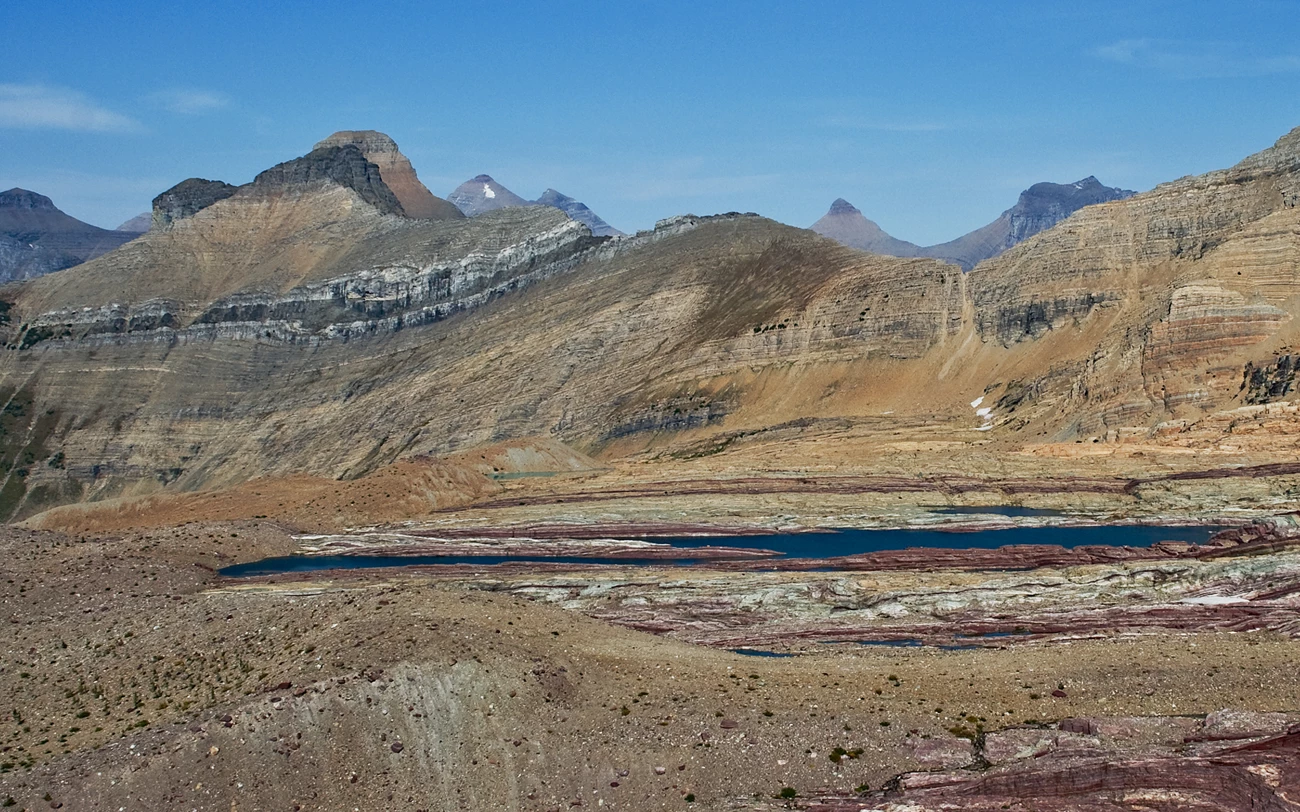
Another photograph taken by Elrod shows Sperry Glacier (below) facing north and pictures the terminal end of the ice. When McKeon went to repeat this one in 2009, she found that Elrod must have been standing on the glacier when he took it. Since then, the ice melted away, and photographing from Elrod’s historic perspective is now impossible.
Sperry Glacier Basin Wide around 1930 and 2009
Left image
Sperry Basin Wide around 1930 by Morton J. Elrod
Right image
Sperry Basin Wide in 2009 by Lisa McKeon USGS
Elrod took this image around 1930. He must have been standing on the glacier when he took it. Since then, the ice melted away, and photographing from Elrod’s historic perspective is now impossible.
Sperry Glacier Basin in 2023
Repeating McKeon's image in 2023 showed the glacier has not advanced back into the frame. Continuing to repeat this picture could show how plants begin to grow in the area once covered in ice.
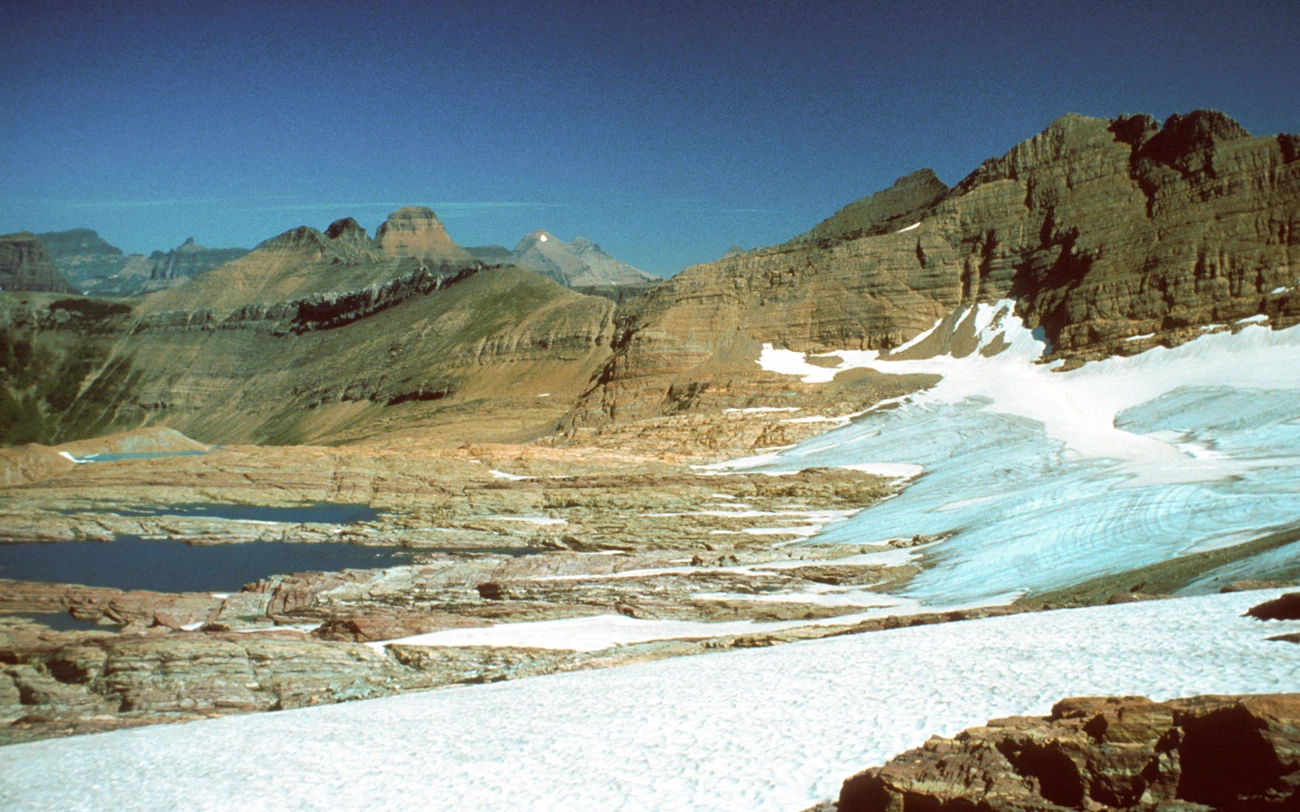
Sperry Basin with Lakes in 1981 and 2023
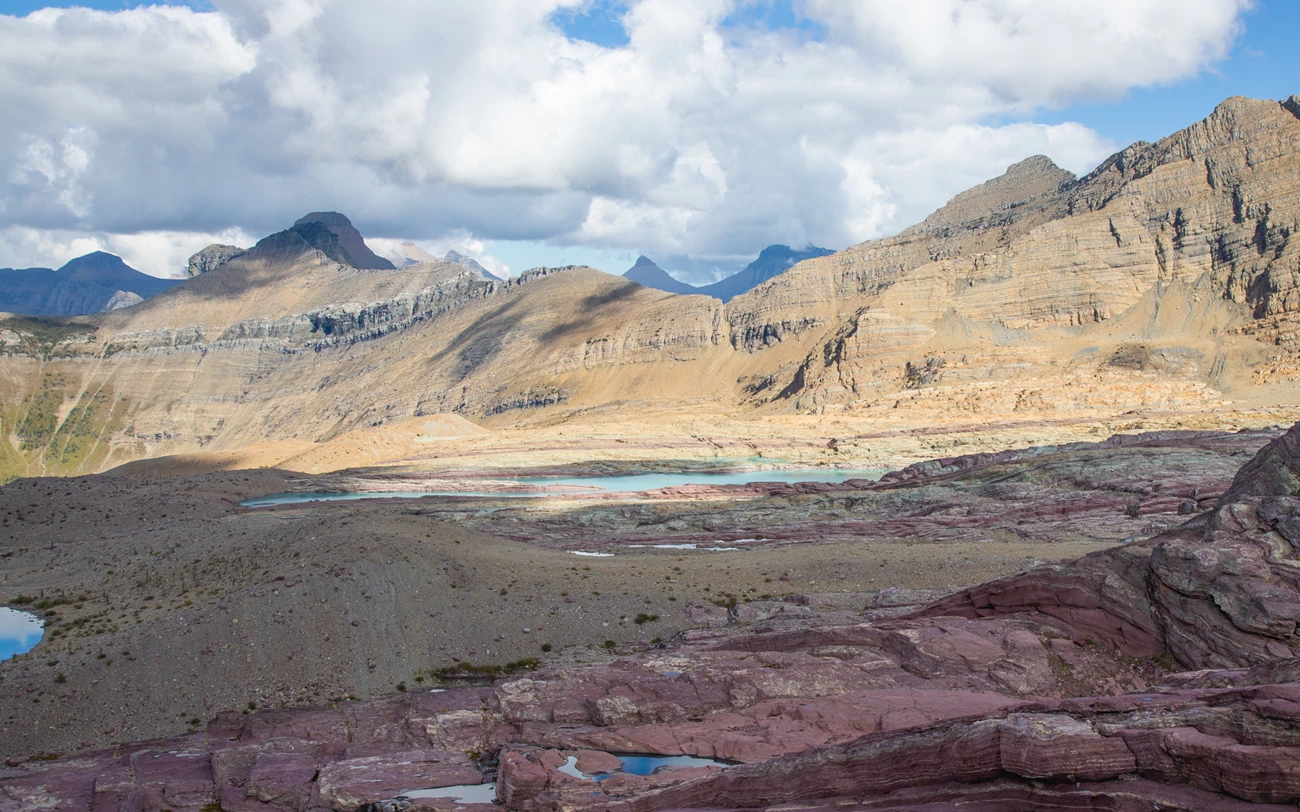
Left image
Sperry Basin with Lakes in 1981
Right image
Sperry Basin with Lakes in 2023
In addition to McKeon's pictures from the 2000s, the USGS archives has some pictures from the early 1980s. These were photographed by Paul Carrara on August 23, 1981, and were repeated on September 8, 2023.
##
The glaciers of McKeon’s youth have all gotten smaller. Her collection of repeat photographs document changes seen over the last century, but they are also a new baseline to measure future changes against.
###
Sources
Headwaters Podcast. Glacier National Park. 2020. “Confluence | Many Glacier” https://www.nps.gov/podcasts/headwaters.htm?reinit=false&season=0&maxrows=10&hiderightrail=true&sortby=date%2Ddesc&startrow=31
USGS. Repeat Photography Overview. https://www.usgs.gov/centers/norock/science/repeat-photography-project?qt-science_center_objects=7#overview

You can see
Part of a series of articles titled
Photographing Change in Glacier National Park.
Next:
Repeat Photos of Grinnell Glacier
Where this belongs
- Glacier National Park
Where this page came from
This page was imported from National Park Service. Produced by the U.S. National Park Service and, as a work of the United States government, in the public domain.
Nobody has written it yet — it is the source material at a new address, which is why search engines are asked to skip it and why no one earns from it. It is up for grabs: take it on, and it is yours to rewrite and to earn from.
このページを含むコレクションGlacier National ParkPhotographing Change in Glacier National Park
ライセンス: CC0 1.0(パブリックドメイン) · 出典 www.nps.gov
1
0
0
0

コメント
次に読む


