What are vaccines ? Vaccines are injections (shots), liquids, pills, or nasal sprays that you take to teach your body's immune system to recognize and defend against harmful germs. For example, there are vaccines to protect against diseases caused by: Viruses, like the ones that cause the flu and COVID-19 Bacteria, including tetanus, diphtheria, and pertussis What are the types of vaccines ? There are several types of vaccines : Live-attenuated vaccines use a weakened form of the germ.
Inactivated vaccines use a killed version of the germ. Subunit, recombinant, polysaccharide, and conjugate vaccines use only specific pieces of the germ, such as its protein, sugar, or casing. Toxoid vaccines use a toxin (harmful product) made by the germ. mRNA vaccines use messenger RNA, which gives your cells instructions for how to make a protein (or piece of a protein) of the germ.
Viral vector vaccines use genetic material, which gives your cells instructions for making a protein of the germ. These vaccines also contain a different, harmless virus that helps get the genetic material into your cells. These vaccines may work in different ways, but they all spark an immune response. The immune response is the way your body defends itself against substances it sees as foreign or harmful.
These substances include germs that can cause disease. What happens in an immune response? There are different steps in the immune response: When a germ invades, your body sees it as foreign. Your immune system helps your body fight off the germ.
Your immune system also remembers the germ. It will attack the germ if it ever invades again. This "memory" protects you against the disease that the germ causes. This type of protection is called immunity.
What are immunization and vaccination? Immunization is the process of becoming protected against a disease. But it can also mean the same thing as vaccination, which is getting a vaccine to become protected against a disease. Why are vaccines important?
Vaccines are important because they protect you against many diseases. These diseases can be very serious. So getting immunity from a vaccine is safer than getting immunity by being sick with the disease. For a few vaccines , getting vaccinated can actually give you a better immune response than getting the disease would.
But vaccines don't just protect you. They also protect the people around you through community immunity. What is community immunity? Community immunity, or herd immunity, is the idea that vaccines can help keep communities healthy.
Normally, germs can travel quickly through a community and make a lot of people sick. If enough people get sick, it can lead to an outbreak. But when enough people are vaccinated against a certain disease, it's harder for that disease to spread to others. This type of protection means that the entire community is less likely to get the disease.
Community immunity is especially important for people who can't get certain vaccines . For example, they may not be able to get a vaccine because they have weakened immune systems. Others may be allergic to certain vaccine ingredients. And newborn babies are too young to get some vaccines .
Community immunity can help to protect them all. Are vaccines safe? Vaccines are safe. They must go through extensive safety testing and evaluation before they are approved in the United States.
What is a vaccine schedule? A vaccine , or immunization, schedule lists which vaccines are recommended for different groups of people. It includes who should get the vaccines , how many doses they need, and when they should get them. In the United States, the Centers for Disease Control and Prevention (CDC) publishes the vaccine schedule.
It's important for both children and adults to get their vaccines according to the schedule. Following the schedule allows them to get protection from the diseases at exactly the right time.
Where this page came from
This page was imported from MedlinePlus, U.S. National Library of Medicine. MedlinePlus is produced by the U.S. National Library of Medicine and is in the public domain.
Nobody has written it yet — it is the source material at a new address, which is why search engines are asked to skip it and why no one earns from it. It is up for grabs: take it on, and it is yours to rewrite and to earn from.
ライセンス: CC0 1.0(パブリックドメイン) · 出典 medlineplus.gov
1
0
0
0

コメント
次に読む
- Planetary NebulaThe Ring Nebula's distinctive shape makes it a popular illustration for astronomy books. But new observations by NASA's Hubble Space Telescope of the glowing gas shroud around an old, dying, sun-like star reveal a new twist. "The nebula is not like a bagel, but rather, it's like a jelly doughnut, be

- Doradus NebulaA panoramic view of a vast, sculpted area of gas and dust where thousands of stars are being born has been captured by NASA's Hubble Space Telescope. The image, taken by Hubble's Wide Field and Planetary Camera 2, is online at The camera was designed and built by NASA's Jet Propulsion Laboratory, Pa
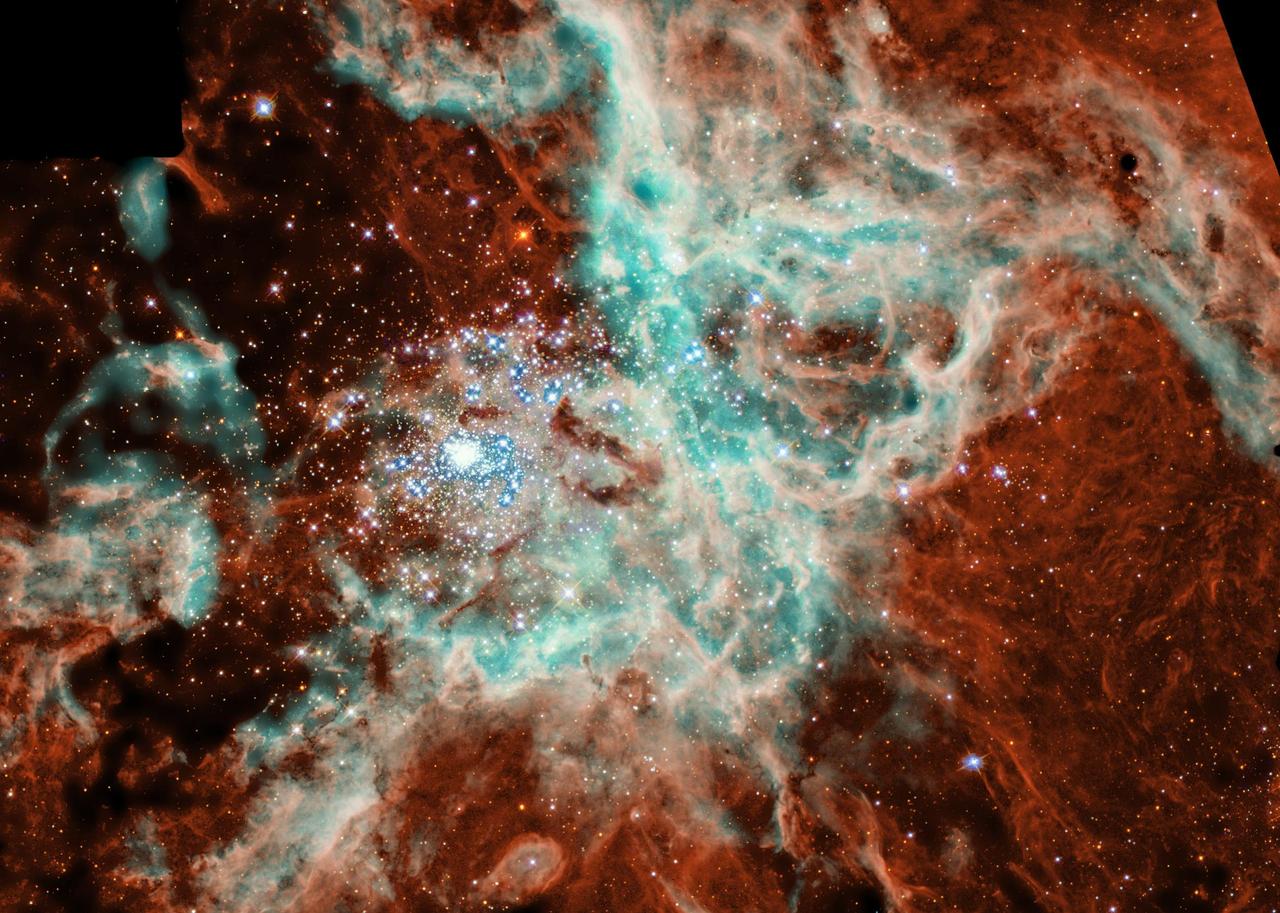
- The Tarantula NebulaNASA Spitzer Space Telescope, formerly known as the Space Infrared Telescope Facility, has captured in stunning detail the spidery filaments and newborn stars of theTarantula Nebula, a rich star-forming region also known as 30 Doradus. This cloud of glowing dust and gas is located in the Large Magel