
About one in five U.S. adults gives regular care or help to a friend or family member with a health problem or disability — support that can keep that person out of a long-term care facility. The time and responsibility can put an undue emotional, economic and physical burden on caregivers, and supporting them is a public health priority in the first National Strategy to Support Family Caregivers (2022). Earlier research found that during 2015–2017, caregivers born in 1946–1964 had more chronic conditions and more frequent mental distress than noncaregivers their age.
CDC researchers compared 19 health indicators for caregivers and noncaregivers in 2015–2016 and 2021–2022, using the Behavioral Risk Factor Surveillance System, a telephone survey, in 35 states and Puerto Rico. 92,461 respondents who had given such care in the past 30 days counted as caregivers, and 353,242 as noncaregivers.
Key findings
- The share of adults who were caregivers held steady: 20.2% in 2015–2016 and 20.1% in 2021–2022. It rose in three states and fell in 11 states and Puerto Rico.
- For caregivers, four indicators improved — smoking, physical inactivity, lack of health coverage and skipping the doctor because of cost.
- Six worsened — frequent mental distress, depression, asthma, obesity, and having any or multiple chronic physical conditions.
- Changes were often similar for noncaregivers, but in 2021–2022 caregivers still fared worse on 13 of the 19 indicators.
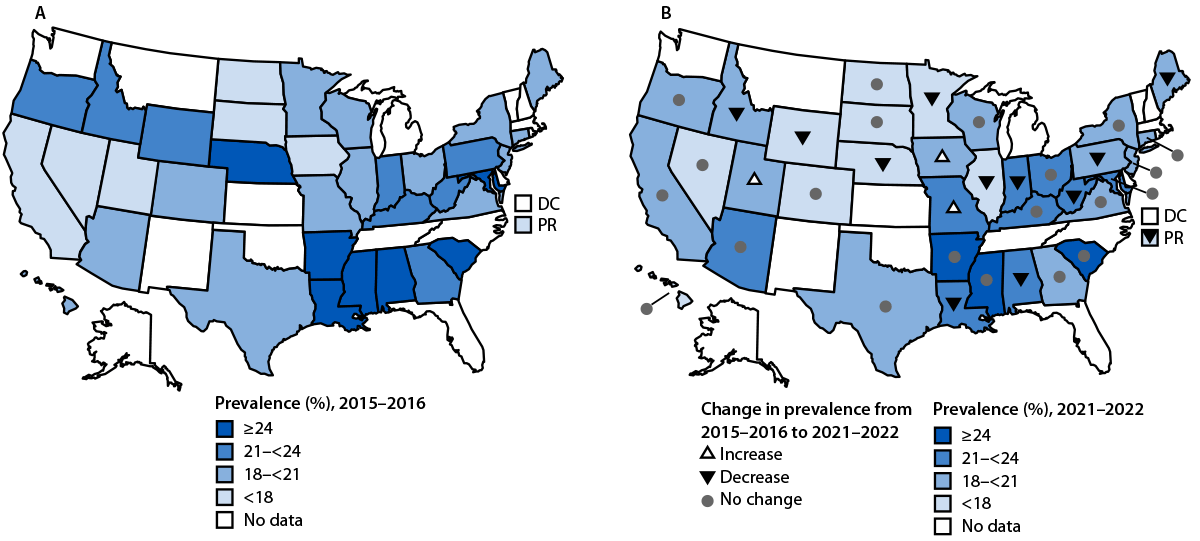
Share of adults who were caregivers, by state, 2015–2016 (A) and 2021–2022 (B), with changes marked. From CDC's MMWR.
Selected indicators
| Indicator | Caregivers 2015–16 | Caregivers 2021–22 | Noncaregivers 2021–22 |
|---|---|---|---|
| Current smoking | 20.9% | 16.6% | 11.7% |
| Physical inactivity | 24.0% | 22.0% | 25.0% |
| Heavy drinking | 5.9% | 6.5% | 5.7% |
| Fair or poor health | 19.7% | 19.6% | 16.9% |
| Frequent mental distress | 17.2% | 20.5% | 13.6% |
| Lifetime depression | 23.3% | 25.6% | 18.6% |
| Obesity | 34.1% | 38.0% | 33.2% |
| Current asthma | 11.6% | 12.8% | 9.1% |
| COPD | 8.2% | 9.1% | 6.2% |
| Arthritis | 32.6% | 34.8% | 24.5% |
| Any chronic physical condition | 60.6% | 65.7% | 54.9% |
| Multiple chronic physical conditions | 28.9% | 32.5% | 24.2% |
| No health coverage (under 65) | 14.1% | 9.0% | 11.1% |
| Couldn't see a doctor because of cost | 16.6% | 13.2% | 9.1% |
What changed, and how
- Smoking fell for both groups but stayed higher among caregivers.
- Physical inactivity fell more for caregivers (2.0 percentage points) than for noncaregivers (0.8).
- Mental distress and depression rose for both — consistent with the COVID-19 pandemic's population-wide effect on mental health — and stayed higher among caregivers. Depression rose more for noncaregivers (3.8 points) than for caregivers (2.3).
- Obesity and asthma rose for both groups. Obesity, asthma, COPD and arthritis were more common among caregivers in both periods; COPD and arthritis didn't change.
- Lack of health coverage among adults under 65 was similar for both groups in 2015–2016, then fell more for caregivers (5.1 points) than noncaregivers (2.6), during a period when Medicaid eligibility expanded and public coverage grew. Caregivers remained likelier to skip a doctor because of cost.
The caregiving population also shifted: fewer were 18–29 (18.0% to 13.3%), more were 60 and older, and more were married, retired and in households earning $75,000 or more.
Supporting caregivers
Caregiving can build a positive bond that gives the caregiver purpose and eases stress for the person receiving care — but caregivers' own health needs attention.
- The national strategy calls for stronger services and supports and more data and research, and names respite care — relief from caregiving tasks — a priority.
- Some states have added paid family leave and antidiscrimination protections for caregivers.
- Community organizations offer skills training, support groups and care coordination; specialized training can help people caring for someone with dementia or memory loss.
- Chronic disease prevention and management programs could be tailored for caregivers, and health professionals can identify patients who are caregivers and encourage them to look after their own health.
Limits: the measures are self-reported; not all states took part; the two periods surveyed different people rather than following the same ones; and the analysis was descriptive. Still, it is the first large population study of how caregivers' health has changed over time.
Sources
Based on Kilmer G, Omura JD, Bouldin ED, et al., "Changes in Health Indicators Among Caregivers — United States, 2015–2016 to 2021–2022," Morbidity and Mortality Weekly Report 73(34), CDC; a work of the United States government in the public domain.
이용 허락: CC0 1.0 (퍼블릭 도메인) · 출처 www.cdc.gov
1
0
0
0

코멘트


