
In 2019, the United States had an outbreak of e-cigarette, or vaping, product use–associated lung injury (EVALI). Most patients reported using vaping products containing tetrahydrocannabinol (THC), often from informal sources, and vitamin E acetate in those products was closely linked to the outbreak. But some patients said they vaped only nicotine. This Illinois study compared them with patients who used THC products.
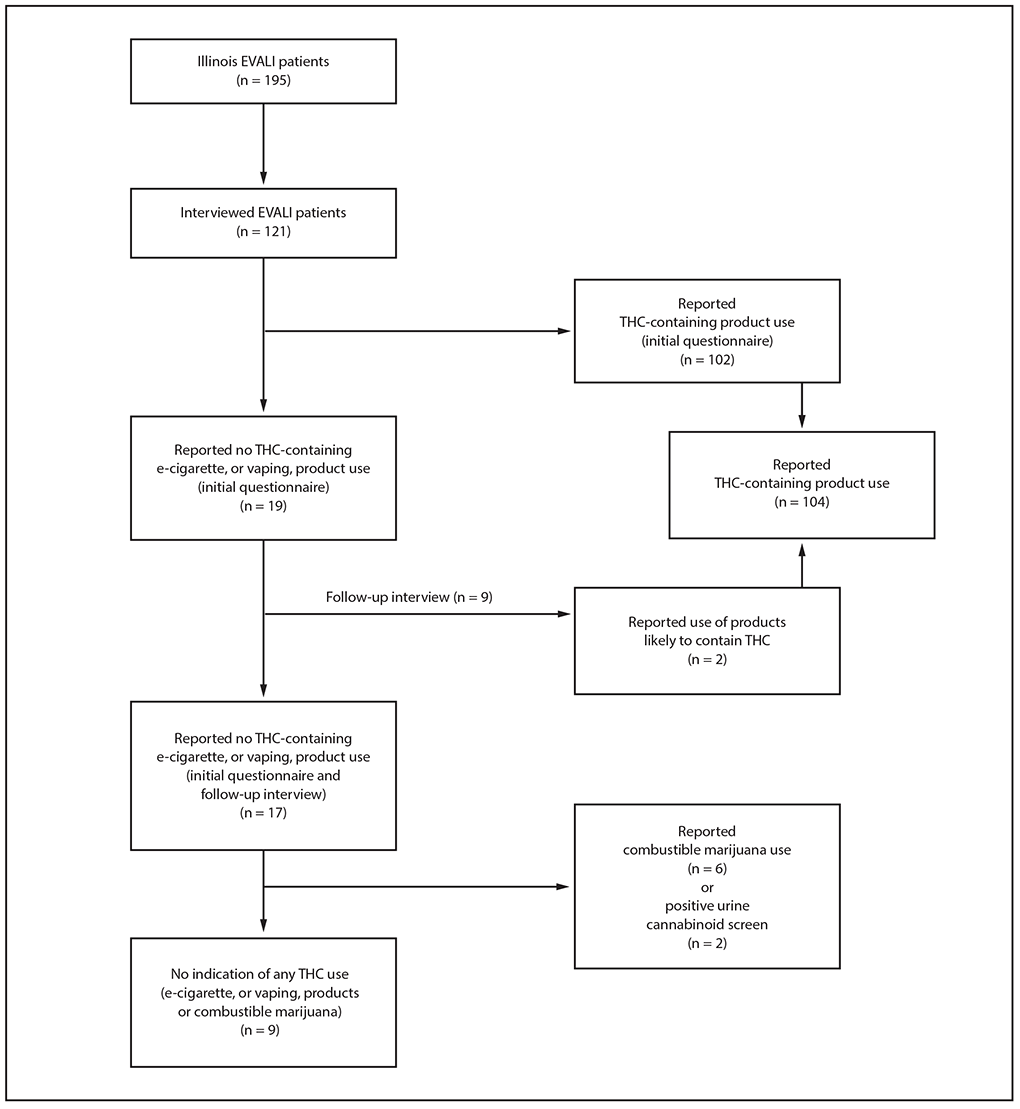
How the 121 interviewed patients were classified. Credit: Centers for Disease Control and Prevention.
How the study worked
The Illinois Department of Public Health collected medical records for all suspected EVALI cases and asked patients or their proxies to fill in a questionnaire on demographics and vaping. Anyone who said they didn't use THC products got a follow-up interview, and their records were rechecked for signs of THC use, such as a positive urine cannabinoid screen or telling a provider they smoked marijuana.
Of 195 cases reported from July 20 to December 1, 2019, 121 patients completed the questionnaire:
- 104 (86%) reported using THC-containing products;
- 17 (14%) reported using only nicotine-containing products — including 9 (7%) with no indication of any THC use at all.
Initially, 19 said they hadn't used THC vaping products. Follow-up interviews found 2 had used products likely to contain THC. Of the remaining 17, 6 reported smoking marijuana and 2 had positive urine cannabinoid screens — leaving 9 with no indication of THC use.
How the nicotine-only patients differed
Compared with patients who used THC products, the nine with no sign of THC use were:
| THC product users (104) | No indication of THC use (9) | |
|---|---|---|
| Female | 25% | 78% |
| Aged 13–24 | 63% | 22% |
| Aged 45–74 | 2% | 33% |
| Confirmed (not probable) case | 44% | 0% |
| Constitutional symptoms at presentation | 96% | 56% |
| High white blood cell count (leukocytosis) | 91% | 38% |
| Visited an outpatient provider or emergency department before hospitalization | 80% | 25% |
Seven of the nine bought their nicotine products at vape or tobacco shops; none reported informal sources.
What it means
Vitamin E acetate is strongly linked to EVALI, but evidence isn't enough to rule out other chemicals of concern — in THC or non-THC products — in some cases. Lung injury from nicotine vaping was reported before this outbreak, and emergency department visits related to vaping have long occurred at a steady baseline. Given their different profile and no sign of THC exposure, patients who used only nicotine products may have a different cause, which needs more investigation.
Because patients don't always report THC use accurately, empathetic, private questioning may help, especially with young people, and providers should consider urine toxicology testing, including for THC, with informed consent.
Limitations
- Very few patients reported no THC use, limiting statistical power.
- Product use was self-reported, and recreational THC was illegal in Illinois before January 1, 2020, which may have discouraged honest answers.
- Toxicology and product testing weren't routine — only three of the nine were screened for cannabinoids.
- A sensitive case definition may have included some non-cases, and not every patient was interviewed.
CDC's advice
- Don't use THC-containing vaping products, especially from informal sources such as friends, family or in-person or online dealers.
- Don't add vitamin E acetate or anything else not intended by the manufacturer to vaping products, even ones bought in stores.
- Adults who switched from cigarettes to nicotine vaping shouldn't go back to smoking; they should weigh the evidence and consider FDA-approved cessation medicines, and talk to a provider about quitting or about EVALI concerns.
- Adults who don't use tobacco shouldn't start vaping, and youths, young adults and pregnant women should never use vaping products.
Sources
Based on Ghinai I, Navon L, Gunn JKL, et al., "Characteristics of Persons Who Report Using Only Nicotine-Containing Products Among Interviewed Patients with E-cigarette, or Vaping, Product Use–Associated Lung Injury — Illinois, August–December 2019," Morbidity and Mortality Weekly Report 69(3), Centers for Disease Control and Prevention; a work of the United States government in the public domain. Original report.
이용 허락: CC0 1.0 (퍼블릭 도메인) · 출처 www.cdc.gov
1
0
0
0

코멘트


