
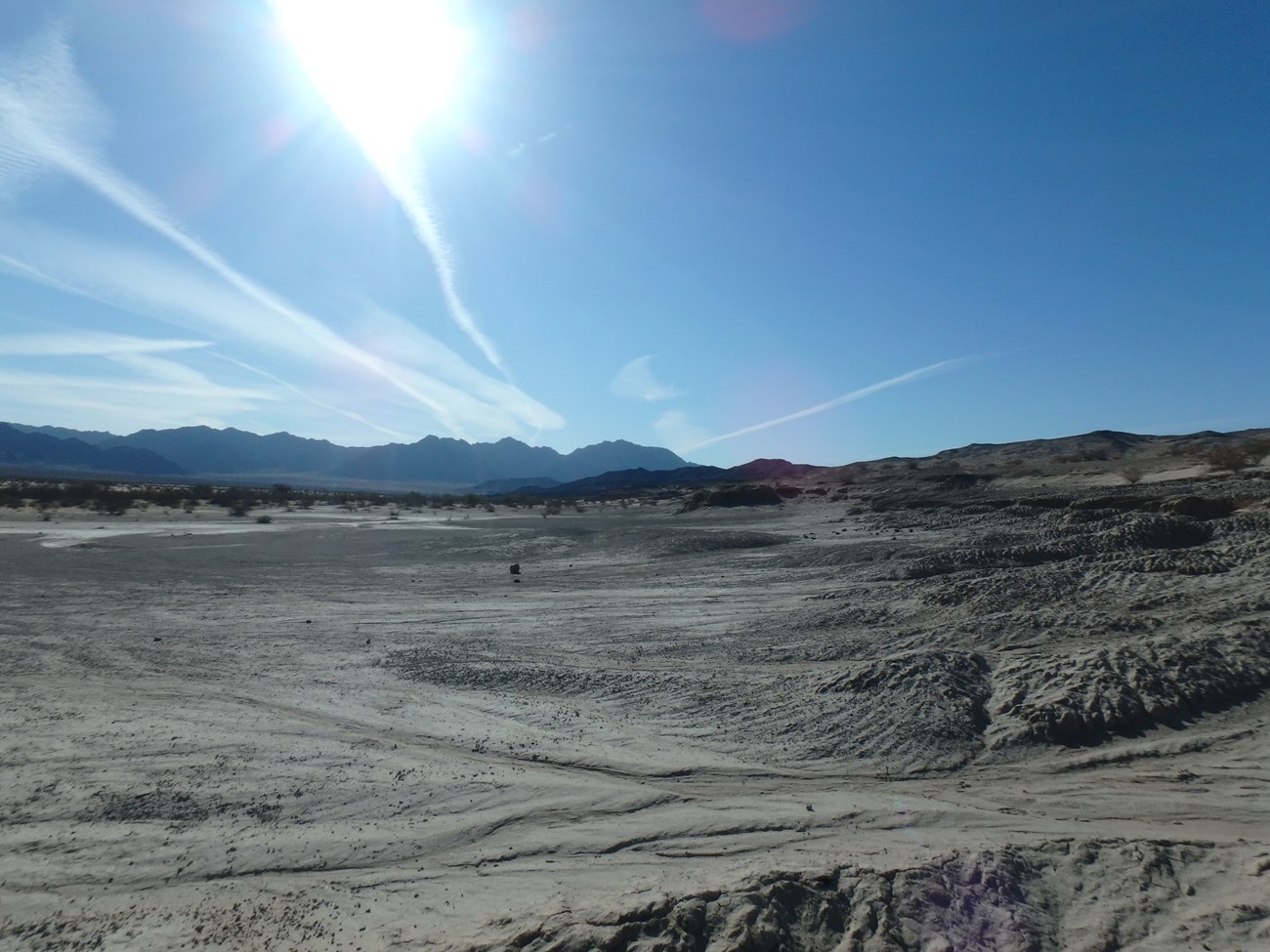
Fossil-bearing ground is easy to miss. NPS / Alaina Tocci.
Joshua Tree National Park is known for its twisted yuccas and bare granite. Beneath its desert floor lie the bones of an ice-age world: Columbian mammoths, horses, camels, llamas, deer, wolves, badgers and tortoises. Joshua Tree is one of seventeen U.S. national parks created partly to protect fossils.
An ice-age desert that wasn't
Scientists have known for almost a century that the park holds Pleistocene vertebrate fossils — from the epoch between about 2.6 million and 11,500 years ago, largely before people reached North America. The climate here was colder and wetter then, and supported different plants and animals. Excavations in the early 2000s greatly widened the list:
| Animal | Found |
|---|---|
| Columbian mammoth (Mammuthus columbi) | tusk and tooth |
| Camel (Camelops) | jaw |
| Ancient llama (Hemiauchenia) | foot bone |
| Horse, deer, wolf, badger, tortoise | bones |
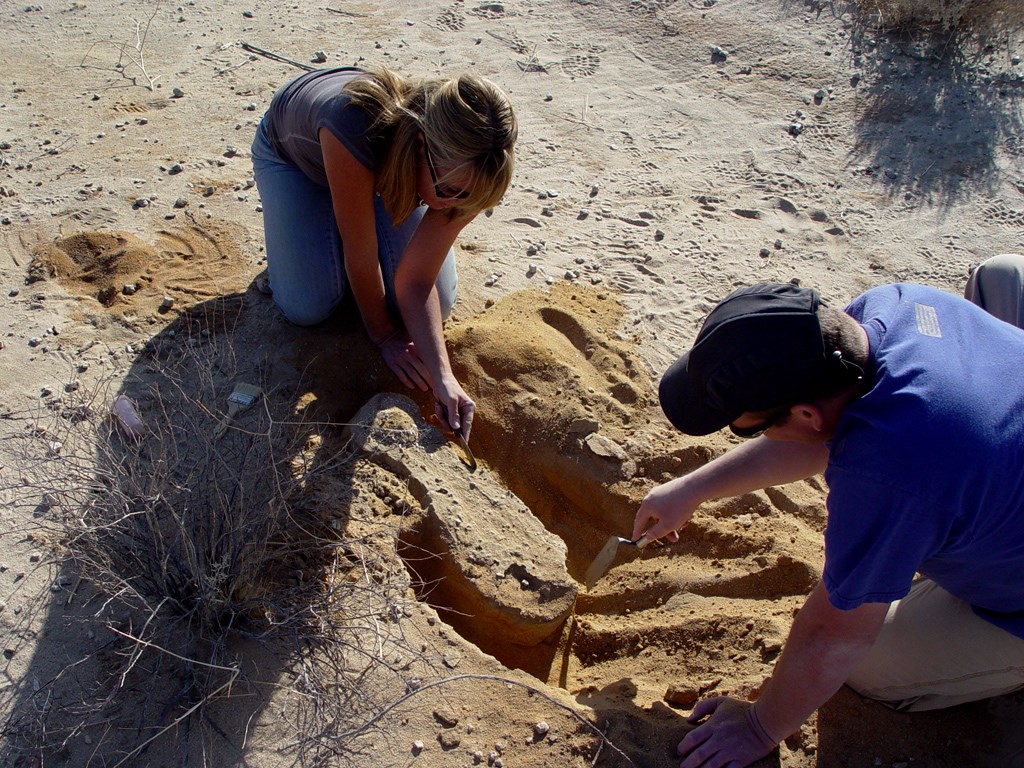
Kathleen Springer and Craig Manker excavate a mammoth tusk. NPS / Eric Scott.
Why position matters
A fossil can tell a paleontologist what the animal ate, how and when it died, whether it lived alone or in a herd — and, beyond the animal, about past climate, ecological communities, disease and migration. Much of that comes from exactly how the fossil lies in the ground, which is why careful excavation and recording matter so much. What the past shows can help predict how today's ecosystems will respond to similar changes.

A camel jaw. NPS / Eric Scott.
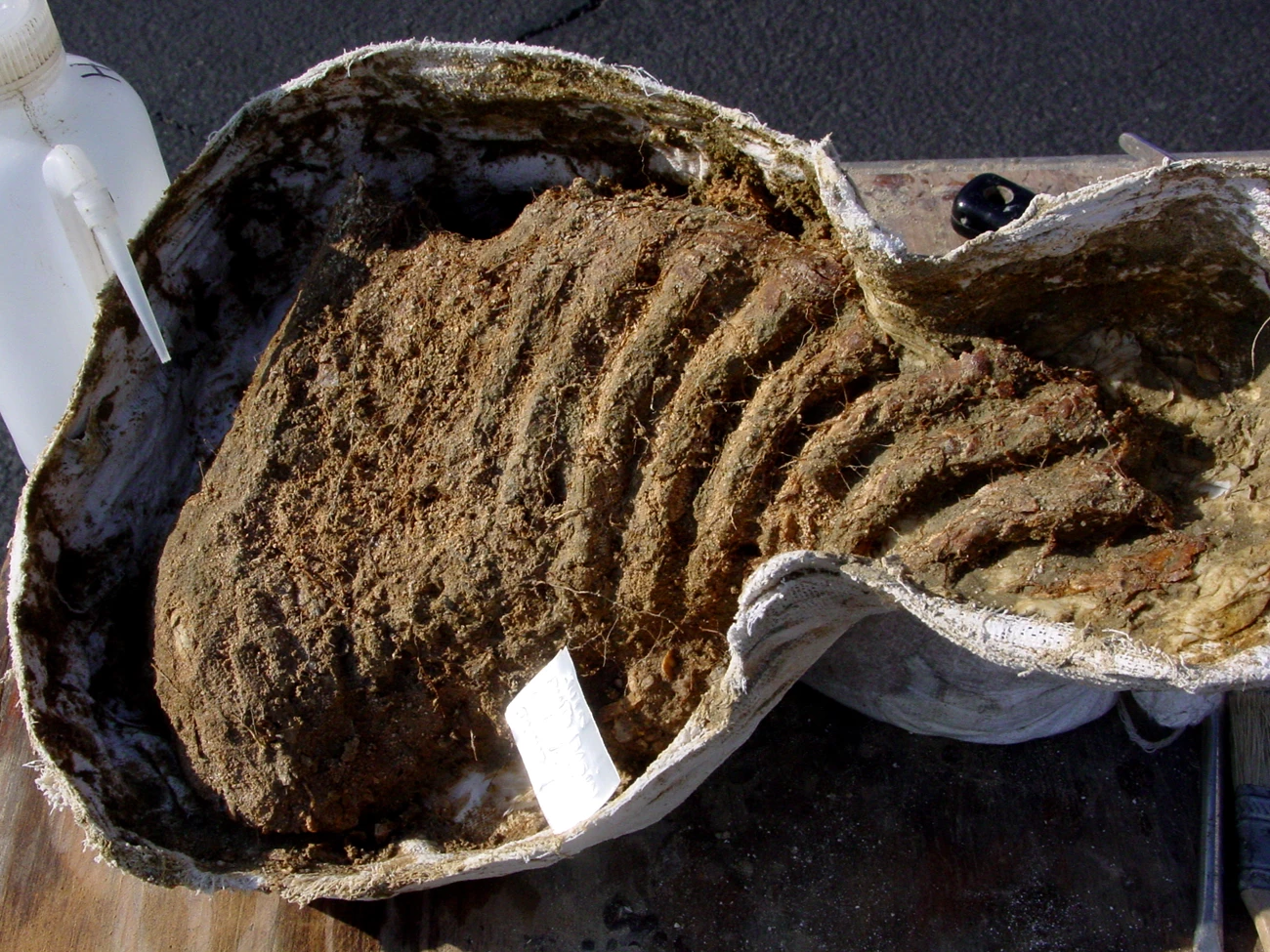
A Columbian mammoth tooth. NPS / Eric Scott.
How to help
- Stay on roads and trails. Off-trail driving and walking damage fossil sites.
- Leave fossils where they are. Taking one destroys scientific information and part of everyone's heritage.
- Report, don't pick up. If you find a fossil, leave it in place and in position, note its GPS location, and tell park staff.
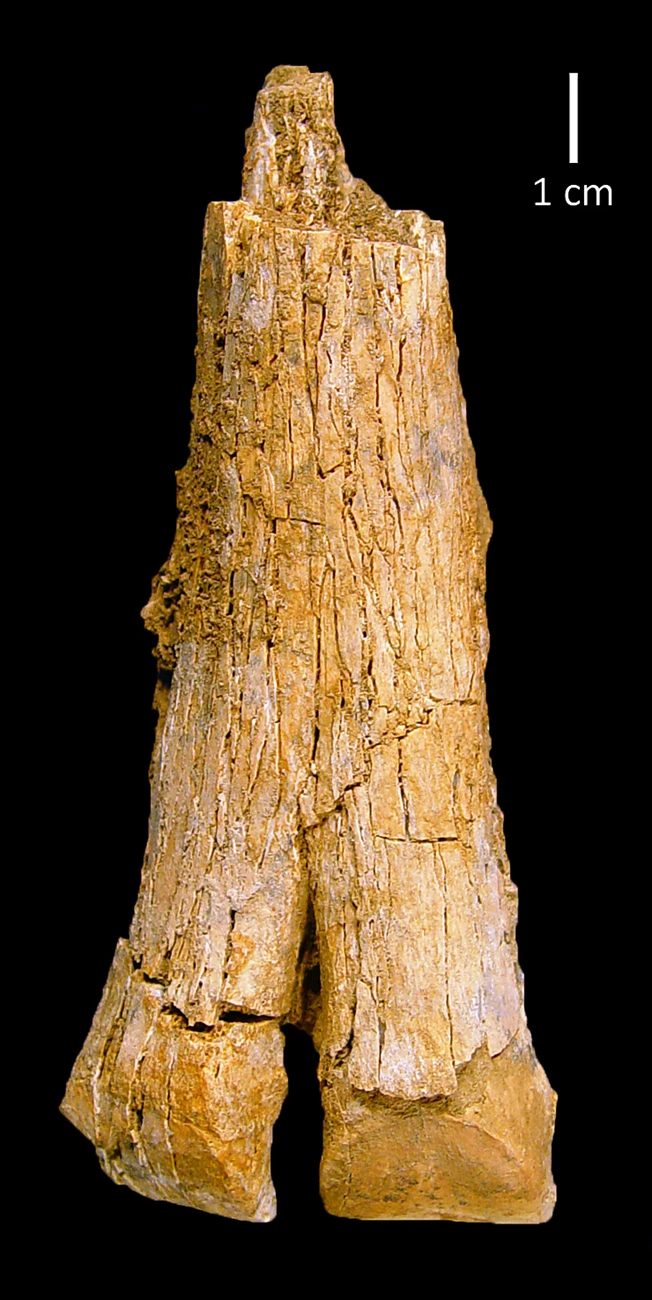
A foot bone from an ancient llama. NPS / Eric Scott.
Sources
Written from "Fossils in Joshua Tree", National Park Service, Joshua Tree National Park, a work of the United States government in the public domain.
이 페이지가 속한 컬렉션Joshua Tree National Park
이용 허락: CC0 1.0 (퍼블릭 도메인) · 출처 www.nps.gov
1
0
0
0

코멘트


