
Want to improve the page's content? Try to propose a change.
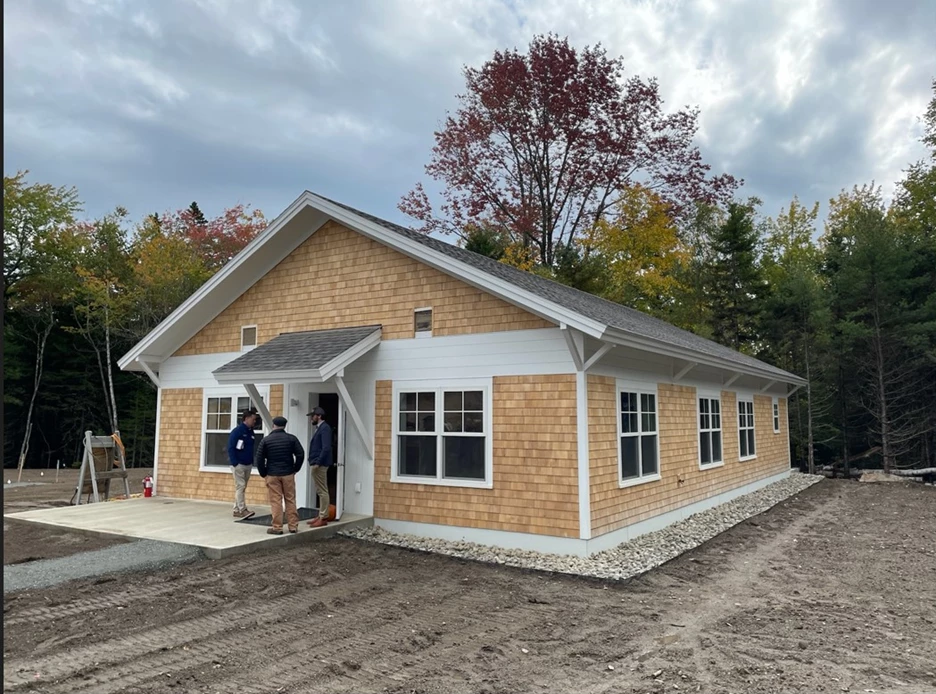
Prototype housing at Acadia National Park, Dane Farm area. NPS
The National Park Service (NPS) faces a growing challenge: providing affordable and sustainable housing for its employees in some of the most beautiful but often remote locations in the country. Traditional housing options can be expensive, energy-intensive, and have a significant environmental footprint. To address this challenge, NPS developed innovative housing prototypes that prioritize sustainability, efficiency, and livability, while using the Department of Energy energy-efficiency standards.
These prototypes are designed to minimize environmental impact while maximizing comfort and functionality for park employees. They incorporate a range of sustainable features, including:
Energy Efficiency: High-performance building envelopes, optimal building orientation, and energy-efficient appliances reduce energy consumption.
Water Conservation: Low-flow fixtures and drought-tolerant landscaping reduce water usage.
Renewable energy: When possible, NPS will use renewable energy generation such as photovoltaics, high efficiency lighting.
These prototypes are not just about reducing environmental impact; they also aim to improve park employee living experiences. Designs consider factors such as natural light, community spaces, and connection to the surrounding environment.
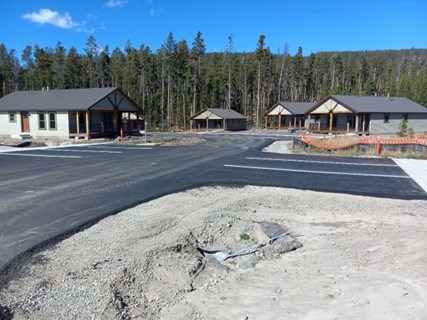
Prototype Housing at Grand Teton National Park NPS
To date, the National Park Service has successfully implemented the use of prototypes at many parks. For example, at
The NPS is committed to providing sustainable housing solutions that support its employees and protect the natural resources it is entrusted with. These housing prototypes are a testament to that commitment, demonstrating how innovation and design can create a more sustainable future for both people and parks.
Part of a series of articles titled
Science, Technology, Engineering, and Mathematics (STEM).
Previous:
Beyond the Classroom: Your STEM Skills Can Build a Greener Future National Park Service
Next:
STEM for Justice: How the NPS is Using Data to Protect Parks and Communities
Where this page came from
This page was imported from National Park Service. Produced by the U.S. National Park Service and, as a work of the United States government, in the public domain.
Nobody has written it yet — it is the source material at a new address, which is why search engines are asked to skip it and why no one earns from it. It is up for grabs: take it on, and it is yours to rewrite and to earn from.
In these collectionsScience, Technology, Engineering, and Mathematics (STEM)
Licence: CC0 1.0 (public domain) · Adapted from www.nps.gov
1
0
0
0

Comments
Read next


