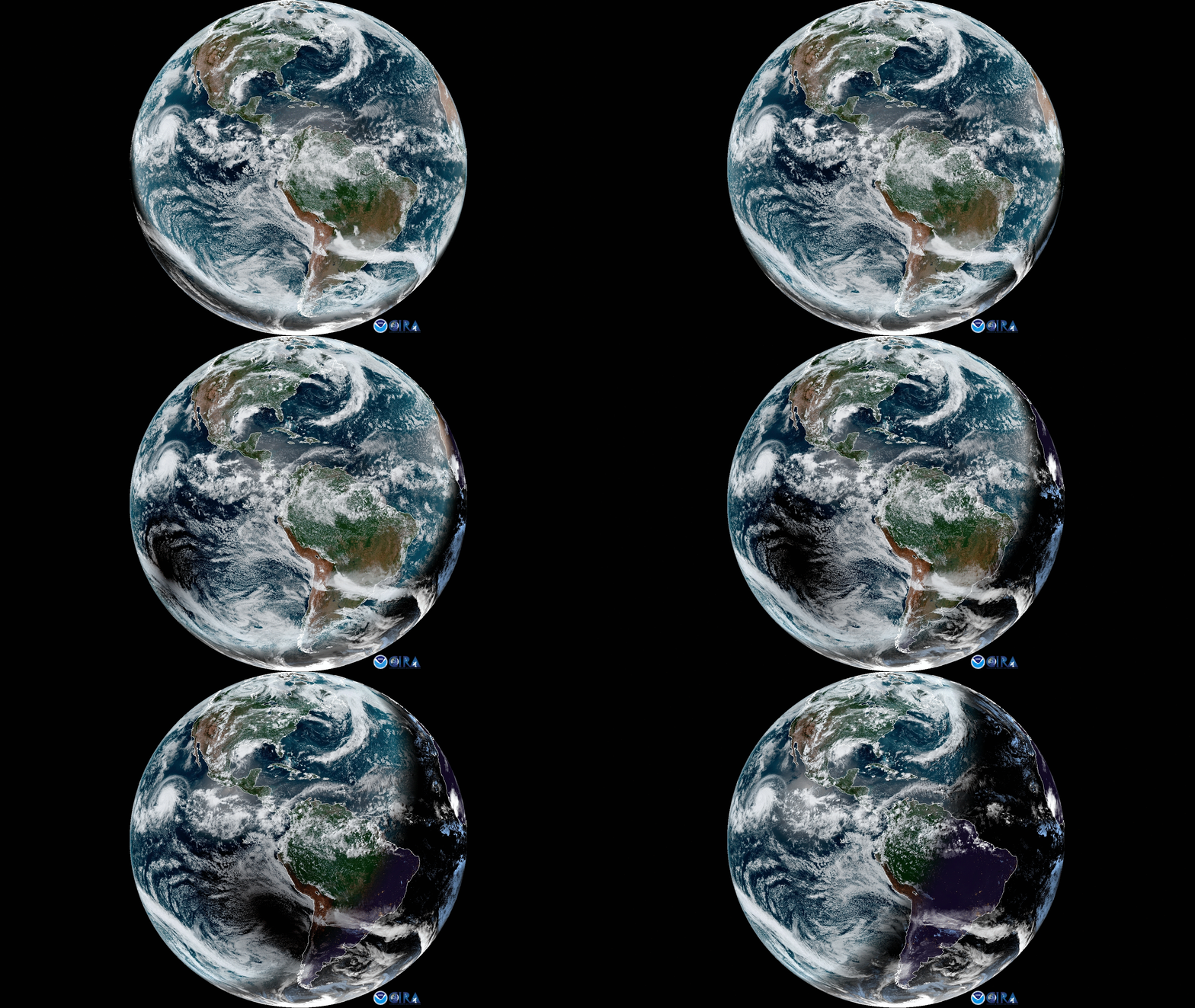
Download Image Download Eclipse Image
NOAA's GOES East saw the moonâs shadow as it moved west to east across South America on July 2, 2019. Parts of Chile and Argentina experienced a total solar eclipse, which is when the moon passes between the sun and the Earth, blocking out all of the light from the sun. Those in the path of totality will be able to see the sunâs corona. While the eclipse began over the Pacific Ocean, La Serena, Chile, was one of the first cities in the path of totality to view the eclipse. According to NASA , the solar eclipse will end near Chascomús, Buenos Aires, Argentina around 4:44 p.m. ET.
Some areas of Argentina and Chile that arenât in the path of totality, as well as Bolivia, Brazil, Colombia, Ecuador, Panama, Peru, Paraguay, Uruguay and Venezuela, will see a partial solar eclipse. Observers in the path of totality will be able to view the eclipse without eye protection because the moon will block out all the sunâs light. However, eclipse glasses are necessary for anyone viewing the partial eclipse because the moon only blocks out some of the sunlight. Astronomers Without Borders sent recycled eclipse glasses collected in the aftermath of the Aug. 21, 2017, eclipse over the continental U.S. to several South American countries.
The next total solar eclipse over South America will be visible Dec. 14, 2020, according to NASA. To learn more about what a solar eclipse looks like from space click here.
Where this page came from
This page was imported from NOAA Satellites (NESDIS). Published by NOAA's National Environmental Satellite, Data, and Information Service and, as a work of the United States government, in the public domain; pictures credited elsewhere are left out.
Nobody has written it yet — it is the source material at a new address, which is why search engines are asked to skip it and why no one earns from it. It is up for grabs: take it on, and it is yours to rewrite and to earn from.
Licence: CC0 1.0 (public domain) · Adapted from www.nesdis.noaa.gov
1
0
0
0

Comments