
Viu algo para melhorar? Proponha uma alteração.
Alcatraz Island draws about 1.6 million visitors a year, and the island's prime landing place — where boats tie up and unload — is a concrete wharf built in 1939 that had never been rehabilitated. On an island known for dangerous currents and exposure to the weather, that has taken a toll. The wharf is also how government staff, the concessionaire and park partners run the island — and the visitor revenue it carries runs to some $60 million a year.
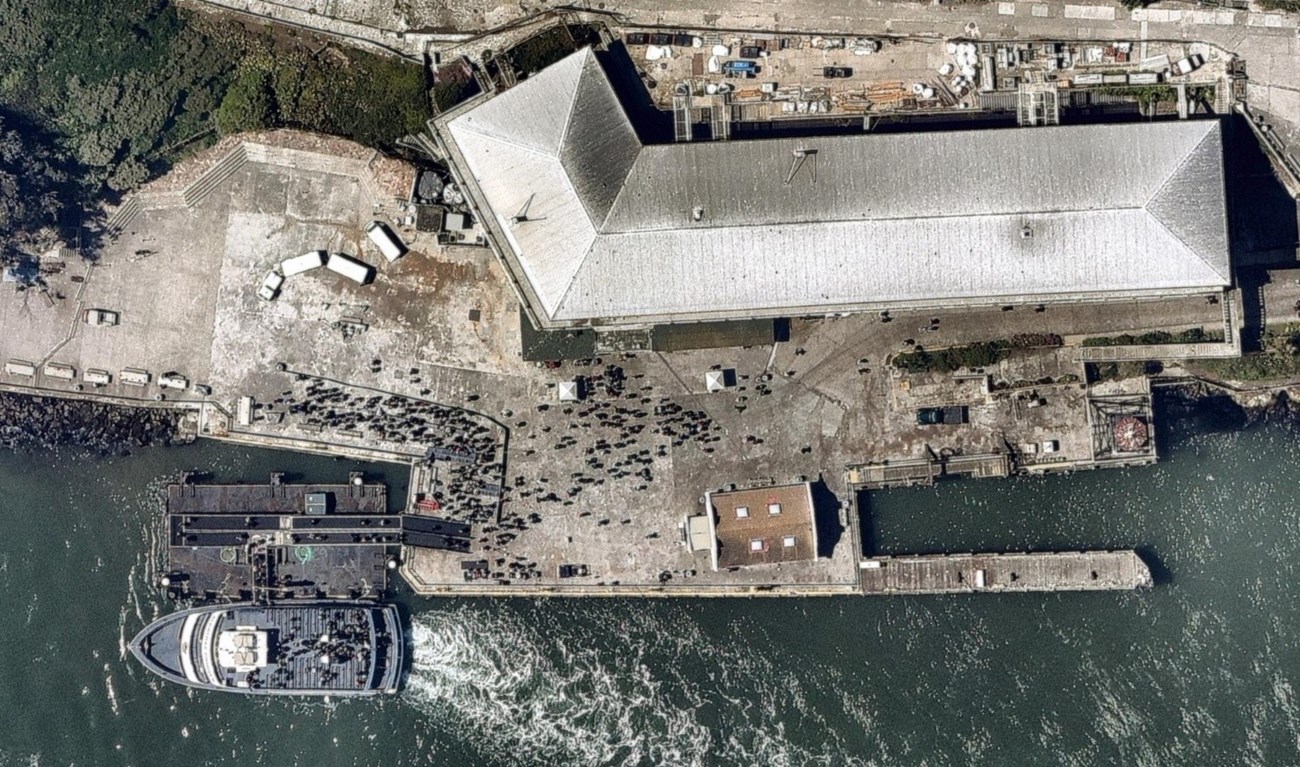
The Alcatraz concrete wharf and finger pier from the air. NPS photo.
A prison, then a park
Alcatraz was an active prison until the 1960s, and became part of Golden Gate National Recreation Area in 1972. The wharf is a contributing feature of the Alcatraz Island National Historic Landmark District.
The work
Funded by the Great American Outdoors Act (GAOA), the project is:
- repairing the historic steel-cased concrete piles, beams and slabs, all in fair to poor condition;
- adding two new seismic-resisting elements to help the wharf withstand conditions in San Francisco Bay;
- if other funding allows, repairing the finger pier attached to it — its wooden fender, bearing piles, cross bracing, gangway ramp landing and motorized pulley — an important historic resource and an exit route for staff, visitors and emergency crews.
It protects what sits on the wharf too: restrooms, the dock office and store, interpretive programs and exhibits, accessible furnishings and the accessible tram, along with the island's water and wastewater lines and a diesel fuel line for its power plant.
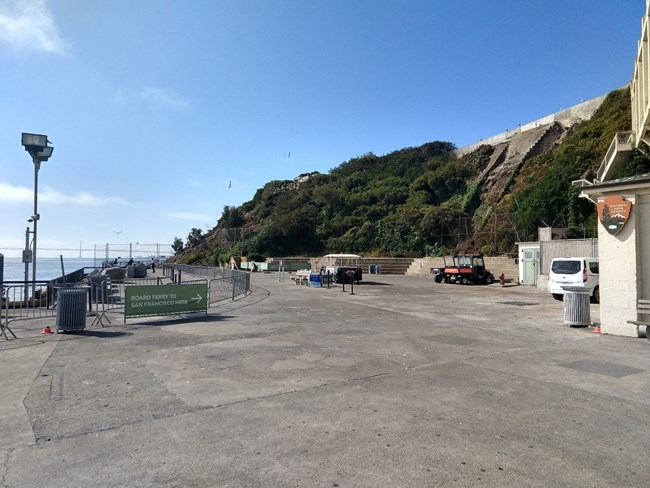
The concrete wharf, looking toward the ferry queue. NPS photo.
Why it matters
- It keeps the wharf usable as the island's public assembly area, for up to 1,000 people at a time.
- It guards against a catastrophic wharf failure, with its risk to life and property, and protects the bay's water and aquatic habitats.
- It gives contractors reliable access for future rehabilitation elsewhere on the island.
- It finishes work begun before: NPS wharf repairs started in 2000 but never completed, and the concessionaire's gangway and fender-pile work in 2010 and 2018.
- The facilities it covers should not need major rehabilitation for 40–75 years.
At a glance
| Project | Described as $36.5 million; current GAOA cost estimate $40,231,040 |
| Anticipated completion | Winter 2025 (fourth quarter), as planned |
| Visitor impact | Limited access to the wharf during construction |
Sources
Based on "Central to visitor access: stabilizing 1939 Alcatraz Island wharf," National Park Service, Golden Gate National Recreation Area; a work of the United States government in the public domain. The source gives the island's annual visitor revenue as both "about" and "over" $60 million, for partners and for the NPS; it is given here without either detail.
Nestas publicaçõesAlcatraz Island
Licença: CC0 1.0 (domínio público) · Adaptado de www.nps.gov
1
0
0
0

Comentários


