
Viu algo para melhorar? Proponha uma alteração.
On May 18, 2023, the Florida Department of Health asked CDC to confirm the parasite in a patient with suspected malaria who had not traveled abroad, used intravenous drugs, or received a transfusion or transplant. CDC confirmed Plasmodium vivax. The patient had caught malaria from a mosquito in Florida — the first such locally acquired, or autochthonous, malaria in the United States since 2003. By mid-July there were eight: seven in Florida and one in Texas.

A thin blood smear showing Plasmodium vivax parasites. Credit: CDC, Morbidity and Mortality Weekly Report.
The cases
- Florida: seven cases, reported May 18 to July 17, all in people living within 4 miles (6.4 km) of each other in Sarasota County. An imported case of P. vivax (symptoms from April 20) had been reported in the same area.
- Texas: one case, confirmed June 7 in Cameron County, where an imported case (symptoms from May 2) had also been reported. Texas's last locally acquired malaria was in 1994.
Whether the imported cases were the source is unknown, and nothing linked the two states' outbreaks. None of the eight had had malaria before. Diagnosed by rapid tests, blood smears or PCR, all were treated for the blood-stage infection — five with artemether-lumefantrine, three with atovaquone-proguanil — and then with primaquine to clear parasites hiding in the liver, after tests confirmed none had G6PD deficiency. All recovered.
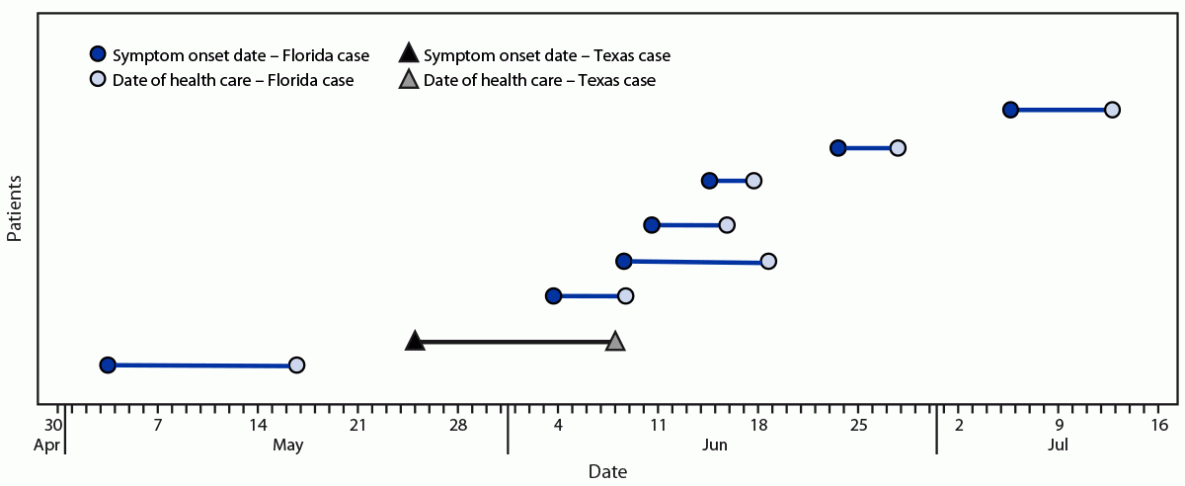
Time from symptom onset to health care and diagnosis for the eight patients. Credit: CDC, Morbidity and Mortality Weekly Report.
The response in Florida
- Finding cases. Syndromic surveillance started May 17, looking back four weeks; active surveillance from May 26, to continue until 8 weeks passed with no new case. Hospitals in Sarasota and Manatee Counties tested people meeting set criteria. Six cases were first reported by doctors and one found by surveillance; 30 other people identified through surveillance tested negative.
- Mosquitoes. Traps near the first case caught 407 Anopheles mosquitoes by August 4. None carried infectious parasites, but three Anopheles crucians had recently fed on an infected person. Aerial and ground spraying began May 24, with larvicides — spinosad, surface films, methoprene and Bti — in standing water and aircraft treating hard-to-reach wetlands.
- Outreach. Advisories began May 26 and became alerts and a statewide advisory by late June. The health department gave people experiencing homelessness repellent, bed nets and information, urging them to seek care if ill.
The response in Texas
Four coworkers of the Texas patient reported malaria-like illness; three were reached, one tested negative, and two declined testing. Mosquito control agencies trapped at the patient's outdoor night worksite and residences — all 71 Anopheles tested negative — and sprayed and treated standing water. State and county health advisories went out on June 23. CDC issued a nationwide Health Alert on June 26 and briefed clinicians on July 20.
Why it matters
Malaria was eliminated as a public health threat in the United States in the mid-1950s, and the World Health Organization certified the country malaria-free in 1970. About 2,000 cases are still diagnosed each year, mostly in travelers. Anopheles mosquitoes able to carry malaria live in many parts of the country, so an imported case can seed local spread. By August 4 there had been no new cases since early July. The risk remains very low, but clinicians should consider malaria in unexplained fever, especially where local cases have occurred; prompt treatment prevents severe illness and further spread.
To prevent mosquito bites: use EPA-registered repellent, wear loose long sleeves and pants, treat clothing with 0.5% permethrin, screen or close windows and doors, and empty standing water weekly. Travelers to areas with malaria should ask a health care provider about prevention, including preventive medicine.
Sources
Based on "Outbreak of Locally Acquired Mosquito-Transmitted (Autochthonous) Malaria — Florida and Texas, May–July 2023," by Dawn Blackburn, Michael Drennon, Kelly Broussard and colleagues (CDC; Florida Department of Health; Texas Department of State Health Services; and local agencies), Morbidity and Mortality Weekly Report, Centers for Disease Control and Prevention; a work of the United States government in the public domain.
Licença: CC0 1.0 (domínio público) · Adaptado de www.cdc.gov
1
0
0
0

Comentários


