
Quer melhorar o conteúdo da página? Proponha uma alteração.
For sixteen years in a row, Dr. Paul Kanive and Scot Anderson never failed to see Mr. Burns at Tomales Point, the northern tip of the Point Reyes peninsula. A 17-foot male with a big bite missing from his tail, he had a habit of rising straight up from the depths to test-bite their seal decoy; they met him 61 times. Then, in the 2023 field season, they saw just six sharks at Tomales Point all season — and for the first time in nearly two decades, no Mr. Burns.
The survey
Kanive and Anderson lead the California White Shark Project, a nonprofit running the world's longest survey of white sharks (Carcharodon carcharias): individual records going back to 1987. Each fall and early winter they visit sites along the California coast, including Tomales Point and the Greater Farallones National Marine Sanctuary, to track the sharks' numbers, health and population.
- Luring. Under federal and state permits, they cast a seal decoy from their 16-foot boat. "The sharks like to be cryptic or hidden," Kanive says; the decoy plays on their curiosity. They are also "very risk averse," quick to leave at any perceived threat.
- Recording. In the moments before a shark loses interest, the team films it with waterproof cameras to judge its sex and length — and above all photographs the dorsal fin, whose shape and notches are as unique as a fingerprint.
When Anderson started in 1987, almost nothing was known about white sharks, "other than [if] a dead shark [was] caught in a net, or if one bit somebody. They used to just be called 'maneater sharks.'" Sharks are hard to study: few, wide-ranging, and demanding in time and local knowledge. The long record now lets the team follow population size, deaths, and movements between populations. It matters: sharks, around for some 450 million years, help control prey such as fish, crustaceans, mollusks, seabirds, seals and sea lions. In California, keeping seal and sea lion numbers in check helps protect salmon, including endangered coho, from being overeaten.
Where the sharks went
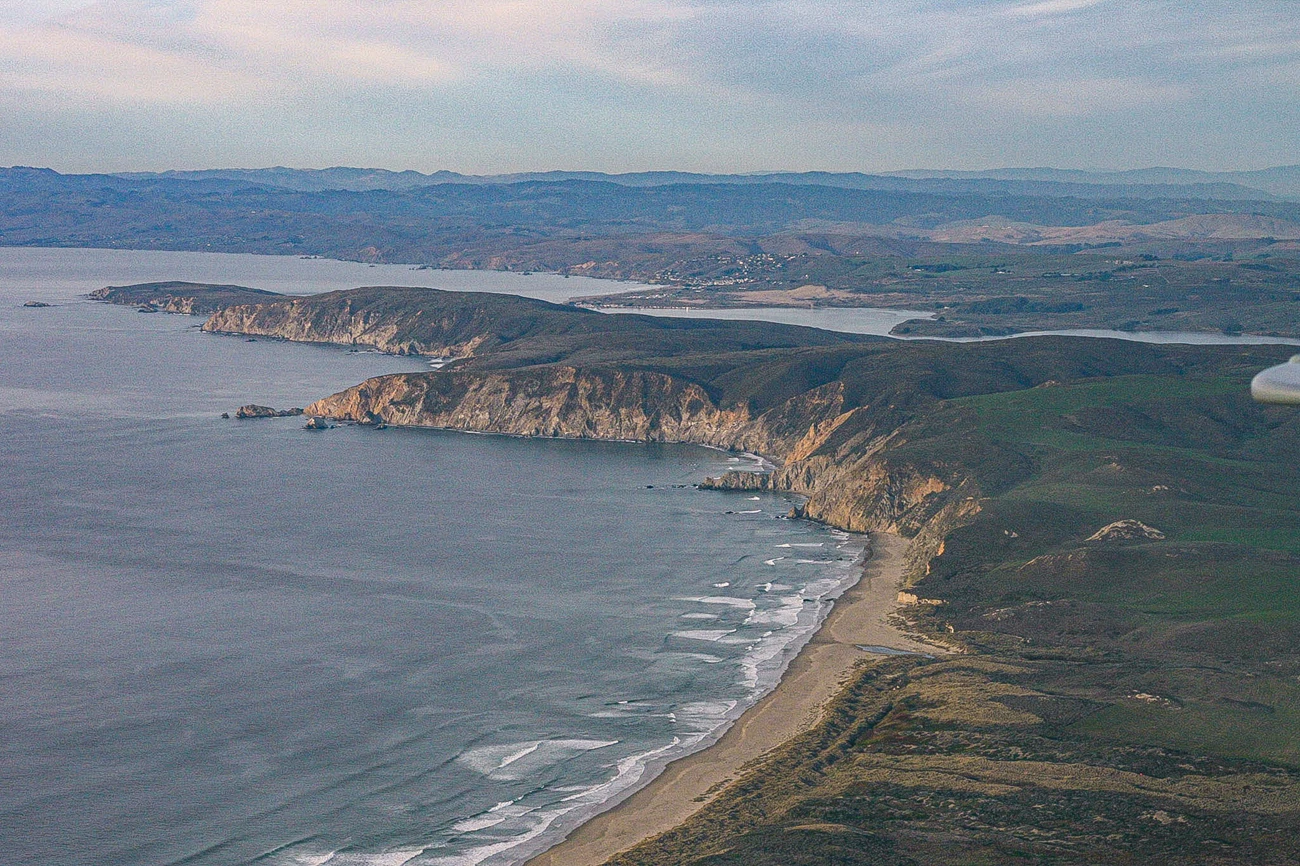
Tomales Point. From 2006 to 2019 researchers saw 30 to 45 sharks here each season; in 2020–2022 the numbers plummeted. Credit: Anela Kopshever, National Park Service.
From 2006 to 2019, the team consistently saw 30 to 45 sharks at Tomales Point. In 2020, 2021 and 2022 the numbers fell sharply — though Mr. Burns still showed up. In December 2023 they searched a whole day without seeing a single shark. "Very atypical," Kanive says. The reasons could be many, Anderson explains: food elsewhere, such as a dead whale on the bottom; orcas, which sharks move away from; prey that moves around; even water clarity — too murky and the sharks can't see, too clear and they see so well they don't come near the boat.
The Drakes Bay hypothesis
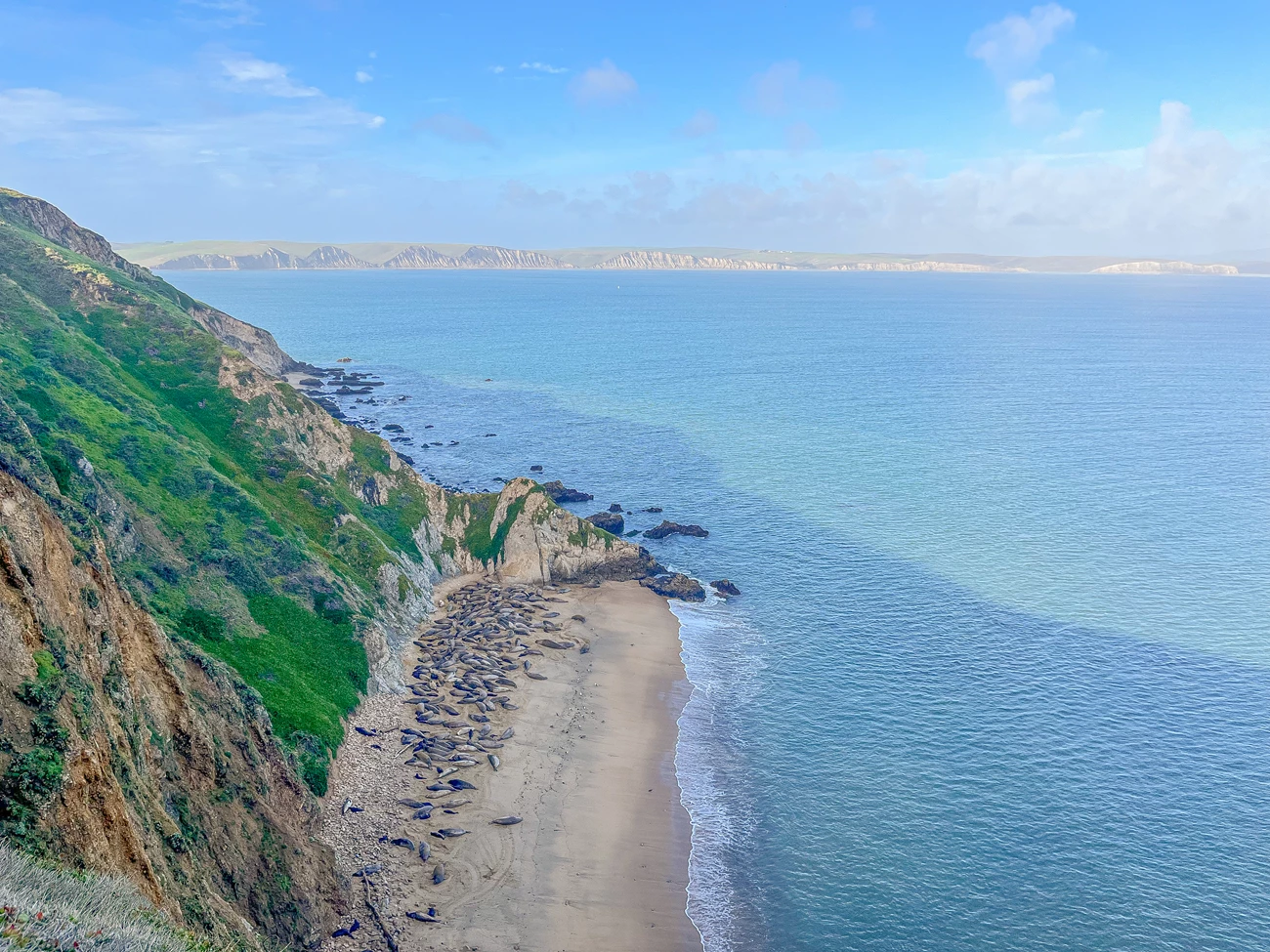
Elephant seals at Point Reyes are moving from ocean-facing beaches to sheltered ones inside bays, such as Drakes Bay. Credit: Aiko Goldston, NPS / Point Reyes National Seashore Association (NMFS Permit No. 21425).
Elephant seal numbers at Drakes Bay are rising exponentially, as the seals shift from open-ocean beaches like the Point Reyes Headlands to protected ones like Drakes Beach. "We have wondered if there would be an increase in white sharks near Drakes Bay," says Sarah Codde, a National Park Service marine ecologist. Young elephant seals haul out there just as white sharks peak in the fall — "big enough to provide a hefty meal, but probably small enough that they won't be able to easily escape a shark" — and she has seen more male seals with very fresh shark bites on Drakes Beach. Residents report more sharks in the bay, too.
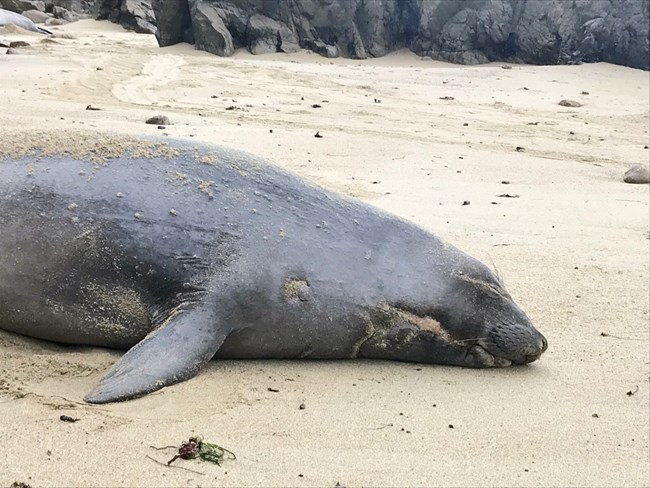
A female elephant seal with a healed shark bite on her neck. Credit: Sarah Codde, National Park Service (NMFS Permit No. 21425).
In the 2023–24 season, with support from the Point Reyes National Seashore Association's Neubacher Marine Science Fund, the team surveyed Drakes Bay by boat for the first time — a long trip from San Francisco or Inverness — while Anderson also watched from Chimney Rock with binoculars. Against their expectations, they found only one shark, a 13-foot male Kanive named "Drake."
One sighting neither proves nor disproves the idea, and bad weather and hard access may explain it. The team treats 2023–24 as a pilot year and hopes to survey more, and perhaps to tag sharks at Tomales Point with a receiver in Drakes Bay. Why Tomales Point emptied may never be fully known — but they hope to see Mr. Burns again.
Sources
Based on "Scientists Dive Deep into a White Shark Mystery at Tomales Point" by Avani Fachon, science communication intern, Point Reyes National Seashore Association, National Park Service (April 2024); a work of the United States government in the public domain.
Nestas coleçõesPoint Reyes National Seashore
Licença: CC0 1.0 (domínio público) · Adaptado de www.nps.gov
1
0
0
0

Comentários


