
Хотите улучшить содержимое страницы? Предложите правку.
Walking off-trail in the high desert to get a closer look at a rock formation can seem harmless — it is only dirt. But much of that “dirt” is alive. Biological soil crusts are communities of lichens, mosses, green algae, microfungi, bacteria and cyanobacteria living in the top few millimeters of the soil. In the high deserts of the Colorado Plateau — parts of Utah, Arizona, Colorado and New Mexico — they may make up 70 to 80 percent of the living ground cover.
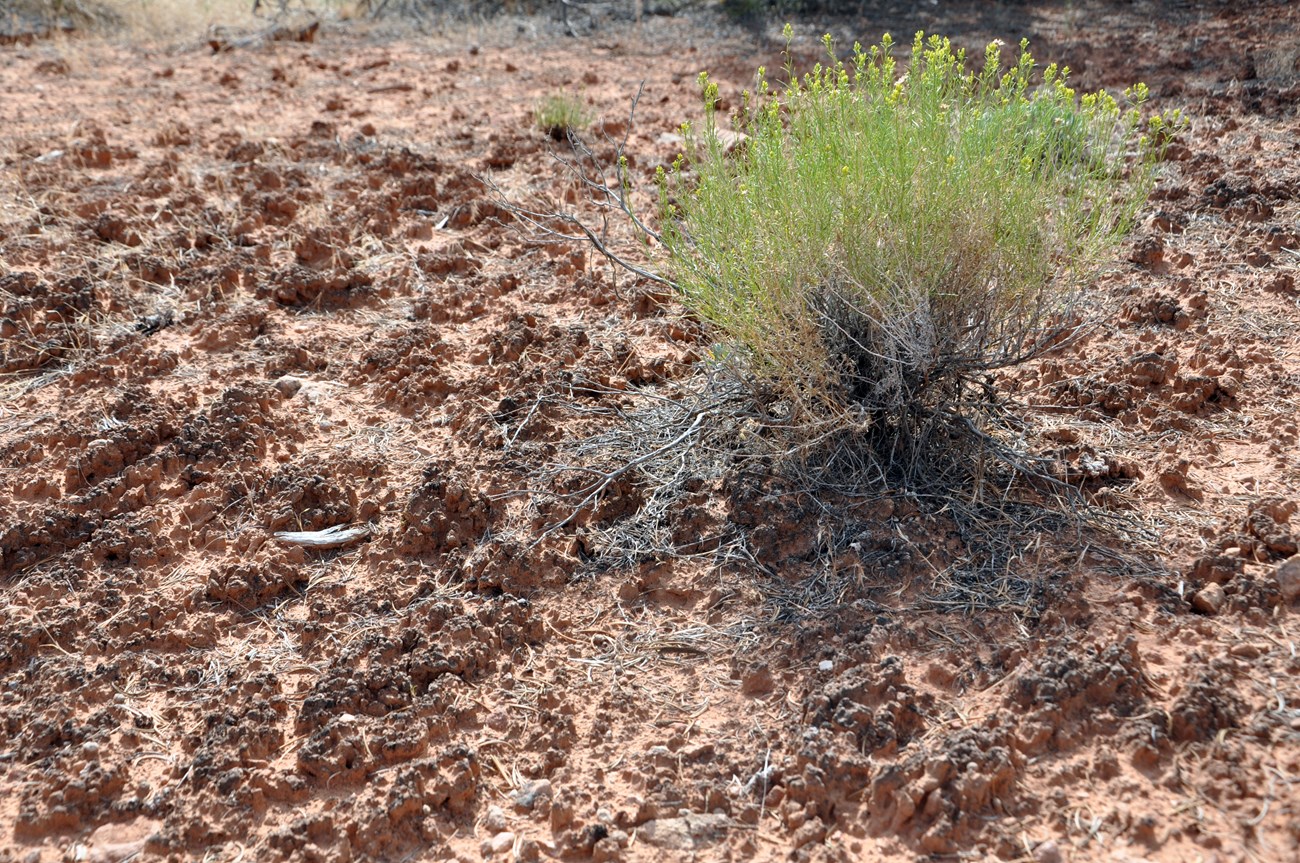
A mature biological soil crust stabilizes the soil at Colorado National Monument. NPS photo.
Hidden life
The crusts go by several names: biocrusts, or cryptobiotic soils — from crypto, “hidden,” and biota, “life.” In dry regions they are dominated by cyanobacteria, among the oldest known life forms on the planet.
Cyanobacteria lie dormant when dry. When wet, they wake and move through the soil, leaving a trail of sticky material that clings to rock and soil grains. Over time this builds an intricate web of fibers that binds loose particles together, turning an unstable surface into one that strongly resists wind and water erosion.
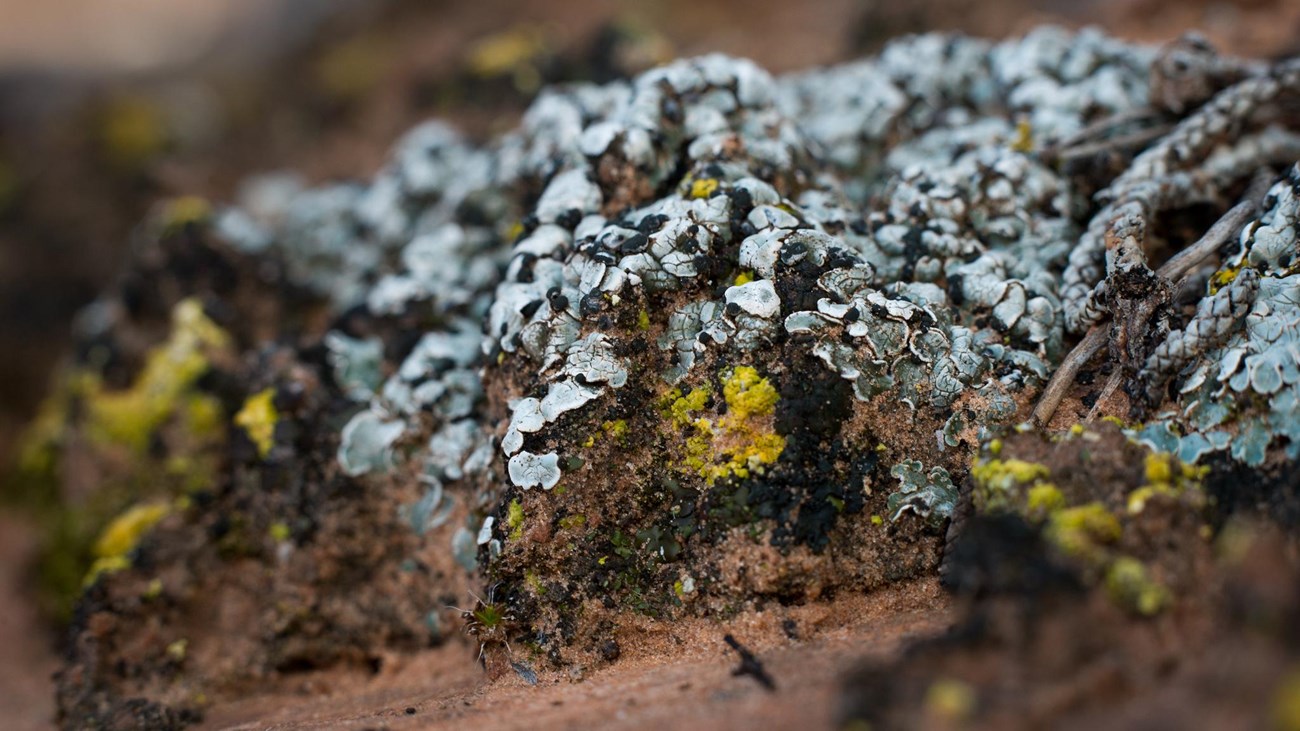
Old-growth soil crust draped in lichens, Arches National Park. NPS / Neal Herbert.
Where to find them
Soil crusts grow in dry and semi-dry places worldwide. In the United States they occur on the Colorado Plateau and in the Mojave, Sonoran and Chihuahuan Deserts, and in semi-dry parts of Alaska. Parks where you may see them include Arches (Utah), Grand Canyon and Saguaro (Arizona), Joshua Tree (California), White Sands (New Mexico), Dinosaur National Monument (Colorado and Utah) and Katmai (Alaska).
How to recognize them
Young crusts are hard to spot: flat, brown and easy to mistake for bare ground. As they mature they grow bumpier and darker, rising into ridges and spires like miniature sandcastles, often dusted with paler lichen or moss.
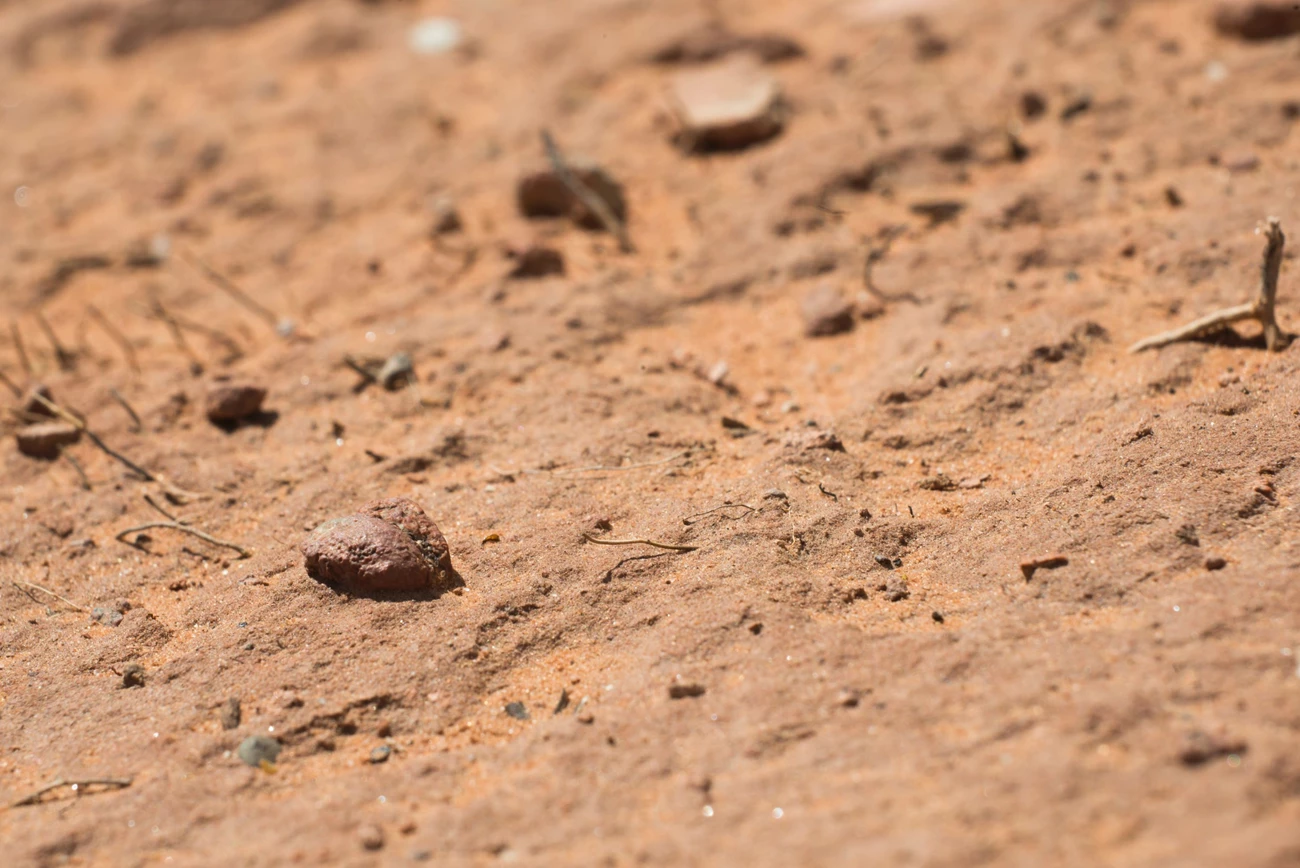
A young biological soil crust. NPS / Neal Herbert.
Why they matter
- They hold the land together. In sandy places the crusts literally shape the landscape, keeping soil and sand from washing away in rain or blowing away in wind.
- They store water, precious in a dry climate.
- They feed plants. The cyanobacteria and lichens fix nitrogen, converting nitrogen from the air into a form plants can use.
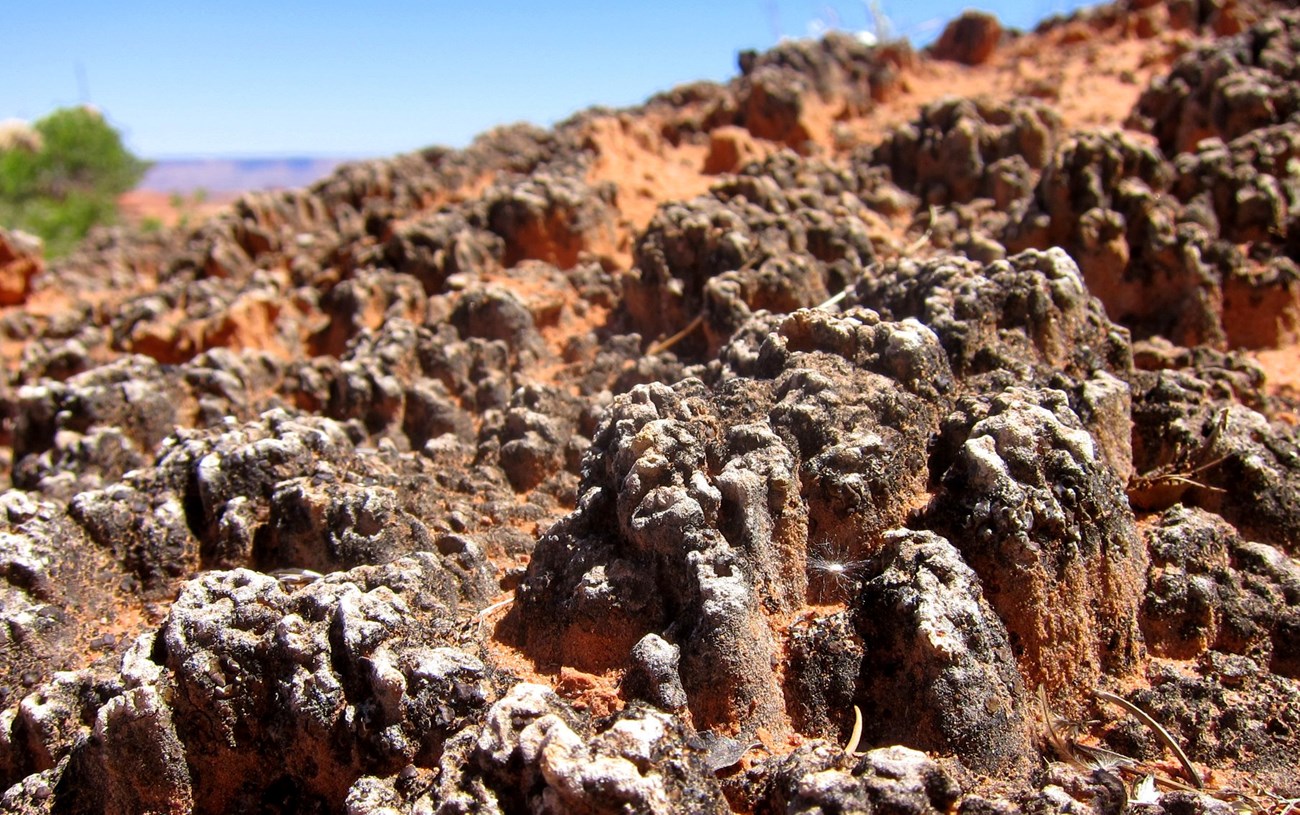
A mature biological soil crust in Canyonlands National Park. NPS / Amy Washuta.
A forest you can crush
A podcast on the park page, recorded at Arches National Park, compares the crusts to a forest in miniature. Up close, the dark layer becomes tiny sandcastles, some looking dusted with soot, and under a hand lens a garden of mosses, many-colored lichens and cyanobacteria. Like trees, the crust organisms photosynthesize, enrich the soil and prevent erosion.
Sasha Reed, a research ecologist with the U.S. Geological Survey in Moab who received a Presidential Early Career Award for Scientists and Engineers in 2011, explains in the podcast that the crusts ooze sticky sugars (polysaccharides) that bind sand grains with remarkable strength. They cope well with high winds and heavy water, she says, but not with being compressed — by feet, bikes, cars or cattle.
Damage spreads. Once a crust stops holding the soil, sand and dust blow onto neighboring healthy crust and bury it, and since crusts need sunlight to photosynthesize, they die too. The effects reach far beyond the desert: dust from disturbed land settles on the Rocky Mountain snowpack, changing the snow’s color and energy balance so it melts faster — a change predicted to cut Colorado River flow by five percent. Destroying crusts, Reed says, is like clearing a forest, only at a scale you must kneel to see. But she is hopeful: the organisms are survivors, and given the chance they can stay healthy or recover.
Don’t bust the crust
Soil crusts are extremely fragile. Tire tracks, bicycles and footprints do serious harm — a single footprint can kill the crust beneath it — and damaged areas can take decades to recover, if they recover at all.
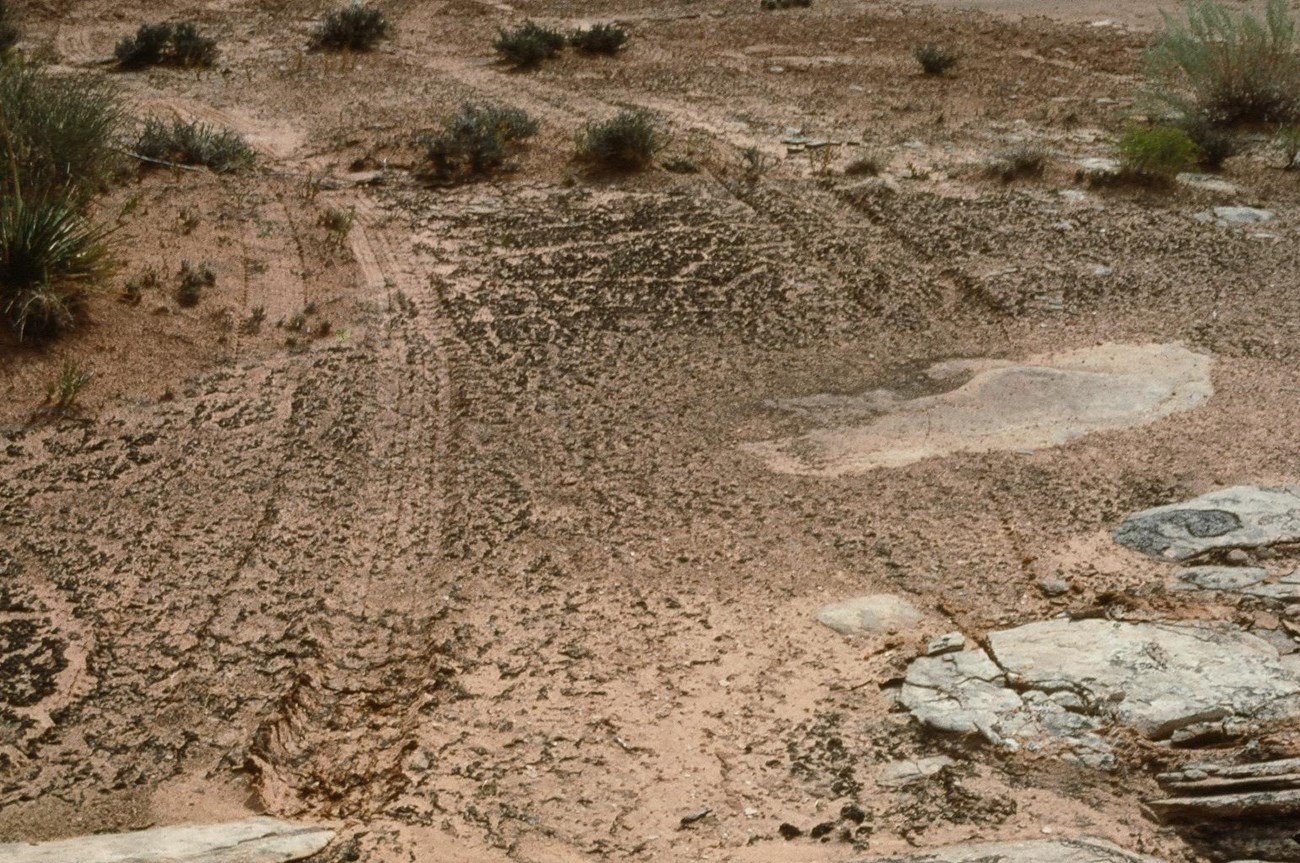
Damaged soil crusts can take decades to recover. NPS photo.
To protect them:
- stay on existing trails and roads
- if you must leave the trail, walk in wash bottoms or on slickrock
- camp on slickrock or in areas already disturbed
- go out of your way to avoid crusts, and watch for signs
- leave no trace of your visit
Sources
Based on "I Didn’t Know That!: Biological Soil Crusts," National Park Service, including its podcast "Tiny Forests in the Desert" by Jennifer Jerrett; a work of the United States government in the public domain, with the podcast rewritten in hubnx’s own words.
В подборкахCapitol Reef National ParkCasa Grande Ruins National MonumentCanyonlands National ParkArches National ParkColorado National MonumentBighorn Canyon National Recreation Area
Лицензия: CC0 1.0 (общественное достояние) · По материалам www.nps.gov
1
0
0
0

Комментарии


