Есть что улучшить? Предложите правку.
Эта страница общедоступна.
Introduction
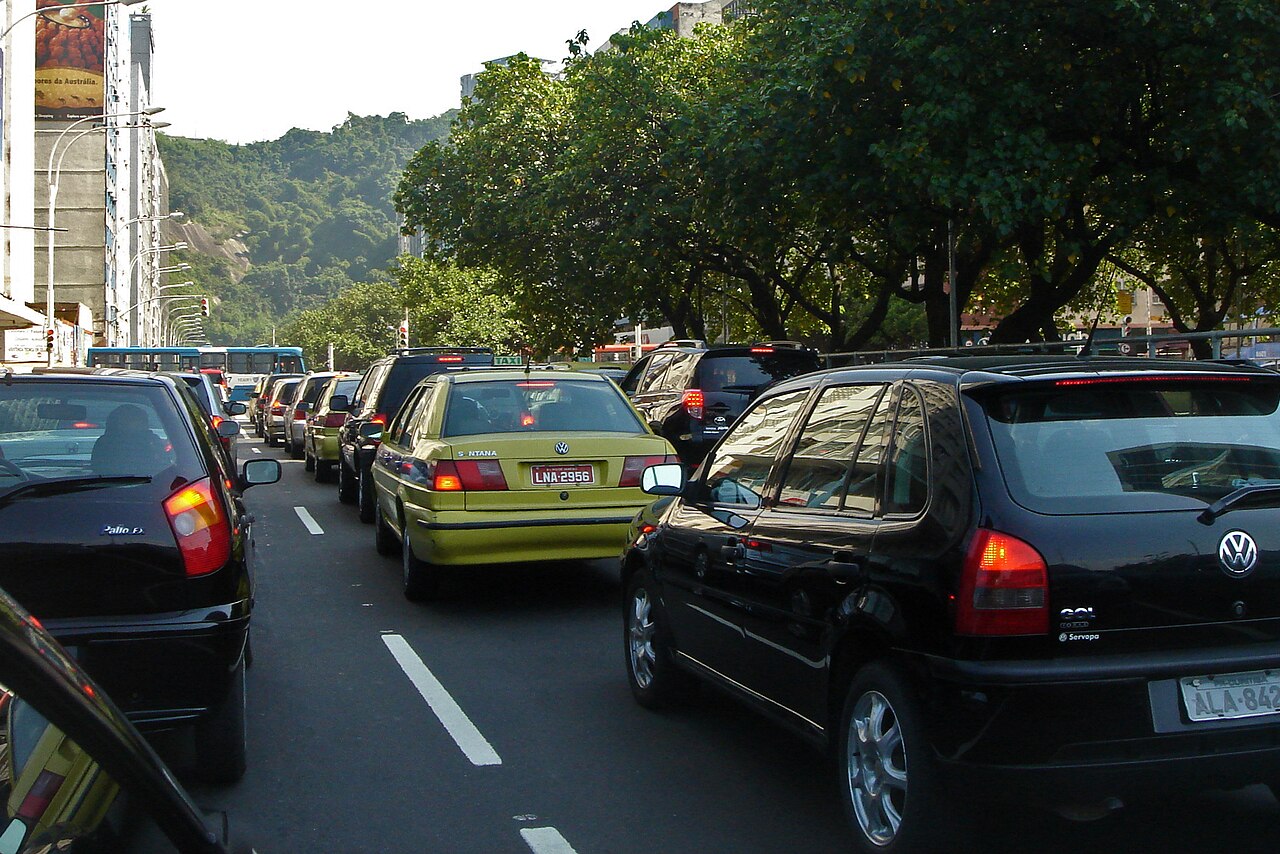
Traffic is a frequent contributing factor to road rage. (Image: Mario Roberto Duran Ortiz Mariordo, CC BY 3.0)
History
Road rage is a term for severe aggressive driving acts that began to rise in usage in the late 1980s.[1] This phenomenon existed earlier, however, under different terminology. Reporters from the Los Angeles local news station KTLA were some of the earliest pioneers of the term in 1987. They used road rage to describe a series of freeway shootings that occurred during the summer.[2]
Researchers have explored the pervasiveness of road rage since the term was coined. The American Automobile Association's (AAA) 1996 study on "violent traffic incidents" found that "road rage" incidents had increased over 7% per year between 1990 and 1996.[3] This trend continues into the 21st century. The Washington Post found the number of fatalities associated with road rage incidents increased exponentially from 2004 to 2013.[4]
Demographic Information
80% of drivers in the United States reported expressing significant anger, aggression or road rage while driving. Road rage is most prevalent with males age 19 to 39. Road rage is highly correlated with unsafe driving habits such as speeding, running red lights, or distracted driving. [5] A 1999 study established several factors connected with road rage. These include environmental factors such as traffic delays or running late as well as personal factors such as anonymity, disregard for the law, disregard for others, and habitual or clinical behavior. These factors are exhibited in unsafe driving habits which are in turn correlated with road rage. 75% of people surveyed in the study felt it was important to do something about unsafe driving. Therefore there are now people exhibiting unsafe driving habits and people responding to those habits, leading to two groups of people contributing to road rage. [6]
Commonalities in Cases of Road Rage
Incidents of road rage often share common characteristics. Some of these characteristics include honking, yelling, confrontations outside of the vehicles, and use of weapons either for assault or intimidation. Although 80% of drivers in the United States expressed significant anger while driving this does not mean they reached the level of an altercation with another driver. Road rage incidents are exhibited on a scale from minor expressions of anger such as honking to significant altercations such as ramming another car or a physical confrontation between drivers.
Global Phenomena
Road rage is not limited to the United States or the western world. There are many incidents of road rage across the globe, especially in areas with poor infrastructure or traffic conditions, such as India and China. A controversial ideology has spread in China in the early 21st century. The "double hit" phenomena is defined as a driver striking a pedestrian multiple times to kill them after an initial accident. This idea has spread in China because of traffic laws that leave drivers liable, such as Article 76 Section 2 of the Law of the People's Republic of China on Road Traffic Safety.[7]-7) The driver may be liable to pay the equivalent of hundreds of thousands of USD in medical and rehabilitation costs for injured pedestrians or tens of thousands of USD in funeral costs. Due to corruption in China's government, it is often possible for these perpetrators to avoid jail time and be limited to paying funeral costs in cases where they strike and kill a pedestrian. [8]
Participants
Traffic Safety Organizations
AAA promotes safe driving practices and spreads information about the dangers of road rage and aggressive driving to increase awareness of these issues. It conducts research on aggressive driving and educates people about it in order to reduce road rage incidents.[9] The National Highway Traffic Safety Administration also conducts research on aggressive driving and uses the information to improve road safety. NHTSA states on their website: “We provide guides, planners and information to law enforcement professionals and prosecutors to assist in the reduction of aggressive driving.”[10] These organizations are often part of the government or a non-profit that operate in the public interest by pursuing safer transportation.
Law Enforcement
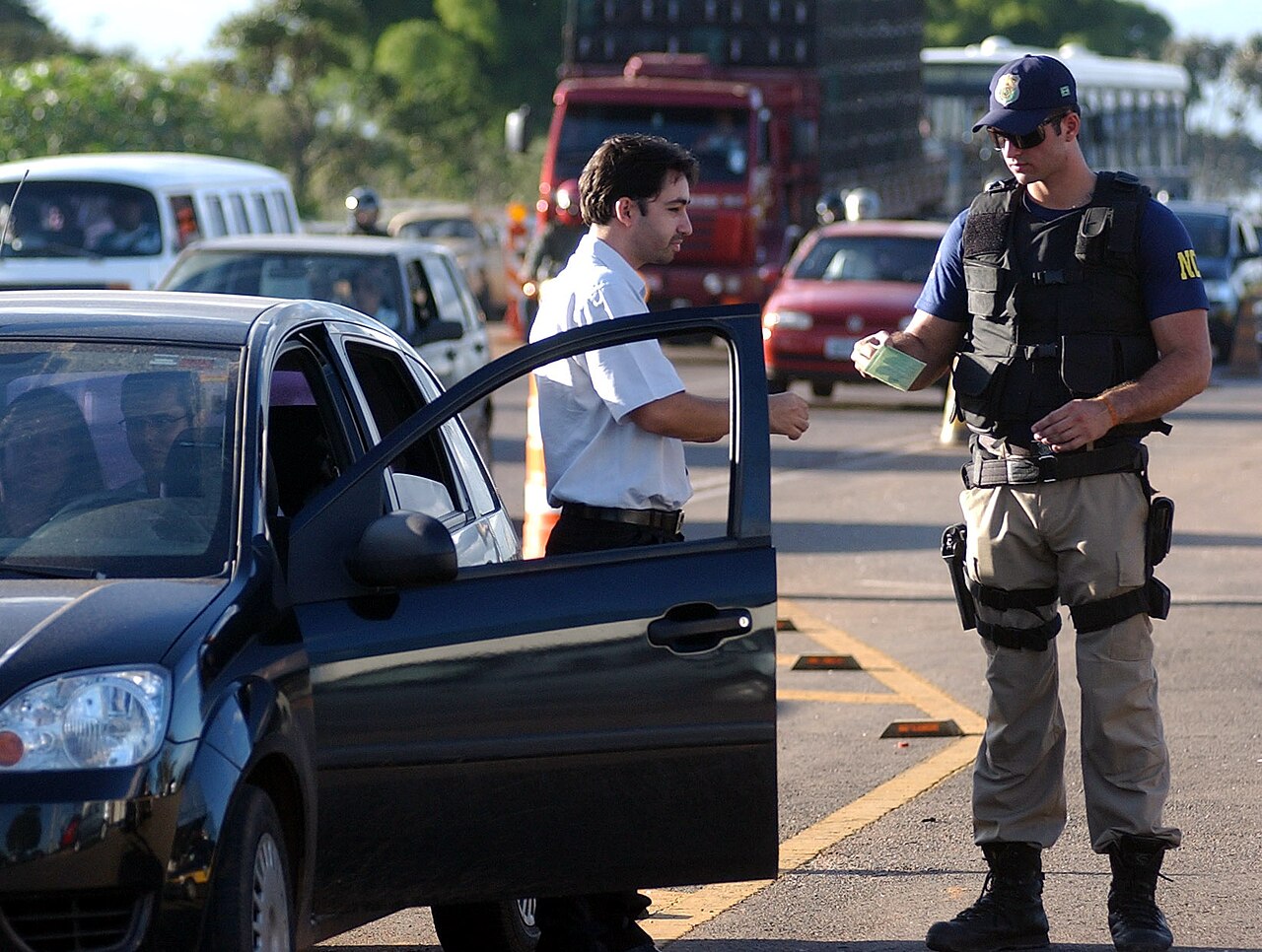
Law enforcement seek to limit road rage incidents by policing aggressive and unsafe driving. (Image: Fabio Pozzebom / ABr., CC BY 3.0 br)
Police presence has been shown to have a significant impact on reducing the prevalence of aggressive driving and other unsafe driving habits which helps to reduce accidents and incidents of road rage. A study conducted by NHTSA in Milwaukee, Wisconsin found that when law enforcement increased their focus on aggressive driving offences, and publicly announced they were doing so, the number of police-reported car crashes decreased throughout the city.[11] Another study analyzed the effect of traffic enforcement on aggressive driving by comparing the prevalence of aggressive driving in Serbia and Kosovo (a region that recently declared independence from Serbia.) The region of Kosovo where the study was conducted did not have traffic enforcement, whereas Serbia did. The results showed that aggressive driving was more prevalent in Kosovo, which indicates that traffic enforcement presence helps decrease instances of aggressive driving.[12]
Insurance Companies
Many insurance companies spread awareness of the dangers of aggressive driving, and promote safe driving practices on their websites.[13][14] These companies have an interest in keeping their policy holders from getting into accidents, so they reward safe driving habits by offering discounts to drivers who have a history of safe driving.[15] Progressive offers customers the option to allow their driving habits to be monitored using either a smartphone app, or a plug-in device, and will give them a discount if the collected data shows the customer is a safe driver.[16]
Road Designers
Roads are typically designed by federal and state departments of transportation, such as the U.S. Department of Transportation and the Virginia Department of Transportation. These government agencies conduct research to improve transportation efficiency which reduces traffic congestion, a major contributor to stress on the road.[17] Although they do not consider aggressive driving prevention to be one of their main priorities, their road designs still effect the prevalence of aggressive driving. Drivers tend to experience the most stress and frustration when they are in heavy traffic, so reducing traffic congestion can help to reduce the likelihood of a driver experiencing road rage.[18]
Drivers
Many drivers experience feelings of anger or rage when behind the wheel. According to a study conducted by AAA: "Nearly 80% of Drivers Express Significant Anger, Aggression, or Road Rage."[5] However, not all drivers act outwardly aggressive. Some are more likely to be victims than perpetrators of road rage. As a whole, driver's main goals are simply to get from point A to point B quickly and with as little frustration as possible.
Pedestrians and Bicyclists
Pedestrians and bicyclists tend to be much more fearful of aggressive drivers because they are more vulnerable. A study conducted in Toronto found that, due to this higher vulnerability, pedestrians and bicyclists who are victims of road rage are more likely to feel that they were personally targeted, instead of the incident being a random event.19] Bicyclists and drivers have a [relationship that often puts the two in conflict with one another and it is common to see road rage incidents involving bicyclists and drivers.
Contributing Factors
One study found alcohol and drug abuse to be highly correlated with incidents of road rage. (Image: Ralf Steinberger from Northern Italy and Berlin, CC BY 2.0)
Studies have established a correlation between road rage and several more implicit factors. A study published in the Psychiatry Journal addressed road rage from the perspective of a public health issue. The study found a high correlation between road rage and psychiatric disorders, especially those which lead to a displacement of anger, alcohol and drug abuse, and with those who scored highly on the General Health Questionnaire. [20] A study published in the Journal of Religion and Health established a slight negative correlation between attending church and road rage impulses. However, the same study also found evidence of a "bizarre paradoxical" group who both attended church and committed road rage frequently. [21]
Attempted Solutions
Legislation
In most road rage cases, existing laws are used to prosecute offenders over specific aggressive driving laws. Road rage incidents are subjective enough in cause that making specific laws targeting such incidents is difficult. For instance, in the United Kingdom, the Public Order Act of 1986 is used to prosecute road rage offenders for other offenses that may reflect the details of the road rage incident, such as alarm or harassment. [22] A few laws specific to road rage exist in the United States. Virginia is one of a few states that has a penalty for road rage. A driver that violates VA Code §46.2-868.1 may be charged with a Class 2 misdemeanor, which can result in a $1,000 fine and up to six months in prison.[23]
Campaigns
Many organizations, such as insurance companies and the Department of Motor Vehicles (DMV), target drivers with media campaigns containing tips and guidelines on how to prevent and diffuse road rage situations. AAA uses brochures to spread awareness on how drivers can avoid becoming victims of road rage.[24] California's DMV has a webpage targeting drivers with information on dealing with road rage incidents and a self assessment drivers can use to rate their tendencies for road rage. [25]
Conclusion
Road rage is an informative case of the interface between society and technology. Looking at this case, engineers should generalize that they must plan systems to deal with people at different levels of anger or rationality. The increasing prevalence of Self-Driving Cars could lead to interesting developments in how road rage incidents play out. There is speculation that it could reduce road rage by limiting driver control of vehicles and decreasing traffic congestion. There is opposing speculation that self-driving cars could allow for new ways of road rage being exhibited, such as vandalism of communal vehicles.
References
- ↑ "Google. (2017). Google Ngram Viewer - Road Rage 1885-2000".
- ↑ "Moliterno, J. E. (2013). The American Legal Profession in Crisis: Resistance and Responses to Change, 142".
- ↑ "American Automobile Association (1996). "Road Rage" On the Rise, AAA Foundation Reports" (PDF). Invalid parameter "road" in tag. The supported parameters are: details, dir, follow, group, name.
- ↑ "Ingraham, C. (2015). Road rage is getting uglier, angrier and a lot more deadly".
- ↑ a b "AAA Newsroom. (2016). Nearly 80 Percent of Drivers Express Significant Anger, Aggression or Road Rage".
- ↑ "NHTSA Study. (1999). National Highway Traffic and Safety Administration Study on Aggressive Driving".
- ↑ "Jintao, H. (2003). Law of the People's Republic of China on Road Traffic Safety (Order of the President No.8)".
- ↑ "Sant, G. (2015). Why drivers in China intentionally kill the pedestrians they hit".
- ↑ "AAA Exchange. (2013). Aggressive Driving".
- ↑ "NHTSA. (2012). National Highway Traffic Saftey Administration. Stop Aggressive Driving".
- ↑ "NHTSA. (2001). National Highway Traffic Saftey Administration. Evaluation of the Aggression Suppression Program".
- ↑ "Hennessy, D.A., & Wiesenthal, D.L. (2010). The impact of police presence on angry and aggressive driving. Ergonomics, 40(3), 348-361".
- ↑ "Geico. (2015). 7 ways to avoid road rage".
- ↑ "Allstate. (2014). Preventing road rage" (PDF).
- ↑ "Nationwide. (2017). Safe driving discount".
- ↑ "Progressive. (2017). Discounts: Snapshot".
- ↑ "U.S. Department of Transportation. (2016). Research, development, and technology strategic plan" (PDF).
- ↑ "Stanojević, P., Sullman, M.J.M., Jovanović, D., & Stanojević, D. (2018). The impact of police presence on angry and aggressive driving. Accident Analysis & Prevention, 110, 93-100".
- ↑ "Cavacuiti, C., Ala-Leppilampi, K.J., Mann, R.E., Govoni, R., Stoduto, G., Smart, R., & Locke, J.A. (2013). Victims of Road Rage: A Qualitative Study of the Experiences of Motorists and Vulnerable Road Users. Violence and Victims, 28(6), 1068-1084".
- ↑ "Sansone, R; Sansone, L. (2010). Road Rage: What's Driving It?".
- ↑ "Gau, L; Woodside, A; Martin, D. (2015). Explaining Seeming Paradoxical Consumer Experiences: Conjoining Weekly Road Rage and Church Attendance".
- ↑ "United Kingdom (1986). Public Order Act 1986, Section 4A".
- ↑ "Code of Virginia (2002). § 46.2-868.1. Aggressive driving; penalties".
- ↑ "AAA Foundation for Traffic Safety (2017). Road Rage: How to Avoid Aggressive Driving" (PDF).
- ↑ "California Department for Motor Vehicles (2017). California Driver Handbook - Sharing The Road".
Where this page came from
This page was imported from Wikibooks. From “Lentis” on Wikibooks, by its contributors, under CC BY-SA 4.0. Changed here: set as a page; navigation and edit links left out; each image under its own licence, credited in its caption.
Nobody has written it yet — it is the source material at a new address, which is why search engines are asked to skip it and why no one earns from it. It is up for grabs: take it on, and it is yours to rewrite and to earn from.
В изданияхLentis
Лицензия: CC BY-SA 4.0 · По материалам en.wikibooks.org
Комментарии

Читать дальше