Есть что улучшить? Предложите правку.

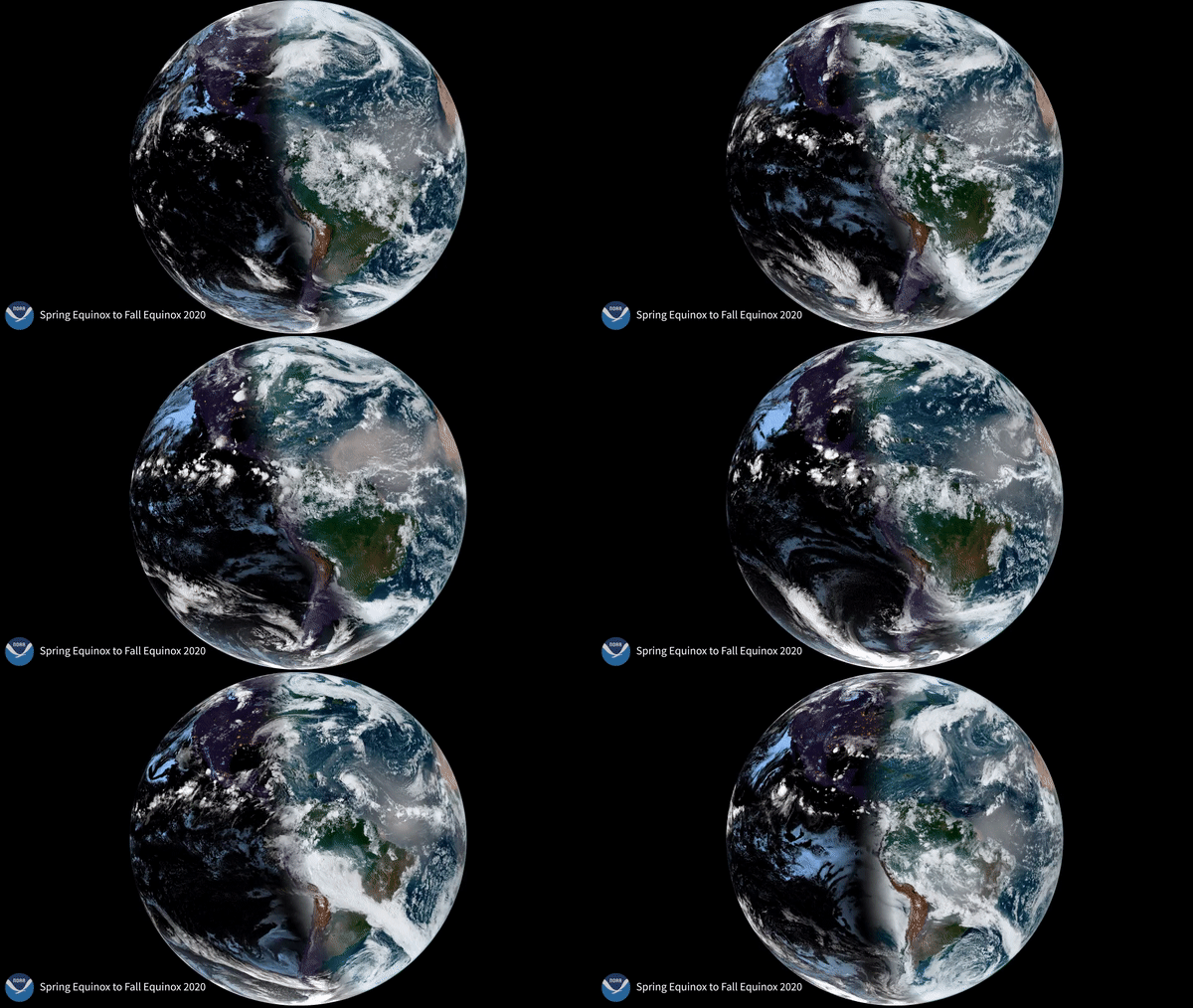
Download Image Download Image of the Autumnal Equinox
It’s officially autumn in the Northern Hemisphere—the season when days get shorter as that half of the world heads toward winter. Meanwhile, in the Southern Hemisphere, spring has begun!
This year, the Autumnal Equinox—the official start of the astronomical season—was Tuesday, Sept. 22, 2020 at 9:30 a.m. EDT. However, the first day of fall can range from Sept. 21 through Sept. 24. This date signifies the start of the astronomical season, since during the equinox (Latin for “equal night”), the sun is located directly above the Earth’s equator. This causes day and night to be roughly equal in length at all latitudes.
They aren’t completely equal, however. According to NOAA’s National Weather Service, our atmosphere refracts the sun’s light, which causes the sun to appear above the horizon before it actually rises and delays the sunset until after it has actually set.
The GOES-East geostationary satellite, also known as GOES-16, keeps watch over most of North America, including the continental United States and Mexico, as well as Central and South America, the Caribbean, and the Atlantic Ocean to the west coast of Africa. The satellite's high-resolution imagery provides optimal viewing of severe weather events, including thunderstorms, tropical storms, and hurricanes.
Where this page came from
This page was imported from NOAA Satellites (NESDIS). Published by NOAA's National Environmental Satellite, Data, and Information Service and, as a work of the United States government, in the public domain; pictures credited elsewhere are left out.
Nobody has written it yet — it is the source material at a new address, which is why search engines are asked to skip it and why no one earns from it. It is up for grabs: take it on, and it is yours to rewrite and to earn from.
Лицензия: CC0 1.0 (общественное достояние) · По материалам www.nesdis.noaa.gov
1
0
0
0

Комментарии