
What is sleep ? While you are sleeping your brain and body functions are still active. Sleep is a natural process that helps your body restore energy, supports learning and memory, and keeps you healthy. It's not just the number of hours of sleep you get that matters.
The quality of your sleep is also important. During the night, your brain cycles through different stages of non-rapid eye movement (non-REM) sleep and rapid eye movement (REM) sleep . If your sleep is often interrupted, you may not get enough time in certain stages of sleep . Poor-quality sleep does more than make you feel tired.
It can affect your physical and mental health, thinking, and daily functioning. What are sleep disorders? Sleep disorders are conditions that disturb your normal sleep patterns. There are many types of sleep disorders.
Some general types include: Insomnia, which is trouble falling asleep or staying asleep . Sleep -related breathing disorders such as sleep apnea, a condition in which you stop breathing for 10 seconds or more during sleep . Sleep -related movement disorders such as restless leg syndrome (RLS), which involves tingling or prickling sensations in your legs, and a strong urge to move them. Hypersomnia, which is extreme daytime sleepiness.
This includes narcolepsy. Circadian rhythm sleep -wake disorders, which are problems falling asleep or waking up at the right times. This may be due to shift work or jet lag. Parasomnia, which is unusual behaviors during sleep or while falling asleep or waking up.
This may include sleepwalking, talking, or eating during sleep . Some people who feel tired during the day have a true sleep disorder, while others simply don't get enough sleep . The amount of sleep you need depends on your age, lifestyle, health, and sleep patterns. Most adults need about 7-9 hours each night.
What causes sleep disorders? There are different causes for different sleep disorders. They may include: Other health conditions, such as heart disease, lung disease, nerve disorders, or pain Mental illnesses, including depression and anxiety Medicines Genetics Sometimes the cause is unknown. Other factors that may contribute to sleep problems include: Using caffeine or alcohol Having an irregular schedule, such as working the night shift Aging, since older adults may sleep less, spend less time in deep sleep , and wake easily What are the symptoms of sleep disorders?
The symptoms of sleep disorders depend on the specific disorder. Some signs that you may have a sleep disorder include that: You regularly take more than 30 minutes to fall asleep . You regularly wake up several times and then have trouble falling back to sleep , or you wake up too early in the morning. You often feel sleepy during the day, take frequent naps, or fall asleep at the wrong times during the day.
Your bed partner says that when you sleep , you snore loudly, snort, gasp, make choking sounds, or stop breathing for short periods. You have creeping or tingling sensations in your legs or arms that are relieved by moving or massaging them, especially in the evening and when trying to fall asleep . Your bed partner notices that your legs or arms jerk often during sleep . You have vivid, dreamlike experiences while falling asleep or dozing.
You have episodes of sudden muscle weakness triggered by strong emotions. You feel as though you cannot move or speak for a brief time when you first wake up. How are sleep disorders diagnosed? To diagnose a sleep disorder, your health care provider will review your medical and sleep history and do a physical exam.
You may also have a sleep study (polysomnogram). Most sleep studies monitor and record data about your body during a full night of sleep . The data includes: Brain wave activity Eye movements Breathing rate Blood pressure Heart rate and electrical activity in the heart and other muscles Other types of sleep studies may check how quickly you fall asleep during daytime naps or how well you can stay awake during the day. What are the treatments for sleep disorders?
Treatments for sleep disorders depend on which disorder you have. They may include: Practicing good sleep habits and other lifestyle changes, such as eating a healthy diet and getting regular exercise Reducing anxiety about sleep with cognitive behavioral therapy or relaxation techniques Using a CPAP (continuous positive airway pressure) machine for sleep apnea Using bright light therapy (in the morning) Taking sleep aid medicines, or natural products such as melatonin Always check with your provider before taking any medicine or supplement. Most sleep aid medicines are generally for short-term use.
Where this page came from
This page was imported from MedlinePlus, U.S. National Library of Medicine. MedlinePlus is produced by the U.S. National Library of Medicine and is in the public domain.
Nobody has written it yet — it is the source material at a new address, which is why search engines are asked to skip it and why no one earns from it. It is up for grabs: take it on, and it is yours to rewrite and to earn from.
Лицензия: CC0 1.0 (общественное достояние) · По материалам medlineplus.gov
1
0
0
0

Комментарии
Читать дальше
- Planetary NebulaThe Ring Nebula's distinctive shape makes it a popular illustration for astronomy books. But new observations by NASA's Hubble Space Telescope of the glowing gas shroud around an old, dying, sun-like star reveal a new twist. "The nebula is not like a bagel, but rather, it's like a jelly doughnut, be

- Doradus NebulaA panoramic view of a vast, sculpted area of gas and dust where thousands of stars are being born has been captured by NASA's Hubble Space Telescope. The image, taken by Hubble's Wide Field and Planetary Camera 2, is online at The camera was designed and built by NASA's Jet Propulsion Laboratory, Pa
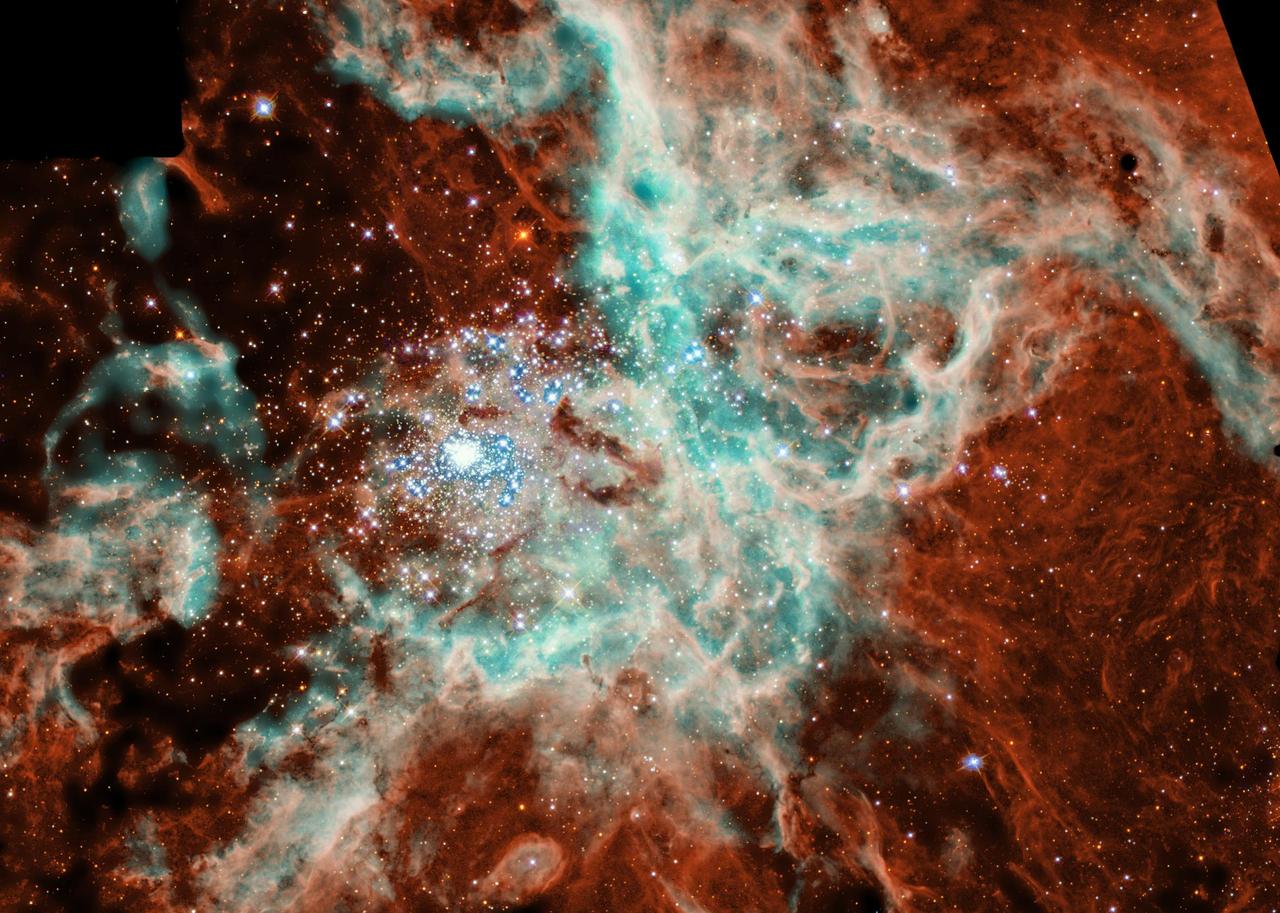
- The Tarantula NebulaNASA Spitzer Space Telescope, formerly known as the Space Infrared Telescope Facility, has captured in stunning detail the spidery filaments and newborn stars of theTarantula Nebula, a rich star-forming region also known as 30 Doradus. This cloud of glowing dust and gas is located in the Large Magel


