
Ser du något att förbättra? Föreslå en ändring.
By Dana Hunt, public affairs specialist, NPS South Atlantic–Gulf Region.
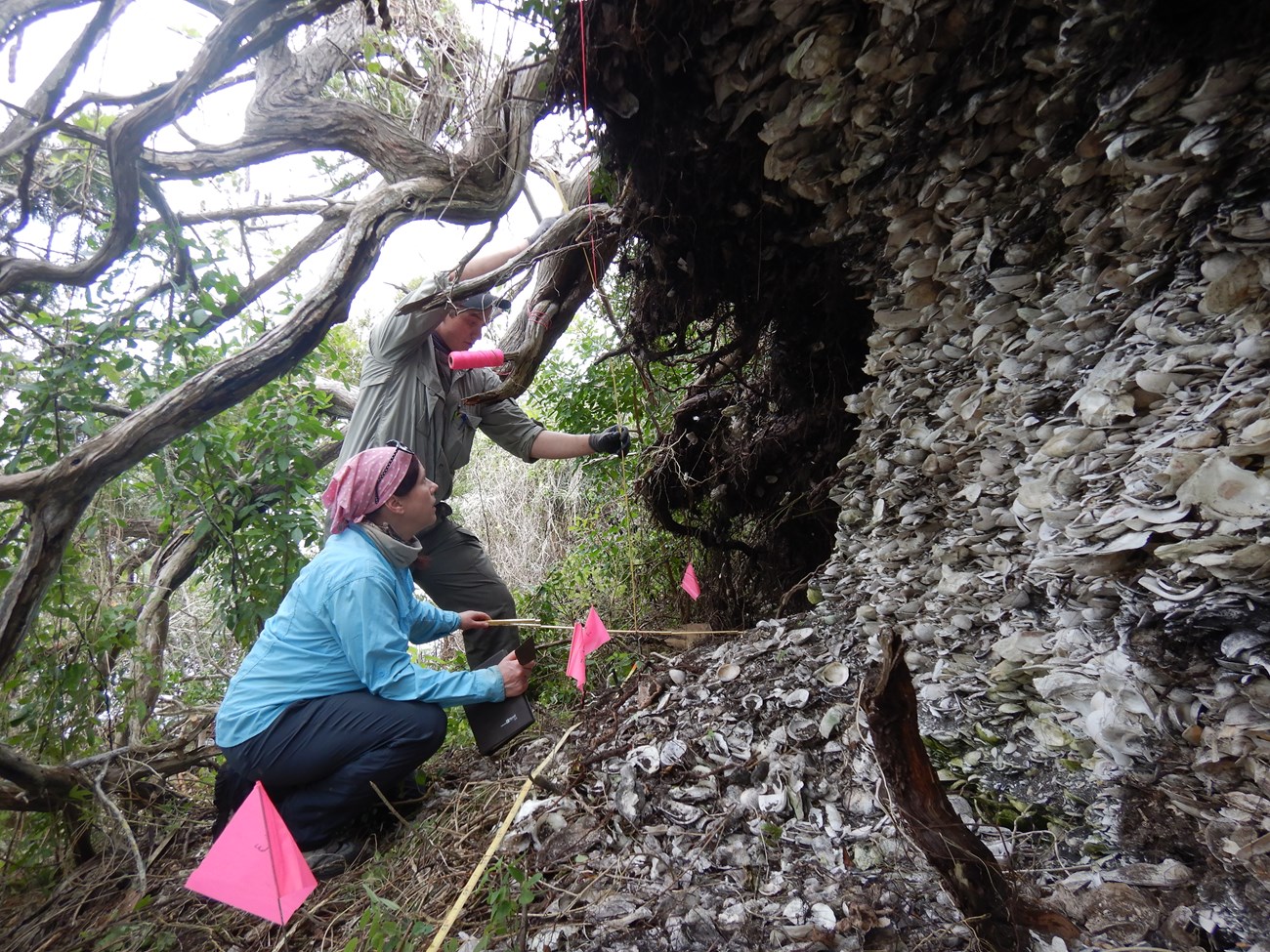
NPS archeologists Dr. Margo Schwadron and Michael Lockman mapping Turtle Mound. NPS photo.
National Park Service archeologists helped a new global study showing that Indigenous peoples harvested huge quantities of oysters sustainably for hundreds and sometimes thousands of years before European colonizers arrived.
The study
Archeologists from the NPS Southeast Archeological Center (SEAC) joined an international team whose study appeared in Nature Communications in May 2022. It examined Indigenous oyster harvest sites in North America — including three national parks — and Australia, some as old as 6,000 years.
The finding: under Indigenous management, oyster beds stayed far more productive for thousands of years. Today, the decline of oyster fisheries is a global concern.
"This study is significant because it highlights the importance of Indigenous knowledge in ecosystem management," said NPS archeologist Michael Lockman. "A failure to take traditional ecological knowledge into account contributed to the collapse of oyster fisheries associated with European settlement."
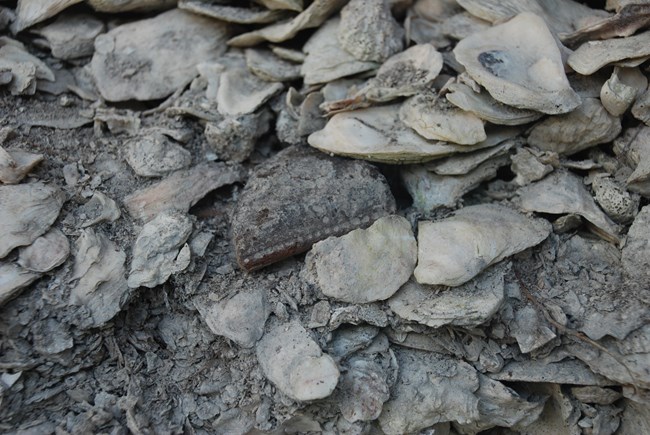
A decorated pottery sherd, about 1,500 years old, in a shell mound. NPS photo.
The parks' evidence
Shell mounds in Canaveral National Seashore, De Soto National Memorial and Everglades National Park supplied data. Using methods such as radiocarbon dating, NPS archeologist Dr. Margo Schwadron and her team, including Lockman, concluded that Indigenous people lived sustainably for many thousands of years, with knowledge and practices that today's conservationists can learn from — in keeping with the Park Service's mission, under the 1916 Organic Act, to leave parks unimpaired for future generations.
"I am happy to be working with tribal partners and engaging in important science and research that recognizes the incredible traditional, ecological knowledge of our tribal partners," Schwadron said.
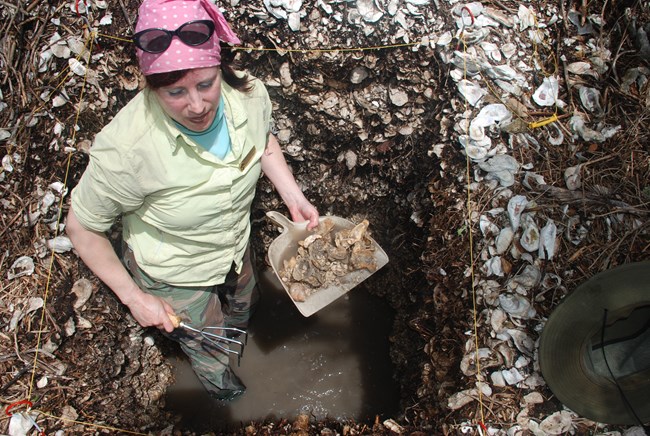
Dr. Margo Schwadron excavating at Turtle Mound, Canaveral National Seashore, Florida. NPS photo.
For more than 30 years Schwadron has documented and protected coastal shell sites in southeastern parks, working with other scientists to restore ecosystems and build living shorelines. She argues for the mounds as major cultural resources that record climate change, historical ecology and traditional knowledge.
Turtle Mound
One of the study's sites, Turtle Mound at Canaveral National Seashore, is the largest shell mound in the park system and possibly the tallest in North America, at 37 feet. Its material spans more than 1,200 years, from 800 to 1400 CE — a time capsule of past food, tools and other artifacts.
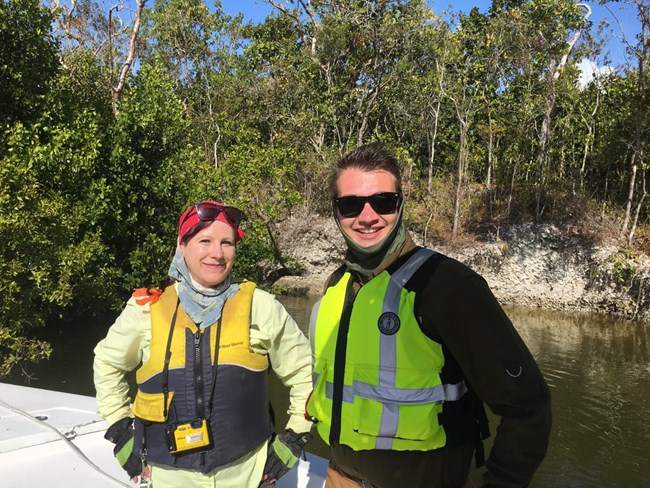
Schwadron and Lockman. NPS photo.
A race against the sea
Climate change is already damaging these mounds through erosion, destroying archeological, environmental and paleoecological data. Sea-level rise and stronger storms are expected to speed the loss, threatening the sites' total destruction. The Park Service works with partners, universities and nonprofits to protect them so future generations can keep learning from them.
Sources
Based on "National Park Service supports groundbreaking Indigenous fisheries management study," by Dana Hunt, National Park Service; a work of the United States government in the public domain.
I dessa publikationerEverglades National ParkCanaveral National Seashore
Licens: CC0 1.0 (allmän egendom) · Bearbetat efter www.nps.gov
1
0
0
0

Kommentarer


