Vill du förbättra sidans innehåll? Föreslå en ändring.
Key points
- If you find a tick attached to your skin, simply remove the tick as soon as possible.
- There are several tick removal devices on the market, but a plain set of tweezers works very well.
- If you develop a rash or fever within several days to weeks after removing a tick, see your doctor.
How to remove a tick
If you find a tick attached to your skin, remove the tick as soon as possible. Do not wait to go to a healthcare provider to remove the tick. Delaying tick removal to get help from a healthcare provider could increase your risk of getting a disease spread through tick bites, known as tickborne diseases.
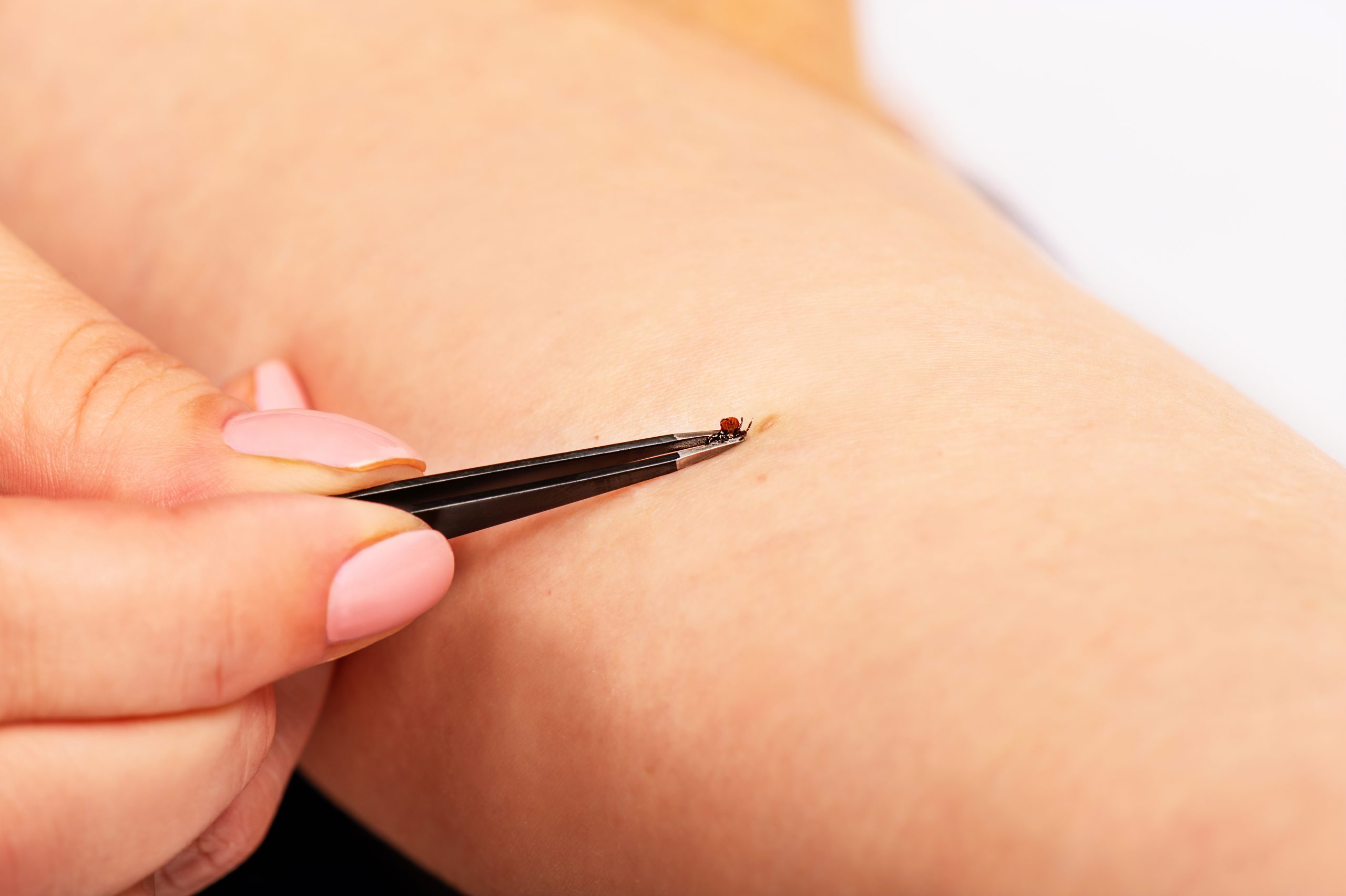
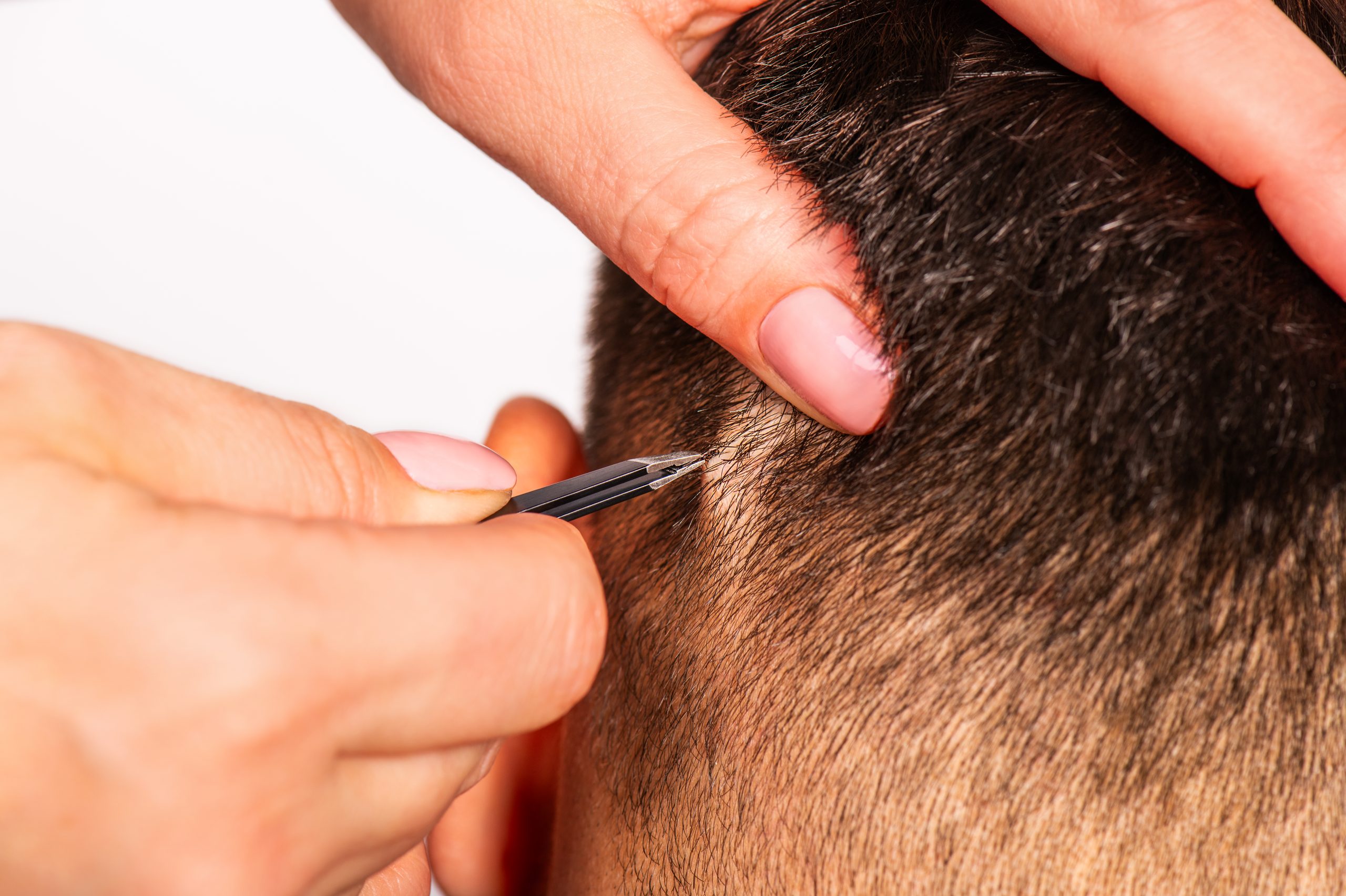
- Grasp the tick as close to the skin's surface as possible using clean fine-tipped tweezers. If fine-tipped tweezers are not available, use regular tweezers or your fingers to grasp the tick. Grasp the tick close to the skin's surface to avoid squeezing the tick's body.
- Pull tick away from the skin with steady, even pressure. Don't twist or jerk the tick. This can cause the tick mouthparts to break off and remain in the skin. If this happens, your body will naturally push the mouthparts out over time as your skin heals. You can also remove the mouthparts with tweezers. If you cannot remove the mouthparts easily with tweezers, leave them alone.
- Dispose of the live tick by taking one of these steps: place it in a sealed container; wrap it tightly in tape; flush it down the toilet; **or **put it in alcohol. Do not crush the tick with your fingers.
- After removing the tick, thoroughly clean the bite area and your hands with soap and water, rubbing alcohol, or hand sanitizer.
- If you find a tick attached to you, there may be other ticks on your body. Do a careful tick check to look for other ticks and promptly remove them.
A word of caution
Do not use petroleum jelly, heat, nail polish, or other substances to try and make the tick detach from the skin. This may agitate the tick and force infected fluid from the tick into the skin.
Use fine-tipped tweezers to grasp the tick as close as possible to the skin's surface.
If you don't have fine-tipped tweezers, regular tweezers can be used to remove attached ticks.
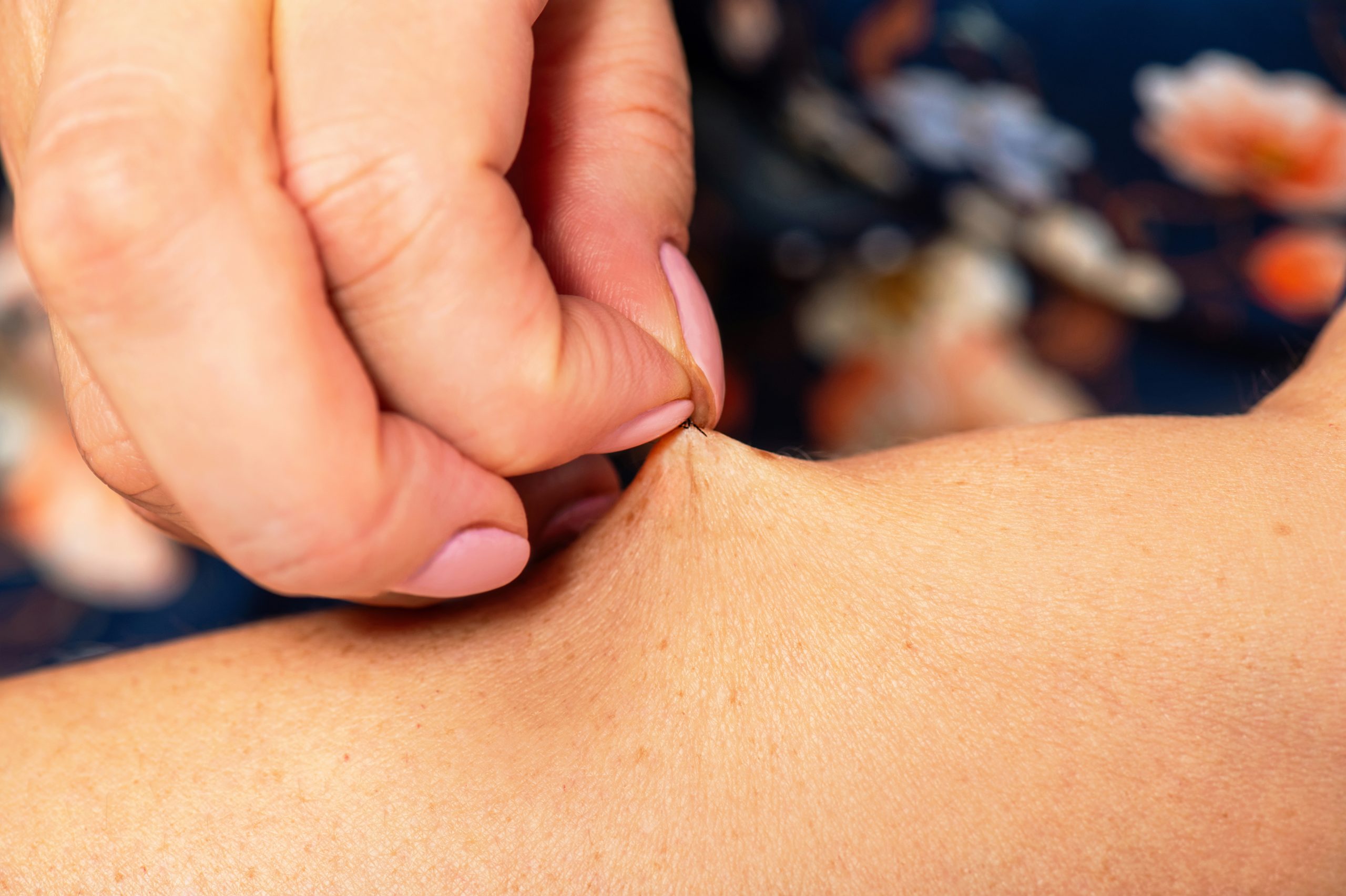
When using fingers to remove an attached tick, avoid squeezing the tick's body.
Check your body for ticks after spending time in grassy, brushy, or wooded areas.
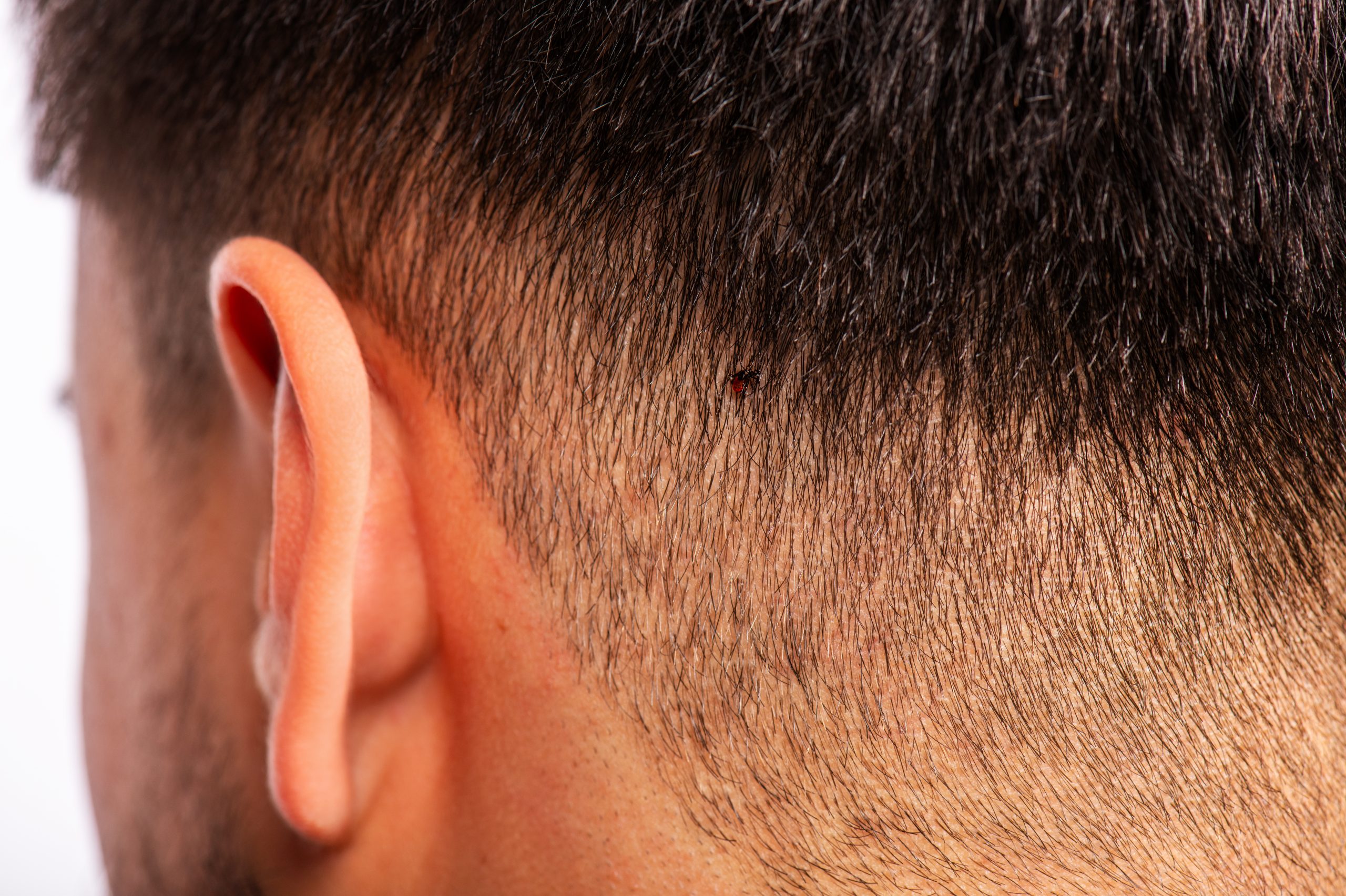
A tick in a man's hair, showing how easily ticks can blend in.
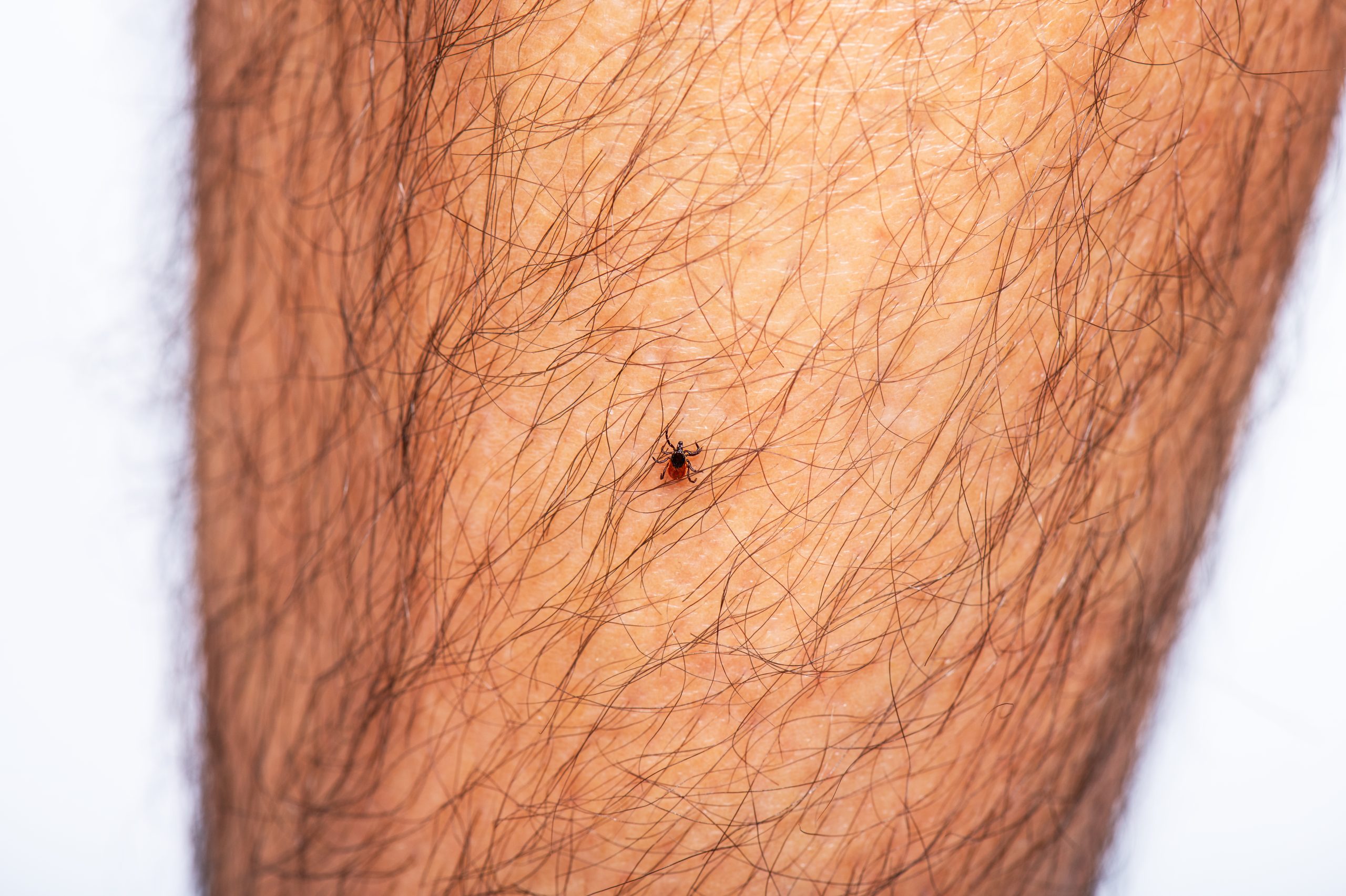
Remove attached ticks promptly to reduce your risk of getting a disease spread through tick bites.
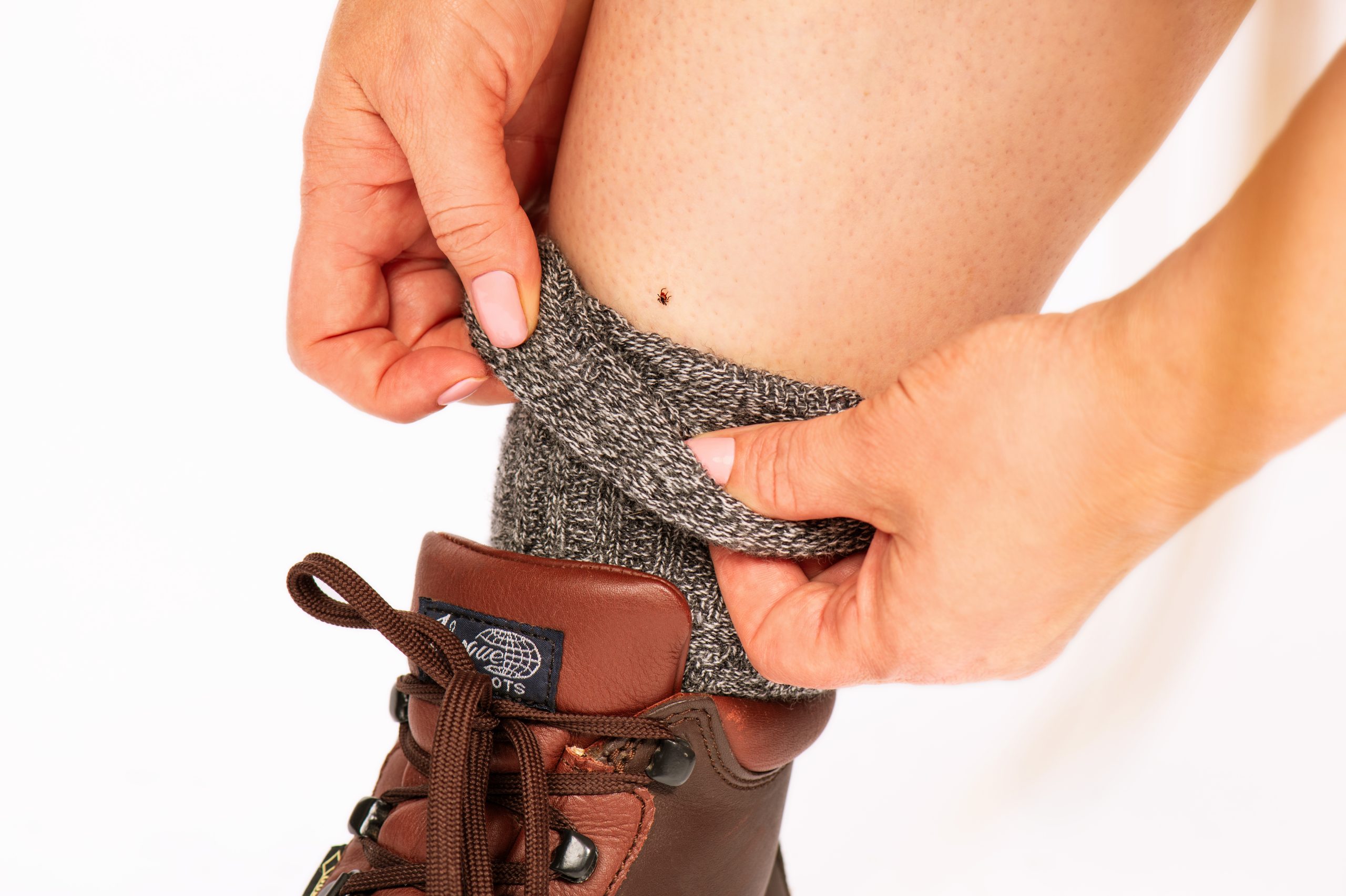
A blacklegged tick crawling up a man's leg.
Avoid: tick testing
People who have removed a tick sometimes wonder if they should have it tested to see if it is infected. Although some commercial groups offer testing, in general this is not recommended, because:
- Laboratories that conduct tick testing are not required to have the high standards of quality control used by clinical diagnostic laboratories. Results of tick testing should not be used for treatment decisions.
- Positive results showing that the tick contains a disease-causing organism do not necessarily mean that you have been infected.
- Negative results can lead to false assurance. You may have been unknowingly bitten by a different tick that was infected.
- If you have been infected, you will probably develop symptoms before results of the tick test are available. If you do become ill, you should not wait for tick testing results before beginning appropriate treatment.
Keep reading
Learn where ticks that spread diseases can be found and steps to prevent tick bites.
Follow-up
If you develop a rash or fever within several weeks of removing a tick, see your doctor:
- Tell the doctor about your recent tick bite,
- When the bite occurred, and
- Where you most likely acquired the tick.
Tick bite guide
Get StartedAbout the Tool
- The Tick Bite Guide is an interactive tool that will assist individuals on removing attached ticks and determining when to seek health care, if appropriate, after a tick bite.
- The online mobile-friendly tool asks a series of questions covering topics such as tick attachment time and symptoms. Based on the user's responses, the tool then provides information about recommended actions and resources.
Resources
Where this page came from
This page was imported from Centers for Disease Control and Prevention. Material produced by the Centers for Disease Control and Prevention is a work of the United States government and is in the public domain.
Nobody has written it yet — it is the source material at a new address, which is why search engines are asked to skip it and why no one earns from it. It is up for grabs: take it on, and it is yours to rewrite and to earn from.
Licens: CC0 1.0 (allmän egendom) · Bearbetat efter www.cdc.gov
1
0
0
0

Kommentarer
Läs härnäst