
On December 31, 2018, Clark County Public Health in Washington learned of a suspected measles case: an unvaccinated 10-year-old, recently arrived from Ukraine, seen at an urgent care clinic with fever, cough and a rash. Lab tests confirmed measles on January 3, 2019. Within two weeks, a dozen more suspected cases had all tested positive. By March 28, measles had been confirmed in 71 county residents, with rashes beginning between December 30, 2018, and March 13, 2019.
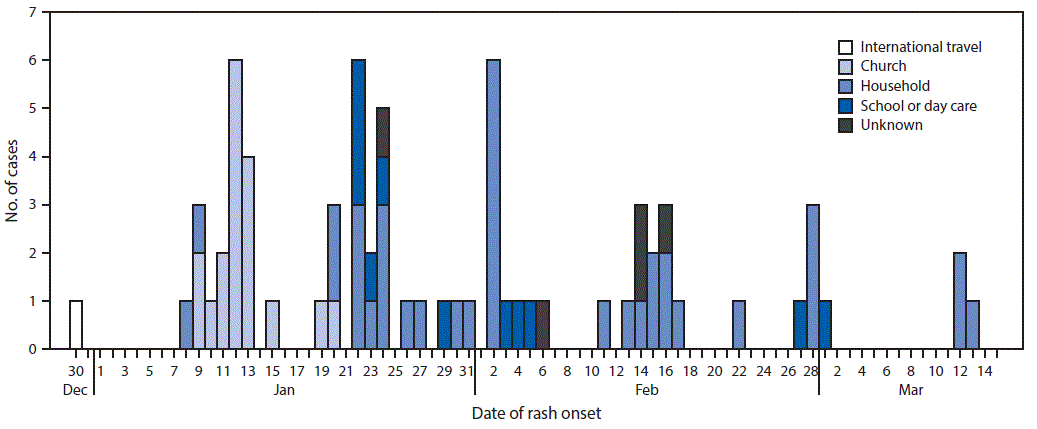
Credit: CDC, Morbidity and Mortality Weekly Report*.*
Who got sick
| 71 patients | |
|---|---|
| Confirmation | 41 by laboratory tests; 30 epidemiologically linked to confirmed cases |
| Age | 1 to 39 years (median 8); 52 (73%) were children 10 or younger |
| Vaccination | 61 (86%) unvaccinated; 3 (4%) had one MMR dose before exposure; 7 (10%) unknown |
| Virus | Genotype D8, then circulating in Eastern Europe, in all 18 specimens tested |
| Where it spread | Households (36 patients, 51%) and churches (18 patients, 25%) above all |
The response
Clark County activated its Incident Management Team on January 15, and about 200 people from the county, the Washington State Department of Health and CDC joined the response. Investigators interviewed patients, reviewed medical records and consulted doctors; advisories went to regional providers, and press releases warned the public of exposures in large settings.
About 3,800 named contacts were identified from 46 known exposures in health care facilities, workplaces, churches, schools, child care centers, social gatherings and homes. Of these, 22% lacked acceptable evidence of immunity — vaccination records, lab evidence of immunity or past disease, or birth before 1957. Control measures included:
- recommending vaccination for anyone without evidence of immunity;
- post-exposure MMR vaccine or immune globulin for eligible contacts;
- isolating patients and quarantining exposed people without immunity at home.
No new cases were confirmed after March 13, 2019.
Why here, why then
Clark County had not had a measles outbreak since 2011, when there were three cases. But since 2013, its vaccination rates had stayed 10%–14% below the statewide average of 88%. And it wasn't alone: by May 10, 2019, the 839 measles cases reported in 23 states already exceeded the count for the same period of every year since measles was declared eliminated in the United States in 2000 (6 to 164). The outbreaks show why two-dose measles vaccination coverage must stay at 95% or higher, and why public health responses must be fast.
Sources
Based on Alyssa Carlson, Madison Riethman, Paul Gastañaduy, et al., "Notes from the Field: Community Outbreak of Measles — Clark County, Washington, 2018–2019," Morbidity and Mortality Weekly Report, volume 68, Centers for Disease Control and Prevention; a work of the United States government in the public domain.
许可协议: CC0 1.0(公有领域) · 改编自 www.cdc.gov
1
0
0
0

留言


