
নোড এর বিষয়বস্তু উন্নত করতে চান? একটি সম্পাদনা অনুরোধ করার চেষ্টা করুন.
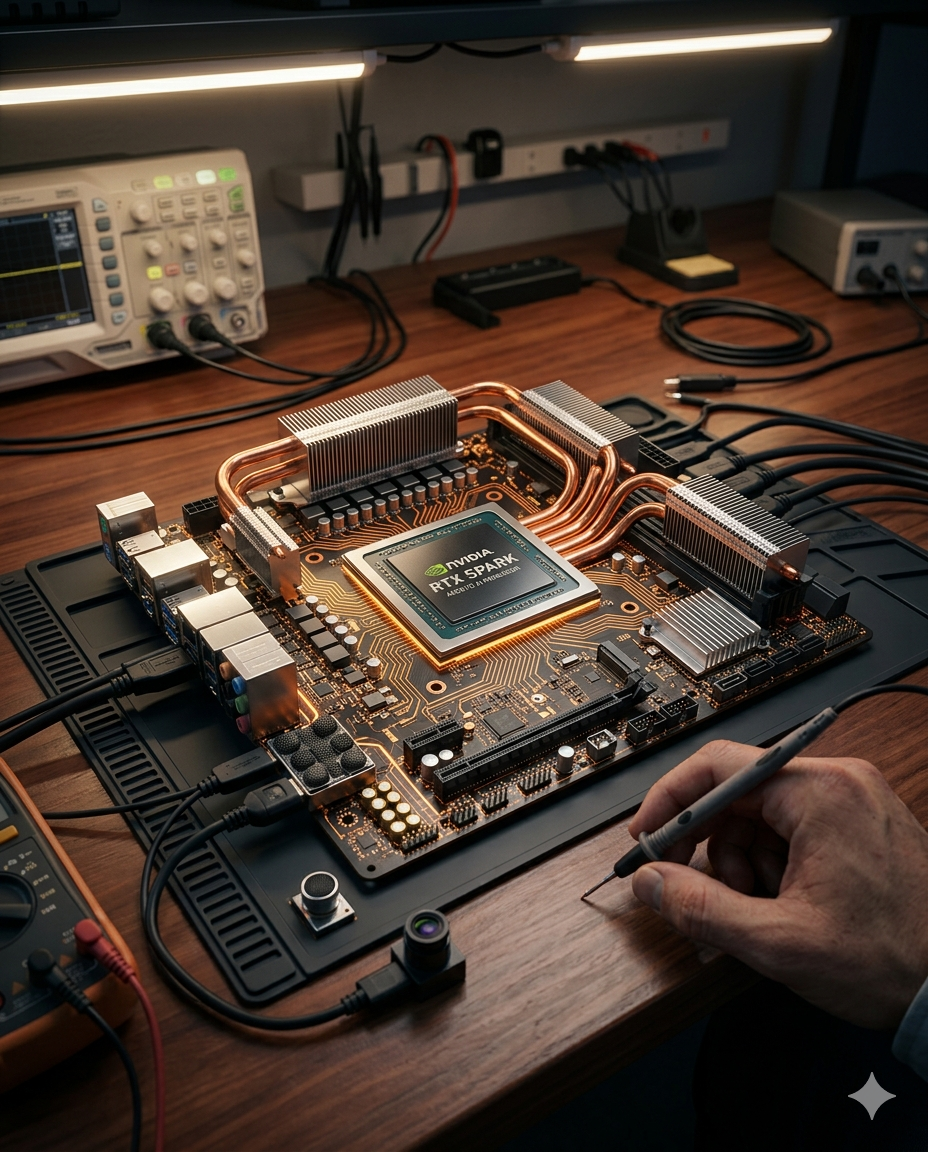
The opening of Computex 2026 in Taipei marks a definitive pivot in the trajectory of the personal computing industry. Industry leader NVIDIA has unveiled the RTX Spark, a specialized artificial intelligence superchip designed to transform the consumer PC from a passive tool into a proactive, autonomous agent. This announcement, delivered by CEO Jensen Huang, signals the end of the traditional operating system era and the beginning of agentic computing, where hardware is purpose-built to host and execute autonomous AI agents. By integrating advanced neural processing directly into the silicon, NVIDIA is aligning with the broader industry trend of shifting AI workloads from data center clouds to on-device edge environments. This shift addresses the escalating costs and latency constraints of current cloud-based AI infrastructure, promising a localized, privacy-focused, and highly responsive computing experience. The implications of the RTX Spark extend far beyond simple performance gains; they represent a fundamental reimagining of the human-computer interface, where users move from writing code or executing applications to expressing high-level intent. As major original equipment manufacturers begin to integrate this architecture into upcoming consumer hardware, the industry faces an inflection point that necessitates a wholesale restructuring of enterprise software, developer workflows, and hardware procurement strategies to accommodate a new class of intelligent, persistent digital assistants.
The introduction of the RTX Spark at Computex 2026 serves as a catalyst for a long-anticipated transition within the global technology sector. For nearly two decades, the personal computer has served as a standardized interface for interacting with siloed software applications. The paradigm shift initiated this week fundamentally disrupts this model, replacing the application-centric workflow with an agent-centric one. This change is not merely an iterative improvement in processor speed or power efficiency; it is a structural architectural realignment of the silicon itself, optimized for the specific demands of agentic intelligence.
At the core of this transition is the economic and operational reality of inference. Throughout 2024 and 2025, the industry saw an exponential rise in the cost of cloud-based AI operations. While the cost per token has decreased significantly, total enterprise expenditure has surged due to the sheer volume of inference requests. Organizations have discovered that relying exclusively on centralized data centers for the intelligence required to power autonomous agents is unsustainable due to latency, privacy concerns, and bandwidth overhead. The RTX Spark is a direct response to this infrastructure reckoning. By moving the inference engine to the edge, manufacturers are enabling a hybrid model where local compute handles the majority of persistent agentic tasks, while cloud resources are reserved for complex, large-scale model updates and massive historical data processing.
The technical specifications of the RTX Spark suggest a focus on high-bandwidth memory and dedicated neural processing units that exceed current consumer-grade requirements. This is necessitated by the nature of agentic AI, which requires models to operate in a continuous state of awareness. Unlike a standard chatbot that exists in a request-response loop, an agentic model must possess long-term memory, context window persistence, and the ability to trigger external software actions. For this to occur on a personal machine, the hardware must maintain low-latency access to the model weights while simultaneously managing the system's power state. This is an engineering challenge that has historically been limited to data center hardware but is now being democratized for the individual user.
The competitive implication of this move is profound. By providing the silicon foundation for autonomous agents, NVIDIA is positioning itself as the arbiter of the next consumer electronics epoch. If the smartphone was defined by the mobile operating system, the agentic PC will be defined by the underlying hardware's ability to host local LLMs and action models. This creates a vertical moat; developers will increasingly design their agentic applications to take advantage of the specific instruction sets and memory hierarchies found in the Spark architecture, mirroring the historical dominance of proprietary gaming and design platforms.
For the enterprise, the adoption of agentic hardware implies a necessary overhaul of existing digital operations. IT departments that have spent years consolidating assets into the cloud must now rethink their architecture for an edge-dominant future. This entails developing new security protocols for on-device data storage, managing the synchronization of local agent instances with enterprise databases, and establishing governance frameworks for autonomous software that can execute commands on behalf of users. The shift from writing code to expressing intent—what industry analysts are calling intent-driven development—will also necessitate a change in technical labor, where the ability to structure logic for agents becomes more valuable than the mastery of traditional programming syntax.
The broader implications for the global technology supply chain are equally significant. As demand for agentic hardware rises, there will be increased pressure on foundries to optimize for high-yield production of specialized AI-ready consumer silicon. This development at Computex also underscores the growing importance of the AI robotics pavilion and the integration of edge computing in industrial settings, suggesting that the logic driving the consumer agentic PC will be mirrored in autonomous warehouse bots, healthcare diagnostic tools, and smart city infrastructure.
This transition is not without significant hurdles. The primary risk is the failure of software ecosystems to catch up with the hardware’s capabilities. A powerful local agentic processor is useless if the operating systems and productivity suites do not support seamless intent-based interaction. While current partnerships with major software providers indicate a degree of alignment, the transition period will likely be characterized by fragmentation as various stakeholders attempt to define the standards for agentic interoperability. Furthermore, the privacy and security risks associated with locally stored, persistently active autonomous agents are substantial. They require a zero-trust model at the silicon level, ensuring that agentic autonomy cannot be co-opted by malicious actors seeking to leverage the direct system access granted to these models.
Ultimately, the announcement at Computex 2026 establishes a clear trajectory for the next five years of the technology industry. The focus is shifting away from the expansion of massive, centralized foundation models toward the optimization of specialized, distributed, and autonomous intelligent systems. By anchoring this shift in personal computing hardware, the industry is signaling that the era of AI-as-a-service is evolving into the era of AI-as-a-native-capability. For hardware manufacturers, software developers, and organizational leaders alike, the message from Taipei is unequivocal: the infrastructure of the future is local, autonomous, and architected for intelligence.
1
0
0
0

মন্তব্য